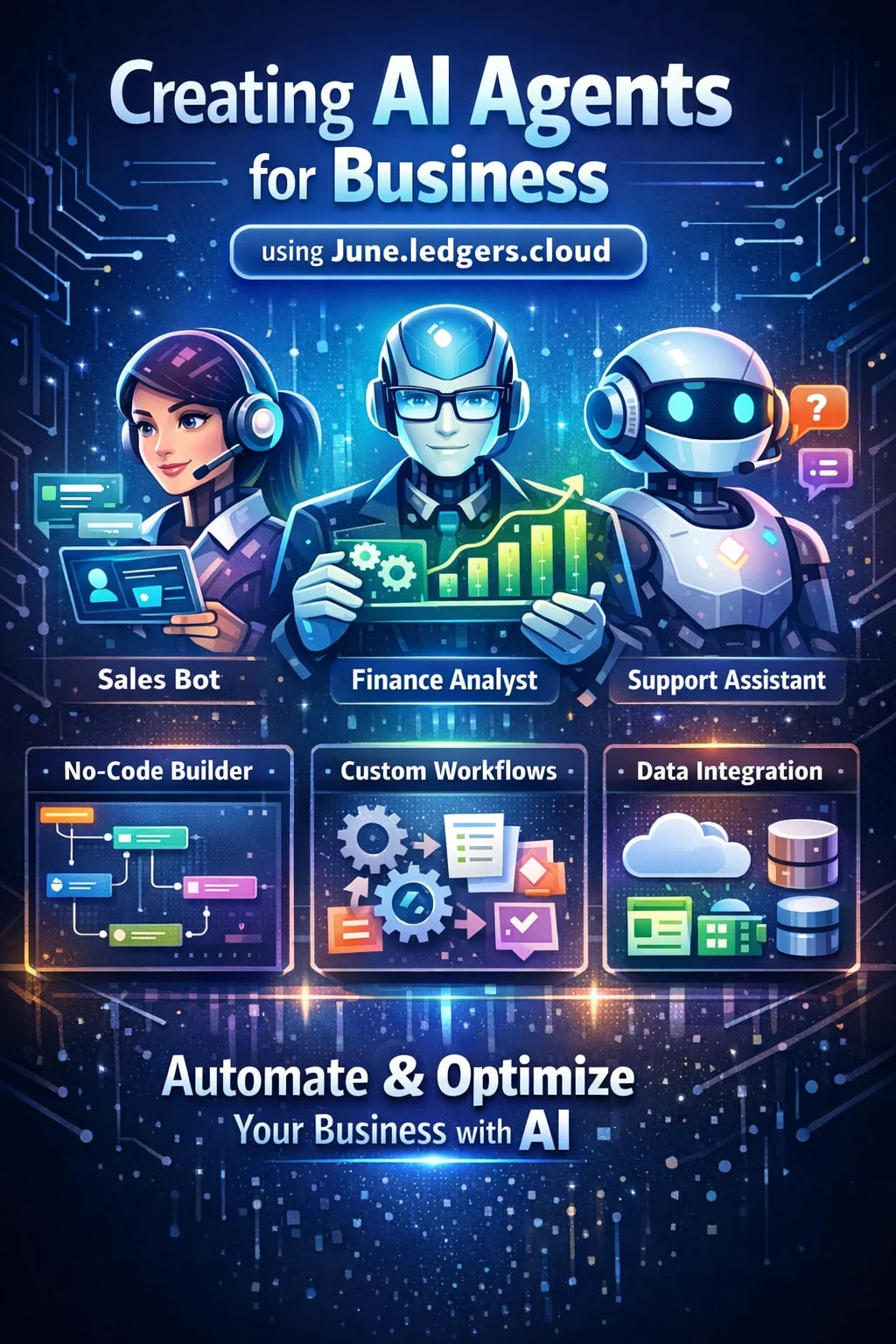
How to Create an AI Agent in June Ledgers AI
The world of AI technologies is changing very rapidly and June Ledger’s AI is leading the way in helping anyone interested in creating complex AI agents. Whether you are an experienced developer or just someone interested in getting started with AI, learning how to create a simple AI agent with June Ledger’s AI will enable you to enhance your skills to succeed in AI development. In the following guide, we will discuss the basic steps on how to create a complete AI agent and share some useful tips to assist you in the development process.
Understanding June Ledgers AI
June Ledgers AI is a cutting-edge platform designed for developing intelligent agents that can automate tasks, analyze data, and provide insights efficiently. Before diving into creation, it's crucial to understand the platform’s capabilities:
- User-Friendly Interface: Offers a streamlined workflow that reduces complexity.
- Comprehensive API Access: Facilitates easy integration with other tools and technologies.
- Efficient Data Processing: Handles large datasets seamlessly, using advanced algorithms.
- Customization Options: Provides flexibility to tailor AI agents to specific needs.
In the sections that follow, we will explore the step-by-step process for developing an AI agent using June Ledgers AI.
Step 1: Setting Up Your Environment
Before building your AI agent, ensure your development environment is appropriately configured. Follow these steps:
- Sign Up: Register on the June Ledgers AI platform by visiting their official website. Complete the necessary authentication to access the development dashboard.
- Install Necessary Tools: Ensure you have the latest versions of Python and Jupyter Notebook, as they are commonly used with June Ledgers AI for scripting and visualization tasks.
- API Key Setup: Retrieve your API key from the dashboard, which is crucial for accessing the platform's functionalities programmatically.
Step 2: Designing Your AI Agent
With your environment set up, the next step is designing your AI agent. This involves identifying its purpose and functionalities:
- Define Objectives: Clearly outline what tasks your AI agent should accomplish. For instance, should it automate customer inquiries, perform data analysis, or something else?
- Data Requirements: Assess the type and volume of data your AI agent needs to function effectively. Gather relevant datasets and consider utilizing built-in datasets available on the platform.
- Algorithm Selection: Choose suitable machine learning models and algorithms based on the nature of the task. June Ledgers AI offers various pre-built models for standard operations like classification, regression, and clustering.
Step 3: Building Your AI Agent
With a blueprint in place, implement your design on the June Ledgers AI platform:
- Create a New Project: Within the platform's dashboard, start a new project and link it with your API key for streamlined access.
- Data Integration: Upload your datasets, ensuring they are cleaned and pre-processed for optimal results. Use built-in tools for data transformation if necessary.
- Model Training: Select and configure your machine learning models. Train the models using your datasets, leveraging the platform’s scalability to adjust processing power as needed.
- Testing and Optimization: Conduct thorough testing to ensure your AI agent meets performance expectations. Optimize model parameters and reiterate the training process to refine results.
Advanced Features and Best Practices
For those seeking to maximize the potential of their AI agents, consider the following advanced features and best practices:
- Utilize Cloud Resources: Take advantage of June Ledgers AI’s cloud computing capabilities to enhance processing power and manage large-scale tasks efficiently.
- Implement Security Protocols: Ensure your AI agent adheres to security best practices, safeguarding data integrity and user privacy.
- Continuous Improvement: Employ an iterative development approach by regularly updating your models with new data and feedback, enhancing precision and reliability.
Conclusion
Creating an AI agent with June Ledger's AI has several stages of development that are strategically mapped and executed, as well as continually updated, to build your ideal AI agent by using the many robust features provided through our platform. Being aware of the latest features and trends in AI will help ensure that you stay abreast of the competitive landscape. Start creating your AI agent today to leverage the power of intelligent automation.