
ledgers.cloudledgers.cloud
India
UAE
USA
AI Agents
PRO Platform
Developers
Pricing
About
LEDGERS Logo

Completely integrated suite of cloud-based tools to help you with invoicing, payments, accounting, inventory management, payroll, GST compliance and more.

Company

  • About Us
  • Contact Us

Usage

  • Terms & Conditions
  • Privacy Policy
  • Assured Terms

Trusted & Certified

ISO 22301 BCMS CertifiedISO 27001 ISMS Certified

Download App

Get it on Google PlayDownload on the App Store
© 2026 LEDGERS. All rights reserved.
HOW TO Prepare AN Audit Report
HARISH BABU KM

HARISH BABU KM

Updated on 13-11-2026

How to Prepare an Audit Report: Format, Components & Compliance Guide

Introduction :

An audit report is the final output of weeks of checking, testing and reviewing. It tells owners, lenders, regulators and investors whether financial statements can be trusted. Yet drafting it is where many professionals lose time, because the report must follow a strict structure, cover legal requirements and still be clear. Teams that handle many clients often rely on audit report software india to keep the format consistent and the working papers organised.

This guide explains how to prepare an audit report step by step, what the standard format looks like, which components matter and what compliance points to check. You will also find a quick reference table. If you shortlist tools, a best audit report software india option should help with drafting, review trails and clean handovers between team members.

Table of Contents :

  1. What Is an Audit Report ?
  2. Types of Audit Opinions
  3. Audit Report Format and Key Components
  4. Compliance Requirements to Check
  5. Using Software to Prepare Audit Reports
  6. Common Mistakes to Avoid
  7. Audit Report Components at a Glance

What Is an Audit Report ?

An audit report is a formal document in which an independent auditor gives an opinion on whether financial statements present a true and fair view and follow the applicable framework. For companies in India, this usually means the Companies Act, 2013 and the relevant accounting standards.

The report serves several readers:

  • Owners and boards, who need assurance about the numbers
  • Lenders and investors, who rely on it for decisions
  • Regulators and tax authorities, who use it for compliance checks
  • Management, who use findings to improve controls

Audits are guided by the Standards on Auditing issued by the Institute of Chartered Accountants of India, so the wording and structure follow a recognised pattern.

Types of Audit Opinions :

The opinion is the heart of the report. There are four common types:

  • Unmodified opinion. The financial statements are fairly presented in all material respects. This is the cleanest outcome.
  • Qualified opinion. The statements are fair except for a specific matter that is material but not pervasive.
  • Adverse opinion. The statements are materially and pervasively misstated.
  • Disclaimer of opinion. The auditor could not obtain enough evidence to form an opinion.

Auditors may also add an emphasis of matter paragraph to draw attention to something already disclosed, such as a major uncertainty, without changing the opinion.

Audit Report Format and Key Components :

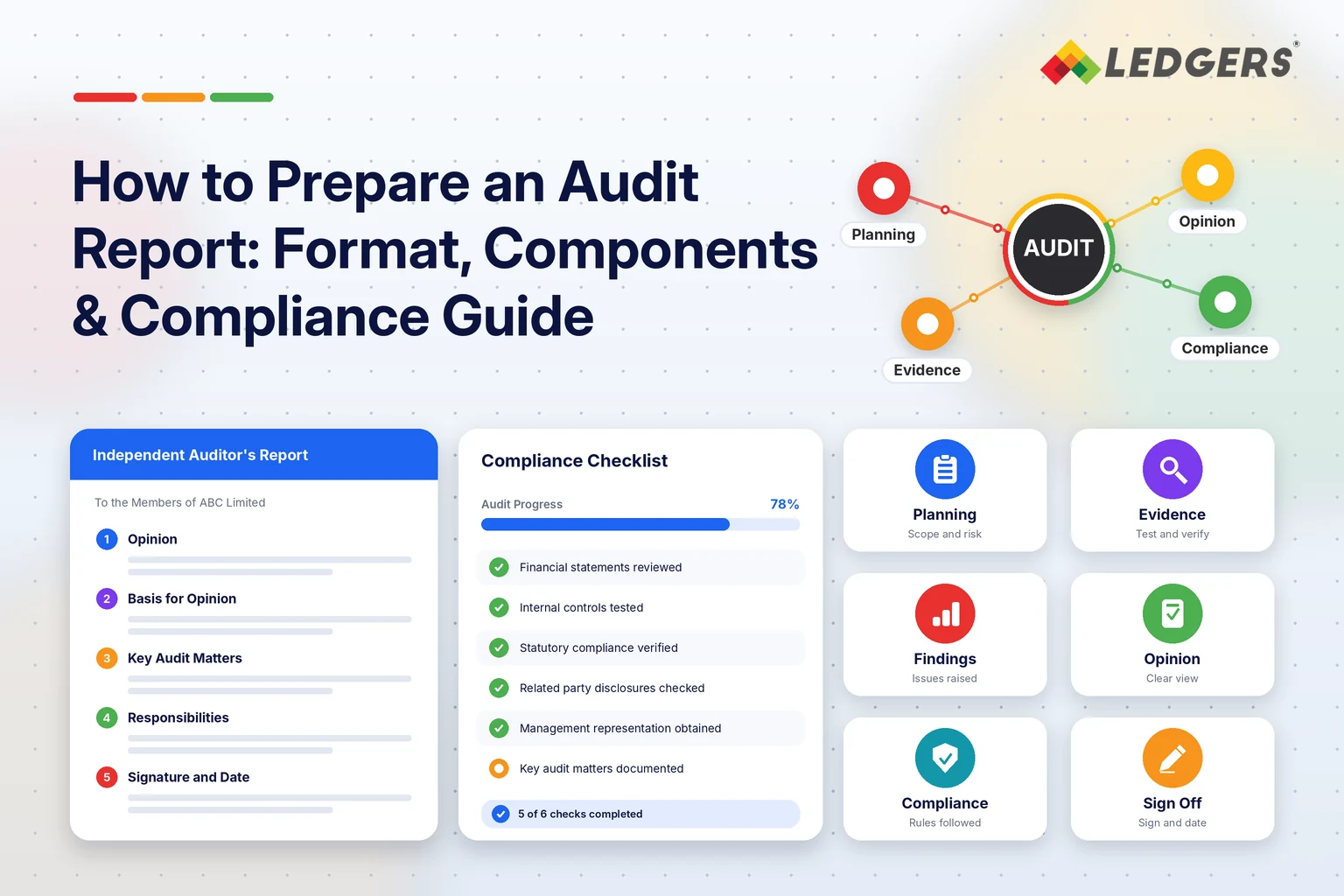
A standard independent auditor’s report generally includes:

  • Title. It clearly says Independent Auditor’s Report.
  • Addressee. Usually the members or shareholders of the entity.
  • Opinion. The auditor’s conclusion, with the name of the entity, the statements covered and the reporting date.
  • Basis for opinion. A statement that the audit followed the Standards on Auditing, plus a note on independence and ethics.
  • Key audit matters. Required for certain entities such as listed companies, covering the most significant areas of the audit.
  • Going concern and other information. Comments where relevant.
  • Responsibilities of management and those charged with governance. How the statements are prepared and overseen.
  • Auditor’s responsibilities. What the auditor did and its limits.
  • Report on other legal and regulatory requirements. Matters required by law, such as the Companies Act and the CARO order where applicable.
  • Signature details. Firm name, membership number, place, date and UDIN.

Compliance Requirements to Check :

Compliance depends on the type of entity and the report. Common points include:

  • Companies Act reporting. Section 143 requires auditors to comment on specific matters, including books of account, accounting standards and the adequacy of internal financial controls reporting where applicable.
  • CARO. Many companies must include the Companies (Auditor’s Report) Order report, which covers areas such as fixed assets, inventory, loans, statutory dues and fraud reporting. Smaller companies may be exempt.
  • Standards on Auditing. The report should follow the standards for forming an opinion, modified opinions, emphasis of matter and going concern.
  • UDIN. Reports signed by chartered accountants need a Unique Document Identification Number.
  • Tax audit reports. Where a tax audit applies, the report must be in the prescribed forms by the due date.
  • Timelines. Statutory deadlines apply to filing audited statements, so plan ahead.

Rules change from time to time, so always check the latest notifications and applicability thresholds.

Using Software to Prepare Audit Reports :

Spreadsheets and documents work for a single audit, but they become hard to manage across many clients and team members. Modern tools help by:

  • Providing standard templates for reports, notes and schedules
  • Linking trial balances to financial statements
  • Tracking review points and sign offs
  • Keeping evidence and working papers together
  • Maintaining version history for every draft

If you are comparing options, look for a best audit report software india choice that supports your reporting formats, review workflow and secure storage. Teams that already manage books and statements in Ledgers also find it easier to pull clean data into audit schedules.

Common Mistakes to Avoid :

Watch out for these problems:

  • Using an outdated report format or wording
  • Forgetting statutory reporting under the Companies Act or CARO
  • Giving an unmodified opinion despite unresolved material issues
  • Weak documentation that cannot support the opinion
  • Missing the management representation letter
  • Dating the report before the audit evidence is complete
  • Skipping the UDIN or signature details

Audit Report Components at a Glance :

The table below summarises the main parts of a typical report.

Component

What It Contains

Why It Matters

Title and addressee

Report name and who it is addressed to

Identifies the purpose and the reader

Opinion

Conclusion on whether statements give a true and fair view

The key message of the report

Basis for opinion

Standards followed, independence and ethics

Shows the opinion is well founded

Key audit matters

Most significant areas of audit attention

Adds transparency for larger entities

Management responsibilities

Preparation of statements and internal controls

Clarifies who is accountable for what

Auditor responsibilities

Scope, procedures and limits of the audit

Prevents misunderstanding of the audit’s role

Other legal requirements

Companies Act and CARO matters

Meets statutory reporting needs

Signature block

Firm, membership number, place, date, UDIN

Makes the report valid and traceable

Conclusion :

A good audit report is clear, complete and compliant. Plan the audit carefully, collect strong evidence, choose the right opinion, follow the standard format and double check legal requirements before signing. With a consistent process and organised records, the report becomes easier to prepare and easier to defend.

If you want your books, statements and supporting records in one connected system, explore Ledgers and see how it can support smoother audits for your team.

Related Guides

Financial Statements: Meaning, Components and Why They Matter
How to Prepare an Audit Report: Format, Components & Compliance Guide
How to File ITR Online FY 2025-26 (AY 2026-27)
Serving Notice Period on Leave or Loss of Pay: Employer & Employee Guide
How to Write an Employee Authorization Letter in 2026?
AI Accounting Software: How AI Is Changing Modern Business Accounting