




SATHISH KUMAR N
Updated on
09-06-2026
What is GST and Why Is It Important for Businesses?
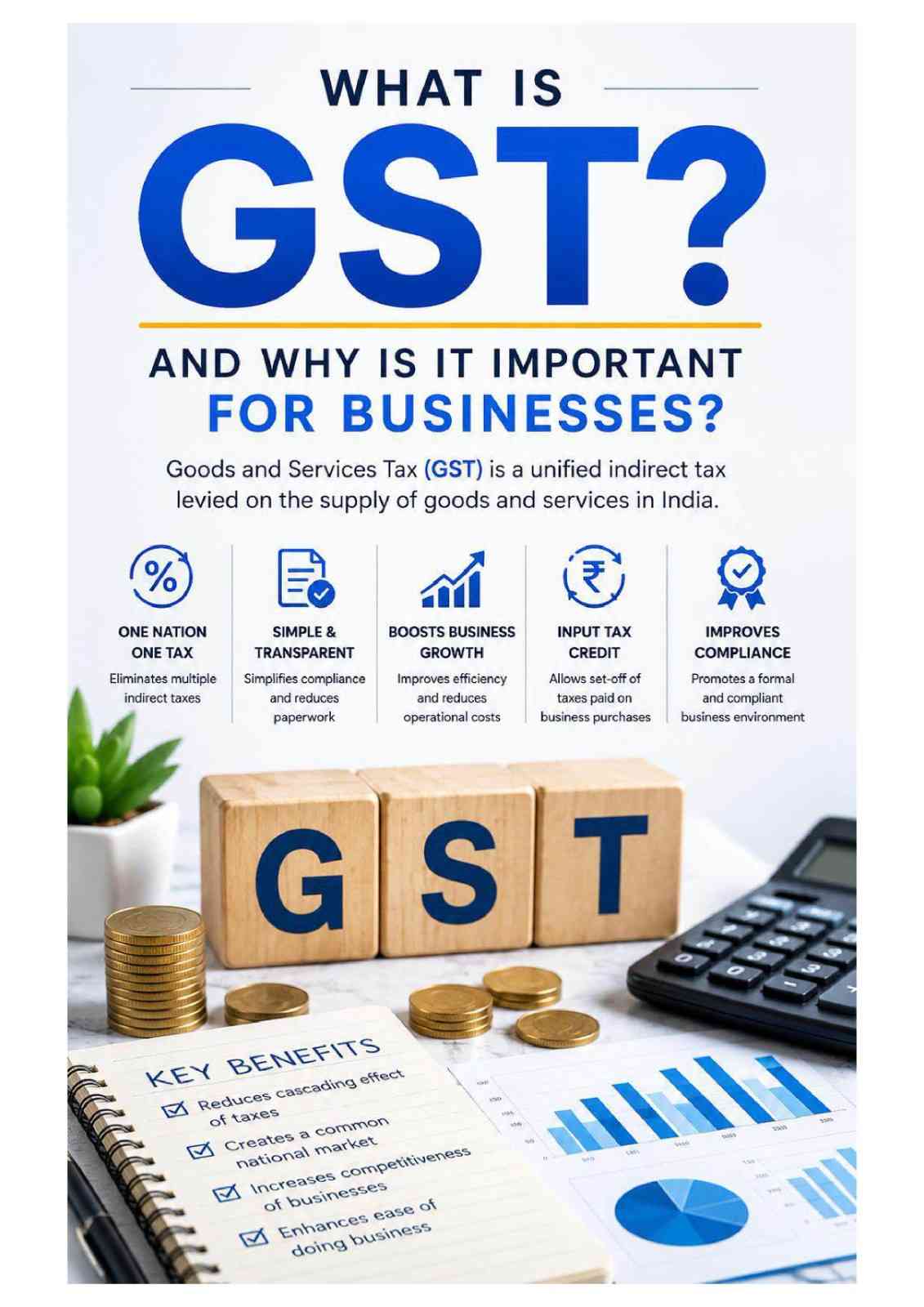
GST can be considered a breakthrough in the sphere of business taxation. It is a comprehensive taxation regime that combines several indirect taxes into one. If you have ever questioned what GST is and what significance it holds in business dealings, then this article provides the answers to all your questions by explaining the importance of GST.
Understanding the Basics of GST
.The GST means the Goods and Services Tax, which is a tax that is imposed based on consumption. It is imposed on goods and services supplied by the manufacturer all the way up to the consumer. In this case, the tax gets collected at each stage but there are tax set-offs from prior stages.
Key Features of GST
- Comprehensive Tax Structure: GST amalgamates various indirect taxes such as VAT, service tax, and excise duty into a single unified tax system.
- Destination-Based Taxation Model: GST is levied at the point of consumption, not at the point of origin, which affords a more equitable distribution of tax revenue.
- Elimination of Cascading Taxes: By allowing tax credits across the supply chain, GST eliminates the cascading effect of taxes.
- Dual Tax System: GST is divided into Central GST (CGST) and State GST (SGST) to cover the federal structure of governance.
Why GST is Important for Businesses?
Deciphering why GST is important for businesses unfolds the myriad advantages it offers. Implementing GST has been a game-changer for businesses in several pivotal ways:
Simplification and Transparency
GST has simplified the tax structure by consolidating multiple taxes into one. This enhances clarity and transparency, making it easier for businesses to comply with tax laws. The elimination of various forms and returns associated with previous tax systems reduces paperwork and administrative burdens.
Boost to Economic Growth
With the introduction of GST, businesses benefit from the seamless movement of goods across states with minimal documentation. The ease of doing business improves overall economic growth and reduces costs, indirectly benefiting the consumer through more competitive pricing.
SME Growth and Expansion
Earlier, businesses with turnovers below a certain threshold were exempt from various taxes, which deterred them from expanding. GST ensures these businesses remain within the tax net, encouraging growth and expansion.
Enhancing Business Efficiency
- Input Tax Credit (ITC): The availability of an input tax credit across the supply chain enhances cash flows and reduces the overall burden of taxes.
- Uniformity Across States: GST negates the multitude of tax rates and laws across different states, promoting a unified market approach.
- Reduced Transaction Costs: Simplified tax processes lead to reduced transaction costs in terms of time, effort, and money spent on tax compliance.
Challenges Faced by Businesses Under GST
Despite its advantages, the implementation of GST isn't devoid of challenges.
Compliance Burden
Adoption of GST means getting used to some new compliance issues, which can pose difficulties for the business. Filing of returns, documentation, and other IT issues require time and efforts.
Technology Dependence
The GST regime heavily depends upon technology for filing returns and record keeping. The companies will be required to make sure that they have a strong information technology system, which requires investments.
Recent Developments in GST
Further steps towards improvement in GST policy show its dynamic nature as it tries to tackle the worries of businesses while adding to the advantages of the unified tax system. Some major steps taken include:
- Increased Threshold Limits: Raising the threshold limits for GST registration has been a significant step toward enabling smaller businesses to breathe easier under GST norms.
- Introduction of E-Invoicing: To enhance transparency and mitigate tax evasion, e-invoicing has been introduced as a step towards digitization.
- Simplification of Return Filing: Continuous efforts towards easing the return filing process aim to simplify compliance further for businesses.
Conclusion
When one gets to know about GST and its relevance to business, it will become evident that GST is not merely a tax reform. It stands for a revolution where everything is becoming clearer, simpler, and more unified. Even though there are some problems, their advantages make up for them. Thus, it is obvious that GST plays an important part in developing modern economic systems of any country. To be able to use all the advantages of GST, businesses should follow the new developments and changes introduced through the reforms.
As more is understood about GST in terms of both economic principles and policy matters, those organizations able to capitalize on the benefits of GST will be better placed to succeed.