




HARI KRISHNAN S
Senior Developer
Updated on
20-05-2026
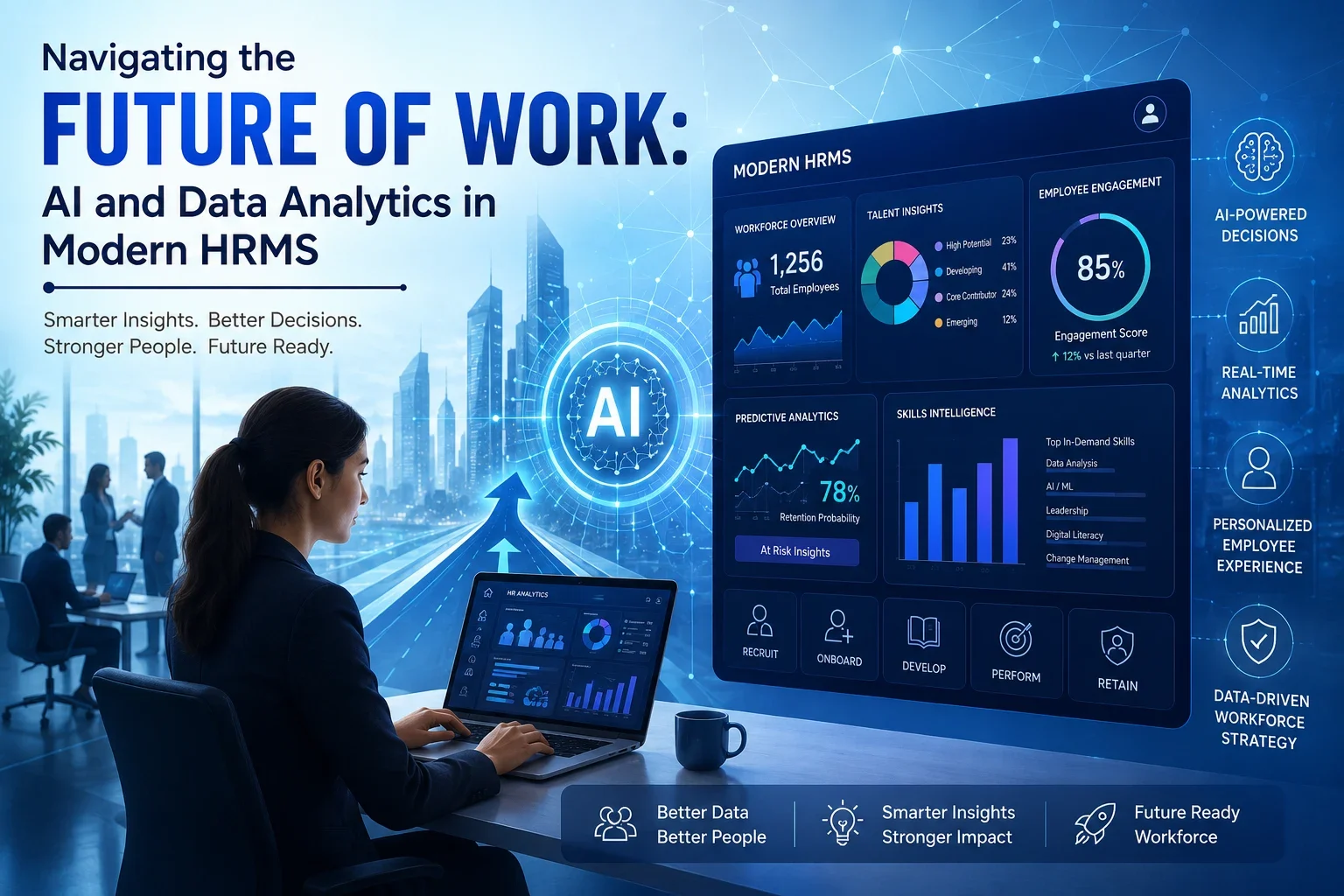
Navigating the Future of Work: AI and Data Analytics in Modern HRMS
In today's rapidly evolving business landscape, the integration of AI and data analytics into modern Human Resource Management Systems (HRMS) is not just a trend but an essential strategic move. As companies strive for greater efficiency and overall employee satisfaction, these advanced technologies are reshaping how HR departments operate, leading to substantial transformations in managing the workforce.
The Evolving Role of HRMS in the Digital Age
HRMS has continually adapted to embrace new technologies that streamline processes and enhance productivity. Traditionally, HR departments were burdened with paperwork and repetitive tasks. Today, modern HRMS leverages technological advancements to revolutionize these systems.
- Automating repetitive tasks, freeing up valuable HR time for strategic planning.
- Enhancing decision-making processes through robust data analysis and insights.
- Improving employee experiences with AI-driven personalized interactions.
The Power of AI in Modern HRMS
Artificial Intelligence, or AI, brings transformative capabilities to HRMS, radically changing how HR tasks are performed:
- Streamlined Recruitment Processes: AI-driven tools can sift through thousands of resumes in minutes, identifying the best-fit candidates based on predefined criteria.
- Meaningful Employee Engagement: Chatbots powered by AI can provide instant responses to employee queries, ensuring smooth communication and engagement.
- Predictive Analytics for Workforce Planning: By analyzing historical data, AI can forecast staffing needs, helping HR professionals plan efficiently.
- Enhanced Learning & Development Programs: AI tailors training sessions according to individual learning preferences and gaps, ensuring more effective upskilling.
Harnessing Data Analytics for Informed HR Decisions
Data analytics offers immense potential to uncover hidden trends and patterns within HR metrics. By leveraging analytics, HR departments can:
- Optimize Talent Management: Identifying high-performing employees and understanding factors leading to employee turnover.
- Improve Diversity and Inclusion: Analyzing diversity ratios can highlight areas needing improvement and guide initiatives promoting inclusivity.
- Refine Performance Metrics: By evaluating performance data, companies can better align goals with actual employee output.
Data-driven HR practices enable targeted strategies that enhance overall organizational efficacy while maintaining a satisfied workforce.
Challenges and Considerations in AI and Data Analytics Integration
While the integration of AI and data analytics in HRMS is promising, it also comes with challenges that organizations must navigate carefully:
- Privacy Concerns: Handling sensitive employee data demands stringent data protection protocols to prevent breaches.
- Bias in AI Algorithms: AI systems are only as unbiased as the data they train on. Companies must ensure that AI solutions do not perpetuate existing biases.
- Change Management: Shifting to an AI-integrated HRMS requires effective change management strategies to ensure employee buy-in and successful implementation.
Addressing these challenges is critical to maximizing the benefits and minimizing the risks associated with AI and data analytics in HRMS.
The Future Outlook for HRMS and AI-Driven Analytics
The future of HRMS is undeniably linked with AI and data analytics. As organizations increasingly prioritize agility and digital transformation:
- Remote Work: AI-driven platforms can effectively manage remote teams, ensuring productivity and engagement no matter the location.
- Continuous Innovation: As AI technology evolves, HRMS platforms will continuously expand their capabilities, offering new solutions to emerging workforce needs.
- Holistic Human Resource Strategies: Combining AI insights with human intuition can lead to more comprehensive HR strategies that are both efficient and empathetic.
Continuous advancements in AI and analytics will further enhance HRMS, making them even more indispensable to modern workplaces.
Conclusion
AI and data analytics are driving significant shifts in the realm of HRMS and the broader scope of work environments. They offer opportunities for enhanced efficiency, better decision-making, and the ability to navigate the complexities of a modern workforce efficiently. While there are challenges to address, the benefits of integrating these technologies far outweigh the hurdles, promising a dynamic shift towards more intelligent and responsive HR practices.
To remain competitive, organizations must embrace these technologies, fostering a culture of continuous learning and adaptability, ultimately ensuring a workforce that's not only ready for the future but also actively shaping it.