




SWATHI S
Updated on
01-04-2026
Expense Tracking for Daily Expenses
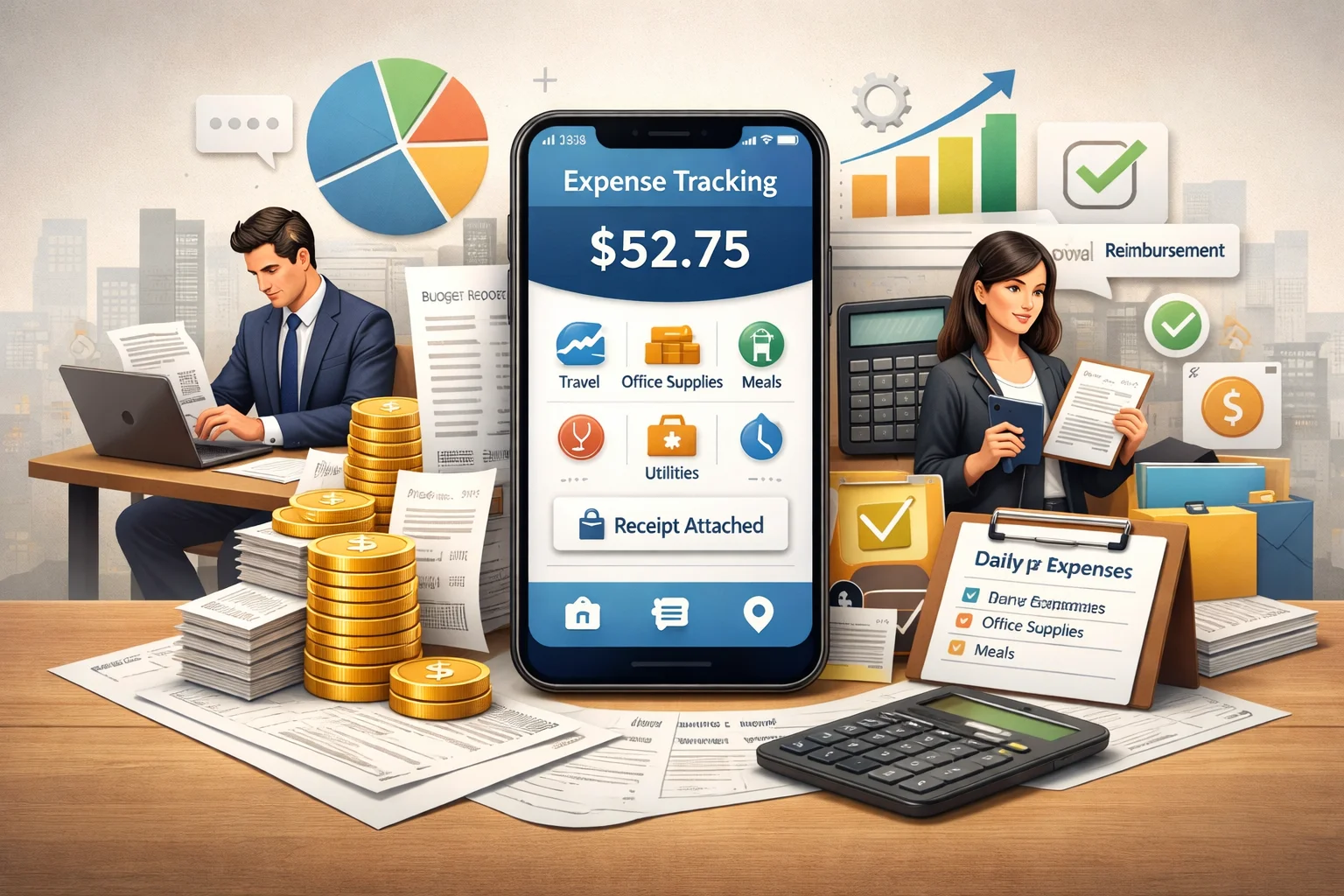
Expense Tracking for Daily Expenses entails meticulously managing business-related expenditures. Essential for maintaining budget accuracy and organizational efficiency, it encompasses daily transactions such as office supplies or transport costs, as well as employee reimbursements. A lack of thorough expense tracking can throw a wrench in any business's budget management and financial planning processes.
Expense tracking software serves as a buttress for businesses by providing tools to record and categorize expenditures. Through this software, businesses gain insights into their spending patterns, maintaining control over their financial outlays and effectively curbing unnecessary expenditures.
Why Daily Expense Tracking Matters
Though often overlooked, daily expenses can cumulatively become significant over time. Businesses that neglecting diligent tracking stand to encounter several issues, such as:
- Inaccurate financial records
- Difficulty in identifying spending patterns
- Budget overruns
- Delayed reimbursements
- Errors in accounting reports
By keeping a daily ledger of expenses, businesses secure reliable financial records, enabling informed decision-making and optimal financial management.
Recording Expenses in Real Time
One distinguishing feature of expense tracking software is real-time recording, allowing for instantaneous data entries. Employees and finance teams can maintain up-to-date records by logging expenses immediately, rather than batching them at month’s end. This process curtails risks like lost receipts and enables seamless expense monitoring. Systems also allow attachment of invoices or receipts to expense entries, ensuring comprehensive documentation.
Categorizing Daily Expenses
The importance of effective expense categorization cannot be overstated. Businesses typically group expenses into categories such as:
- Office supplies
- Travel and transportation
- Utilities
- Marketing expenses
- Employee reimbursements
- Maintenance and operational costs
Through systematic categorization, finance teams can easily track spending and identify potential areas for cost reductions.
Monitoring Employee Expenses
Employees often incur expenses for work-related activities, including client meals, supplies, or travel. Meticulous tracking ensures fair reimbursement processes and enables organizations to maintain a clean, comprehensive budget.
Expense tracking systems facilitate the employee expense entry process, allowing them to submit costs and receipts for managerial approval. Managers are then able to review and swiftly approve expenses, streamlining the reimbursement process for transparency and efficiency.
Improving Financial Visibility
Accurate expense tracking provides businesses with comprehensive insight into their financial performance. Stakeholders can monitor expenditure by department and align spending habits with pre-set budgets. This transparency allows businesses to manage costs prudently, recognize spending patterns, and make financially sound decisions. With organized, easily accessible expense data, quick adaptation to any financial situation becomes a reality.
Automation in Expense Tracking
Modern expense tracking software streamlines numerous processes, automating tasks such as:
- Automatic expense categorization
- Receipt scanning and storage
- Policy compliance checks
- Approval workflows
- Integration with accounting systems
Automation reduces dependence on manual data entry, minimizing human error and saving time for finance teams.
Benefits of Digital Expense Tracking
Implementing a digital expense tracking system surpasses manual methods, like spreadsheets or paper-based record-keeping in numerous ways:
- More efficient expense recording
- Reduced duplicate entries
- Enhanced data organization
- Simplified auditing
- Improved compliance with company policies
As businesses expand, digital systems become indispensable for managing substantial volumes of expense data.
Expense Tracking with Ledgers
An expense management platform such as Ledgers provides businesses with an efficient way to monitor daily expenses. By centralizing expense data, automating workflows, and delivering timely financial insights, businesses can maintain robust control over spending.
Expense tracking systems streamline financial processes, improving transparency, and ensuring complete, accurate recording of every business expense. Ultimately, such systems enable informed decision-making and solid financial management to keep businesses thriving.
To conclude, meticulous expense tracking for daily business needs is critical for financial health. It allows businesses to see precisely where their money goes, fostering smarter, data-driven spending habits and ensuring longevity in the competitive business landscape.