
SWATHI S
Updated on 30-07-2026
When organizations grow and develop, they become more complex, making the management of overall expenses more challenging. To enable their growth, organizations need to have a deeper knowledge about how budget allocations are spent among departments. Tracking expenses on a departmental basis enables more structured supervision of expenditures and provides an increased level of financial control and accountability on a departmental basis.
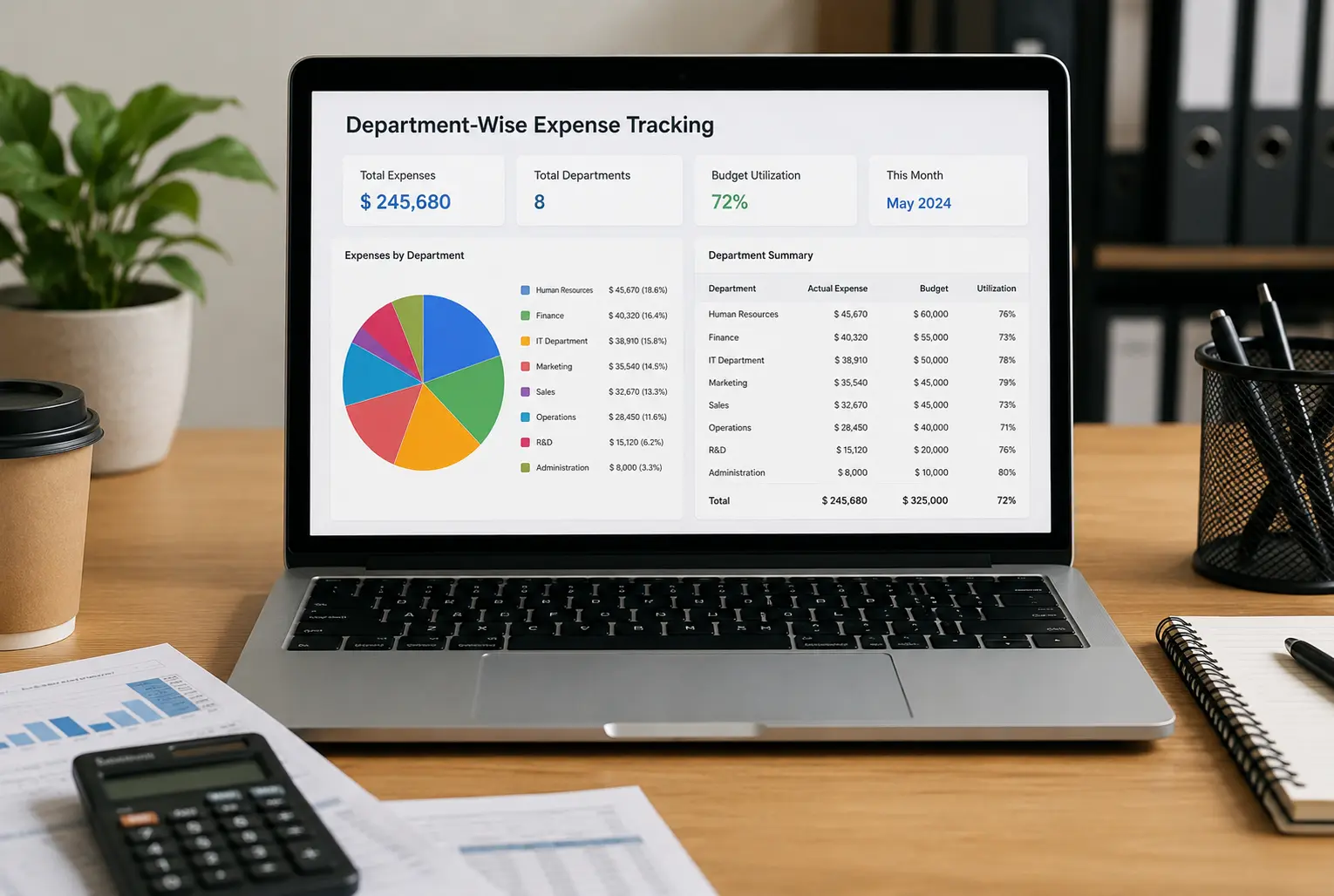
Tracking department-wise expenses involves aggregating and tracking an expense by department. Examples of department-wise expenses would be expected expenditures incurred by the marketing department, the operations department, the finance department, and the human resources department (HR). It is the process of allocating an expense to departments, which helps facilitate cash flows and provides departments with department-wise visibility of their expenditures for both accountability and monitoring.
Using department-wise expenses, an organization can ascertain how and where it is spending money and the efficiency with which it is using its required resources. This enables decision-makers to identify if a particular department is overspending or under-budgeting and ultimately make decisions to remediate the situation. This information is essential for improving efficiency and optimizing the allocation of financial resources.
Many organizations face difficulties in tracking expenses across departments because the organization uses decentralized systems to track expenditures and rely on the manual entry of expense transactions. Additionally, different departments may record an expense differently, which complicates the aggregation of departmental expenses and limits the development of comprehensive financial reports. Ultimately, a lack of consistency among all departments will result in decreased accountability for departmental expenses, confusion regarding the organization's overall financial performance, and the inability to identify and realize potential cost-savings opportunities.
Companies that track budgets and expenses by department can implement better controls because they have a clearer understanding of their specific departments’ financial situations. In addition to enhancing the accountability of each department for its expenses, it also increases the transparency of expenses to management by allowing for easily reviewing and comparing expense patterns across departments. In time, this will lead to more accurate financial planning and improved operational performance.
Sophisticated expense management systems like Ledgers provide an easy way to do department-wise expense tracking by allowing you to centralize all expense data and automatically categorize those expenses. Businesses can access all of the expense data from each department quickly and without the need for manual effort via real-time dashboards and detailed reports. This gives businesses the ability to track department expenses without impacting accuracy or consistency in their financial records and saves them time while allowing them to have the most accurate and complete information available.
By providing insight into the financial performance at a granular level of detail, department-wise expense tracking assists businesses in making better decisions about how to allocate financial resources. For example, managers can use department-wise expense tracking data to identify spending trends, evaluate the efficiency of departments, and make informed decisions to optimize their budgeted expenses. This enables businesses to remain flexible and responsive to their changing financial needs.
Department-wise expense tracking is an essential practice for businesses aiming to improve financial control and accountability. By gaining detailed insights into how each department spends its budget, organizations can optimize resources, reduce unnecessary costs, and enhance overall efficiency. With the support of platforms like Ledgers, businesses can implement this approach effectively and achieve stronger financial management.
Implementing department-wise expense tracking can seem like a monumental task, but the benefits undoubtedly outweigh the effort. It not only provides a clear view of where your money is going but also helps in strategizing for more efficient use of resources and effective budget allocation. When combined with technology, it transforms the way businesses handle their financial insights and prepares them to tackle future challenges with data-backed confidence.
