
SWATHI S
Updated on 30-07-2026
Expense management includes more than just tracking your expenses as to how much you spend; it is also about ensuring that your company does a proper job of reviewing and approving each expense before being paid or recorded on your company's financial records. Manual approval processes can be time consuming, inconsistent and subject to errors as a business grows. In order to increase efficiency of the expense approval process, it is important for a company to streamline the expenses that they approve through an optimized approval workflow; this ultimately improves accountability and allows for greater management and financial control of your company's finances.
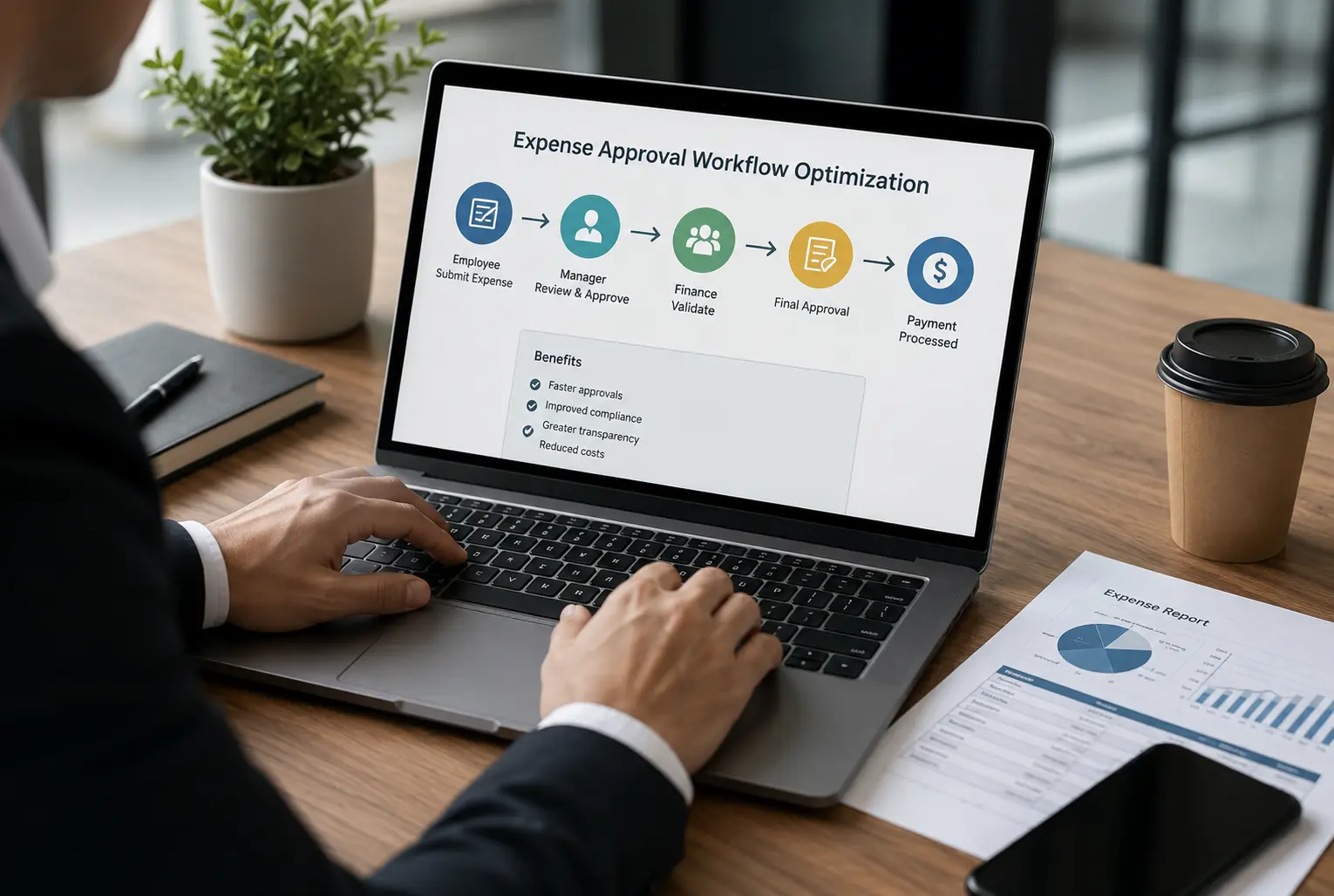
An expense approval workflow is a defined process by which an expense is approved or denied by an authorized individual prior to being processed as a valid expense on your company's books. The number of approvals that an expense will require will vary based on the type of expense and the dollar amount of the expense being processed; however, a defined workflow will ensure all expenses comply with the policies and budgetary authority of the company.
Many companies continue to use manual expense approval processes; email approval is subject to delays and missed approvals; and an email does not provide a complete, accurate and timely record of history of approval. As a result, in a manual approval process; it is difficult to track expense approvals; the potential for unauthorized or duplicate expenses being approved is greater as the volume of expenses being processed increase; therefore, inefficiencies in expense approvals have a significant impact on a company's overall financial operations.
An optimized approval workflow eliminates bottlenecks and/or delays within the approval process; thus, providing a clear and efficient hierarchy of approvals for processing expenses. Optimizing the expense approval process not only saves time, but also increases your company's control over their expenses by instituting the proper level of controls over each stage of the approval process.
An efficient approval workflow improves speed and transparency in expense management:
Automation plays a key role in optimizing expense approval workflows. Modern solutions like Ledgers allow businesses to:
A streamlined approval process improves overall business efficiency by reducing administrative workload and accelerating decision-making. Finance teams can focus more on analysis and planning rather than handling routine approvals. This contributes to faster operations and better financial control.
Optimizing the expense approval workflow is essential for businesses aiming to improve efficiency and maintain strong financial governance. By adopting structured processes and leveraging technology, organizations can ensure that expenses are approved quickly, accurately, and in line with policies. Platforms like Ledgers support this transformation by simplifying workflows and enhancing transparency, helping businesses achieve more effective expense management.
