




Jyothishwar M
Updated on
17-04-2026
HRMS Is Essential for Business Success
As businesses are stepping into the year 2026, the way businesses are managing their workforce is changing rapidly. As the hybrid workplace is rising, the need to comply with the regulations is rising, as well as the need to access the data in real-time. Therefore, the traditional method of managing the workforce cannot be considered effective. Ledgers HRMS is one such system that can help businesses cope with the changing dynamics of the workplace by providing automation and smart workforce management tools..
Understanding HRMS
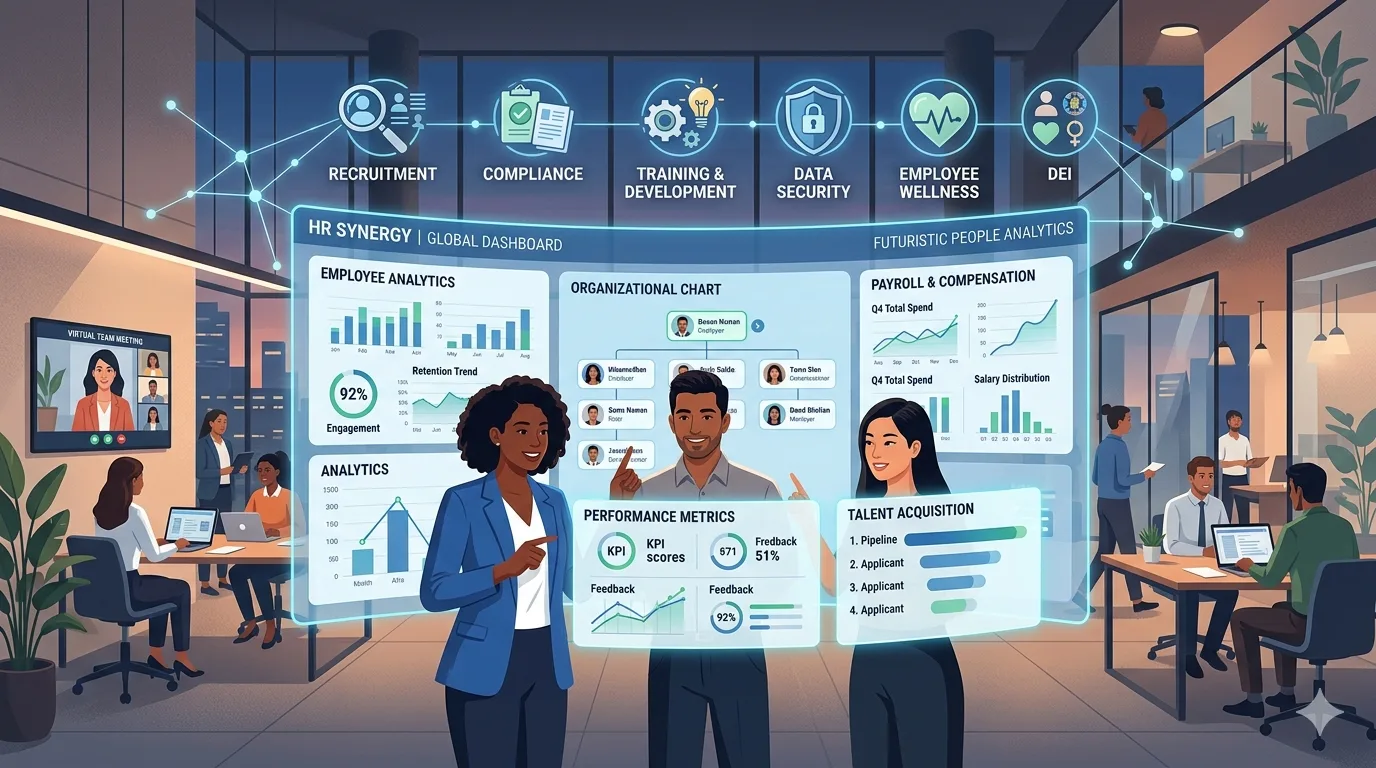
The Human Resource Management System integrates multiple HR functions onto one platform, facilitating smoother and more efficient processes. These systems typically include:
- Recruiting and onboarding tools
- Employee data management
- Payroll and benefits administration
- Performance tracking
- Training and development modules
- Compliance management
By unifying these diverse aspects, HRMS provides a comprehensive approach to managing a company’s most valuable asset—its people.
Why HRMS Is Essential for Business
The significance of HRMS in any business cannot be overstated. Here’s why implementing HRMS is a game-changer:
1. Streamlined HR Processes
HRMS automates numerous traditional HR processes, reducing paperwork and administrative tasks. This automation allows HR staff to focus on more strategic activities that improve employee satisfaction and productivity.
2. Enhanced Data Management and Security
Effective HR management hinges on accurate data. HRMS ensures consistency and reliability in handling employee data. With advanced security features, it protects sensitive information from unauthorized access and breaches.
3. Improved Compliance and Risk Management
Keeping up with labor laws and regulations is daunting. HRMS automatically updates legal requirements and facilitates compliance, minimizing legal risks and helping businesses avoid costly penalties.
4. Elevated Employee Experience
By providing employees with tools for self-service (access to payslips, benefits, etc.), HRMS enhances the employee experience. When staff can manage their information independently, job satisfaction increases, contributing to higher retention rates.
5. Enhanced Recruitment and Talent Retention
HRMS helps identify the best talent through efficient recruitment tools and tracks performance to ensure employees are in roles that match their skills. This system is vital for maintaining a competitive edge by retaining top talent.
6. Data-Driven Decision Making
HRMS provides valuable insights through analytics, facilitating informed decision-making. Businesses can harness data to identify trends, forecast workforce needs, and align HR strategies with organizational goals.
Implementing HRMS: Best Practices
Successfully deploying an HRMS requires careful planning and execution. Here are the best practices to ensure a smooth transition:
1. Set Clear Objectives
Define what you aim to achieve with HRMS. Clear objectives guide the deployment process and help measure success.
2. Involve Key Stakeholders
Engage HR staff, management, and IT departments. Their input can address concerns, ensuring the system meets cross-departmental needs.
3. Choose the Right Vendor
Select a vendor offering comprehensive support during and after implementation. Evaluate their expertise, user-friendliness of their system, and scalability to meet future needs.
4. Plan a Comprehensive Training Program
Equip employees with necessary skills to utilize HRMS efficiently. Training should be ongoing to fully capitalize on system functionalities.
Future Trends in HRMS
In 2026, companies are embracing remote and hybrid work environments. Managing employees across different locations requires a system that provides real-time access and flexibility. Ledgers HRMS supports this shift by enabling web-based and mobile access, allowing employees and HR teams to stay connected from anywhere.
This flexibility ensures that businesses can maintain productivity without being restricted by physical office boundaries.
Conclusion
In conclusion, HRMS is an indispensable resource for businesses aiming to streamline their HR functions, enhance employee experiences, and foster flexibility amidst digital transformation. As organizations continue to lean into data-driven strategies and tech-enabled solutions, adopting an HRMS is no longer optional but essential for continued success and growth in the competitive business landscape. By implementing HRMS, companies position themselves at the forefront of innovation, ensuring they not only survive but thrive in the modern business world.
Stay ahead of the competition by understanding and prioritizing efficient human resource management. It’s a strategic decision that could transform your business trajectory.