
PREMNATH P
Updated on 30-07-2026
Digital transformation has led to more effective ways of tracking and reporting employee attendance. Attendance systems use innovative technology to improve efficiency, minimize administrative errors and maximize employee productivity. The following article will provide a better understanding of what smart attendance systems offer, their functionality, efficiency, and usage in various industries.
Smart attendance systems automate the tracking of employee attendance using technology, rather than relying on punch cards or signing in and out manually. Smart attendance systems are much more accurate, reliable, and better able to assist employers with their attendance issues.
Here is an overview of how smart attendance systems work:
Smart attendance is a sophisticated method of tracking attendance that utilizes unique characteristics from individuals to determine and verify whether they attended work.
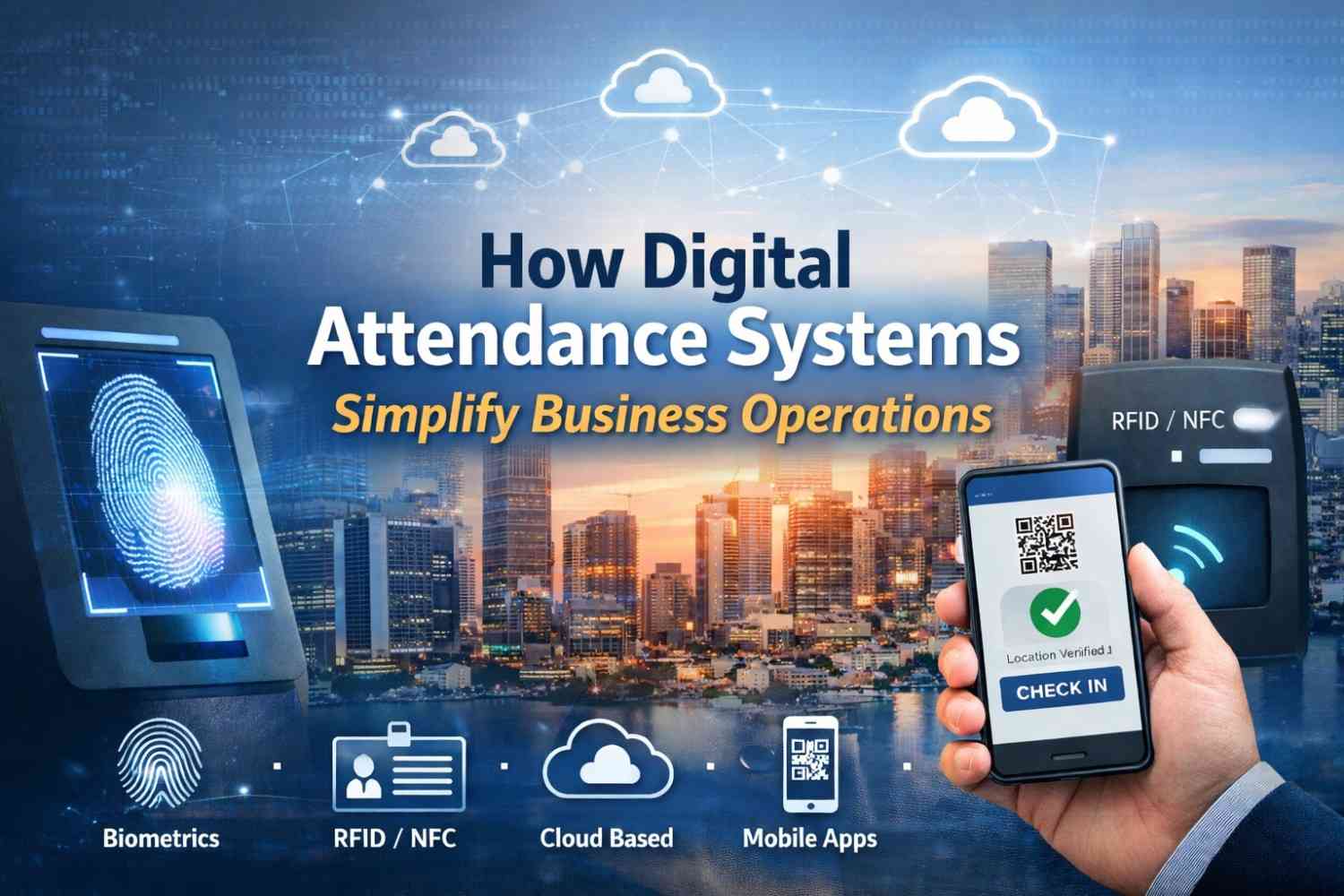
Biometric systems are one of the most popular approaches to smart attendance and use physical characteristics such as fingerprints, facial features and iris patterns to identify a person. Biometric systems utilize sensors to record a data point of each person's unique characteristic, then convert that data point into an algorithm and store it in a secure database for future retrieval.
RFID and NFC cards are also a type of smart attendance system. Employees are given RFID or NFC cards embedded with microchips that interact with RFID or NFC sensors when employees enter or exit a facility, allowing for automatic attendance record keeping. This contactless method of tracking attendance streamlines the tracking process and minimizes errors.
Smart attendance applications that provide a flexible attendance recording method include mobile apps. Employees use mobile apps to check in or out of the company with tools such as geofencing, which validates their presence at a certain location, or by scanning a QR code at the point of entry. These applications also provide alerts for tardiness and absence, and promote employee accountability.
Smart attendance systems have different effectiveness levels based on how they are used. This is when these systems work best:
For larger businesses, keeping track of when their large number of employees are at work can be cumbersome. Smart attendance systems provide the automation to allow for easier record keeping and more accurate data collection resulting in smoother HR processes.
With an increase in remote working options, traditional methods for recording employee attendance do not work. Mobile smart attendance systems provide a simple way to track remote workers or field staff by providing an effective means of recording productivity without limitations of time and distance.
Many industries such as finance, health care, and government have high security needs and strict access restrictions. Biometric attendance systems enhance the security of these types of models, making it more difficult for people to gain unauthorized access to sensitive data.
The developments in smart attendance systems continue to move rapidly due to the underlying technology. Here are some breakthroughs being made:
The numerous benefits associated with smart attendance systems are leading to a dramatic increase in their adoption by organizations across the globe.
Smart attendance have the potential to be an asset to businesses looking for best practices in maximizing productivity and efficiently managing their workforces. Businesses can take advantage of all the emerging technologies available today to create a wide variety of solutions, including automated employee time reporting, eliminating human error, improving security around sensitive employee information, reducing operational costs, increasing employee morale and trust, improving customer service levels, and ultimately creating a more productive environment for the business and its employees.
Businesses can benefit by implementing a Smart Attendance Solution that will allow them to focus on improving their overall workflow rather than simply tracking attendance. As technology continues to advance, businesses will increasingly adopt Smart Attendance Solutions, and these systems will provide innovative solutions for the management of their workforces.
