




SAI VIGNESH M
Updated on
30-07-2026
Aadhar Sign in Employee Contracts
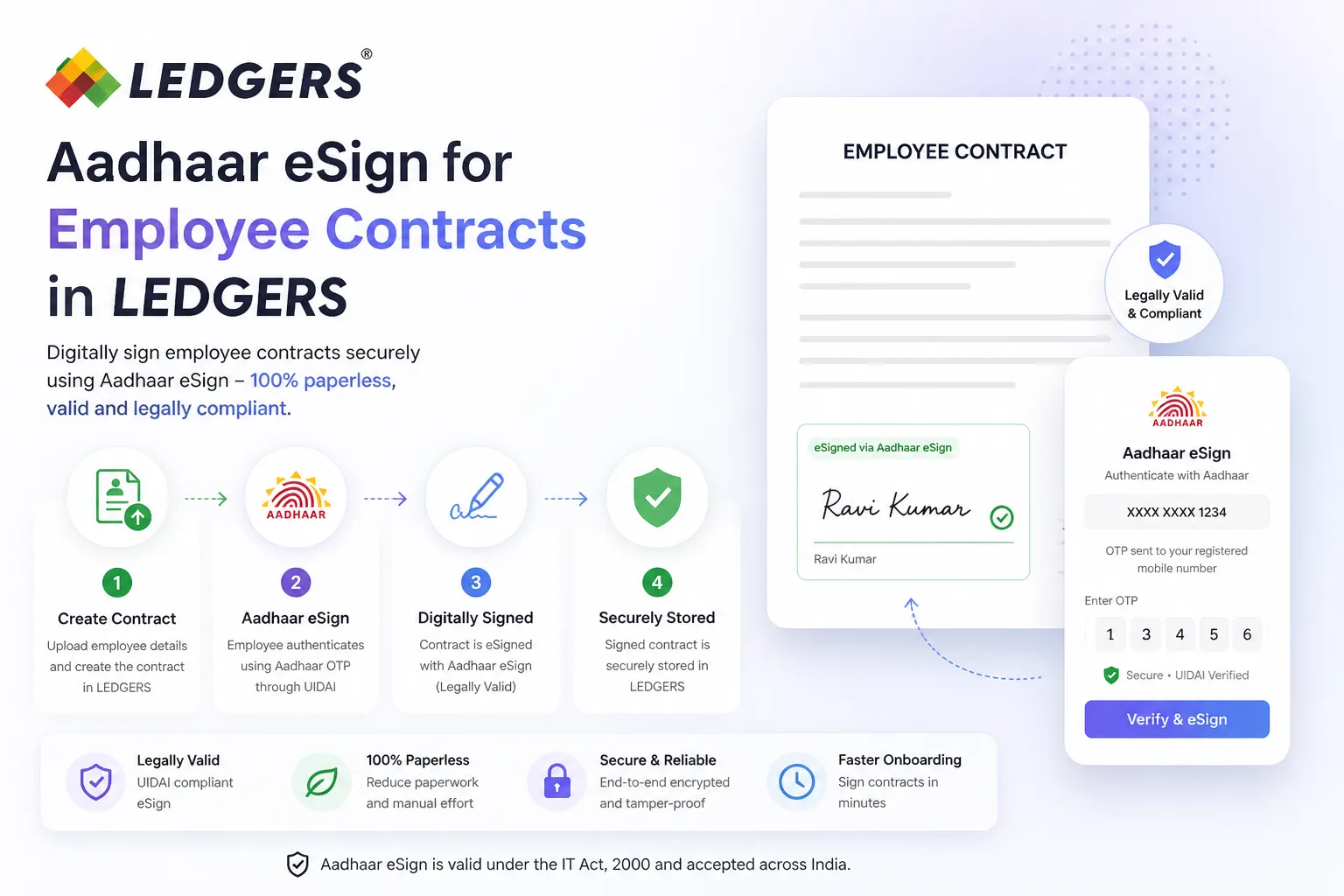
The technological advancements of today have led to a rapid increase in the speed at which businesses authenticate and verify individuals and to ensure the security and efficiency of these processes. The use of the digital Aadhar signature system (part of the larger e-Governance of India) will improve the ease and speed through which organisations can verify an individual's identity and thereby have a larger number of potential employees available to enter into an employment contract or provide other services. The following sections will cover the impact of Aadhar Sign use on contracts, specifically in relation to employee contracts.
What is Aadhar Sign?
Aadhar sign refers to the electronic signature that utilizes data tied to the Aadhar card to provide a secure and legally recognized method of signing documents. It leverages the unique Aadhar number issued by the Unique Identification Authority of India (UIDAI), providing individuals with a robust digital identity. In turn, this enables the facilitation of paperless transactions and document signing, simplifying many bureaucratic processes.
Key Features of Aadhar Sign:
Legally Recognized:Aadhar sign holds the same legal standing as a handwritten signature under the Information Technology Act of 2000. -
Secure and Authenticated:Digital certificate authentication ensures secure interactions, safeguarding against fraud. -
Efficiency:Streamlined processes that minimize paperwork and reduce operational time. -
Accessibility:Available across various platforms and easily integrated into digital workflows.
Impact of Aadhar Sign on Agreements
Simplifying Employee Contracts
Employee contracts form the backbone of any organization's workforce management. Adopting Aadhar sign for these contracts offers several advantages:
Reduced Documentation Workflow: Transformation of cumbersome manual processes into efficient digital pathways, minimizing the risk of lost or misplaced documents.
Enhanced Security: Ensuring that the electronic signing and storage of contracts are safe and tamper-proof through encryption and secure databases.
Quick Turnaround Times: Accelerating the process of onboarding and contract renewals due to instant authentication.
Accessibility and Verification: Employers and employees can quickly access and verify signed contracts from anywhere, fostering transparency and ease of use.
Aadhar sign transforms not just the creation of these contracts but also their execution, storage, and accessibility, thus altering the entire lifecycle of employee agreements.
Implementing Aadhar Sign-in Employee Contracts
For organizations considering the incorporation of the Aadhar sign into their employee contract processes, understanding the implementation mechanics is crucial.
Steps to Integrate Aadhar Sign:
- Procurement of e-Sign Services: Partner with authorized e-Sign service providers to facilitate the Aadhar-based electronic signing process.
- System Integration: Integrate e-Sign capabilities within existing document management systems, ensuring seamless operation and user experience.
- Training and Awareness: Educate HR personnel and employees about the benefits and usage of Aadhar sign in contracts.
- Compliance and Legal Consideration: Ensure that all legal prerequisites concerning the use of digital signatures are met, and compliance is maintained with respective regulations.
- Feedback and Refinement: Seek feedback post-implementation to refine the process continually and address any operational bottlenecks.
Benefits and Challenges
While the benefits of Aadhar sign-in employee contracts are substantial, balancing these with potential challenges is important for successful integration.
Benefits:
- Cost Effectiveness: Reduces the costs associated with paper filings, storage, and administration.
- Environmental Impact: Supports eco-friendly practices by replacing physical paper with digital alternatives.
- Scalability: Easily applicable across large organizations with bulk signing capabilities.
Challenges:
- Infrastructure Requirement: Necessitates digital infrastructure and widespread internet access, which may be a barrier in remote areas.
- Privacy Concerns: Ensuring the confidentiality of personal data linked with Aadhar numbers remains a top priority.
- Regulations and Trust: Building trust among users and consistent regulation adherence can be challenging yet critical.
Conclusion
Aadhar Sign represents a transformational shift with respect to digital contract evolution; an example of such would be Employee Agreements. In addition to facilitating an easier and more secure means of processing employee agreements, Aadhar Sign combines the ability to convert traditional paper processes into modern, digital workflows. It stands to reason that as more businesses adopt this technology, it will evolve and help organizations further refine their current challenges when implementing Aadhar Signature; therefore, be better able to expand their use approximately as well as continue to expand uses. Aadhar Sign has the potential to become a dominant, effective tool for business development and employee management by developing a thoughtful strategy for implementation supported by great attention to compliance and data protection.