




Jyothishwar M
Updated on
30-07-2026
Effective Attendance Tracking for Growing Teams
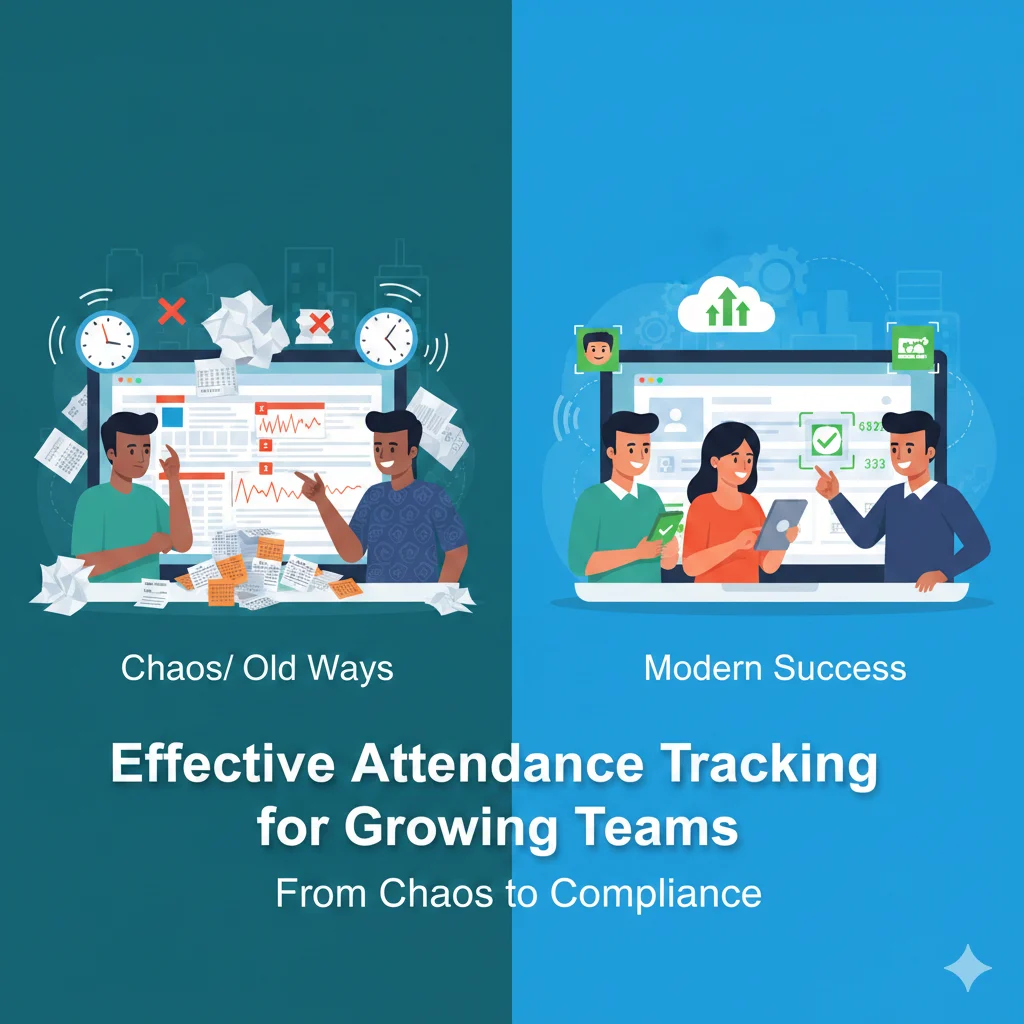
In a fast-paced business world, managing a consistently growing team can pose significant challenges, especially when it comes to attendance tracking. Its crucial for companies to adopt efficient systems that enhance productivity and manage resources wisely. In this article, we explore the fundamentals of attendance tracking for growing teams, offering insights and solutions tailored for modern business needs.
Why Attendance Tracking Matters
- Efficiency: Accurate tracking helps in optimizing workforce use and allocating resources where they're most needed.
- Compliance: It ensures that companies remain compliant with labour laws regarding hours worked and overtime.
- Cost Management: Proper tracking of attendance can help in identifying patterns like absenteeism, aiding cost reduction.
- Moral and Culture: It contributes to a transparent workplace where everyone is held accountable equally.
The attendance data monitoring started with physical registers where supervisors would check on the records at the end of the day and month. It is the basic way to track employee clock-in and out. However, it often results in issues due to human errors, buddy punching, and more.
As businesses grew, Excel-based tracking became common. Staff logged their working hours in spreadsheets, and HR teams used the data for salary processing. It seemed like a structured format for managing records, but manual verification was required. Moreover, HR teams evaluated the attendance data by scrutinising every cell of the spreadsheet, which was a painstaking task, and human error became a regular occurrence.
The Evolution of Biometric Attendance Trackers
To address all these challenges, companies were looking for a feasible solution – biometric attendance. It started with fingerprints, but now facial recognition, retina and many other biometrics are used for attendance tracking. Biometric technologies are now helping attendance records to streamline salary processing and comply with company policies.
In many workplaces, RFID or access card-based systems were also implemented. Employees simply swiped or tapped their ID cards on entry and exit. While this method reduced manual intervention, it still had drawbacks, such as lost or stolen cards.
As cloud computing and the digital transformation began to grow, web-based and mobile attendance systems have become the norm in modern organisations. Employees can log in and out through online portals or mobile apps. These systems are integrated with payroll, leave management, and performance tracking, offering a comprehensive workforce management solution.
Why is an Attendance Tracker Essential for Organisations?
A structured attendance tracking mechanism is way too essential for any organisation that endeavors to manage their teams. A robust attendance tracker helps businesses overcome common challenges associated with managing a remote workforce.
1. No more Time Theft and Buddy Punching
Some systems, for instance, marking attendance in manual registers, may leave room for buddy punching. Anybody will have access to the record, and keeping track of the changes is way too difficult. A digital attendance tracker eliminates these issues by using unique login credentials, biometric authentication, or GPS-based check-ins.
2. Better Productivity and Accountability
highlight that employees are more likely to stay disciplined and focused when they are aware of time tracking. Implementing an attendance tracker ensures that staff work consciously and also helps organisations keep track of the workforce, especially when they are working from home.
3. Data-Driven Insights
Insights are the most valuable form of data as they help organisations better understand their employees. When it comes to time tracking, data like tardiness, early clock-in, , and more are accumulated. High-end software technology and analytics play crucial roles in generating reports.
4. Compliance
Organisations must comply with labour laws regarding working hours and overtime. An attendance tracker offers accurate records, simplifies payroll processing, and reduces compliance risks.
How to Track Remote Workers’ Attendance?
Though there are many ways to track clock-in/out, organisations experience several challenges in implementing streamlined attendance management software across the workforce. Here are some of the best methods businesses can use to monitor their employees effectively:
- 1. Cloud-Based Attendance Tracker
Employees can use cloud-based systems to mark their attendance via a web portal or mobile app. These systems provide real-time tracking, generate automated reports, and integrate with HR and payroll software.
- 2. GPS and Geofencing Technology
Remote or field employees can log in from the correct location with the help of GPS-based tracking. Geofencing technology restricts attendance marking to a predefined area and prevents false check-ins. It helps organisations to stay compliant with remote work policies.
Future-Proof Trends
AI now predicts absences from patterns, while blockchain locks records against tampering. Mobile apps dominate with offline modes and auto-reminders, perfect for India's distributed workforce. Expect deeper ties to HRMS via APIs for devs like you.
Conclusion
As organizations strive to scale, embracing efficient attendance tracking for growing teams becomes non-negotiable. By leveraging technology and adopting best practices, companies can maintain a high level of accuracy and efficiency. Ultimately, this leads to better compliance, increased productivity, and a happier workforce. Implement the outlined strategies today to streamline your attendance tracking process and support your team's growth effectively.