
HARI KRISHNAN S
Updated on 30-07-2026
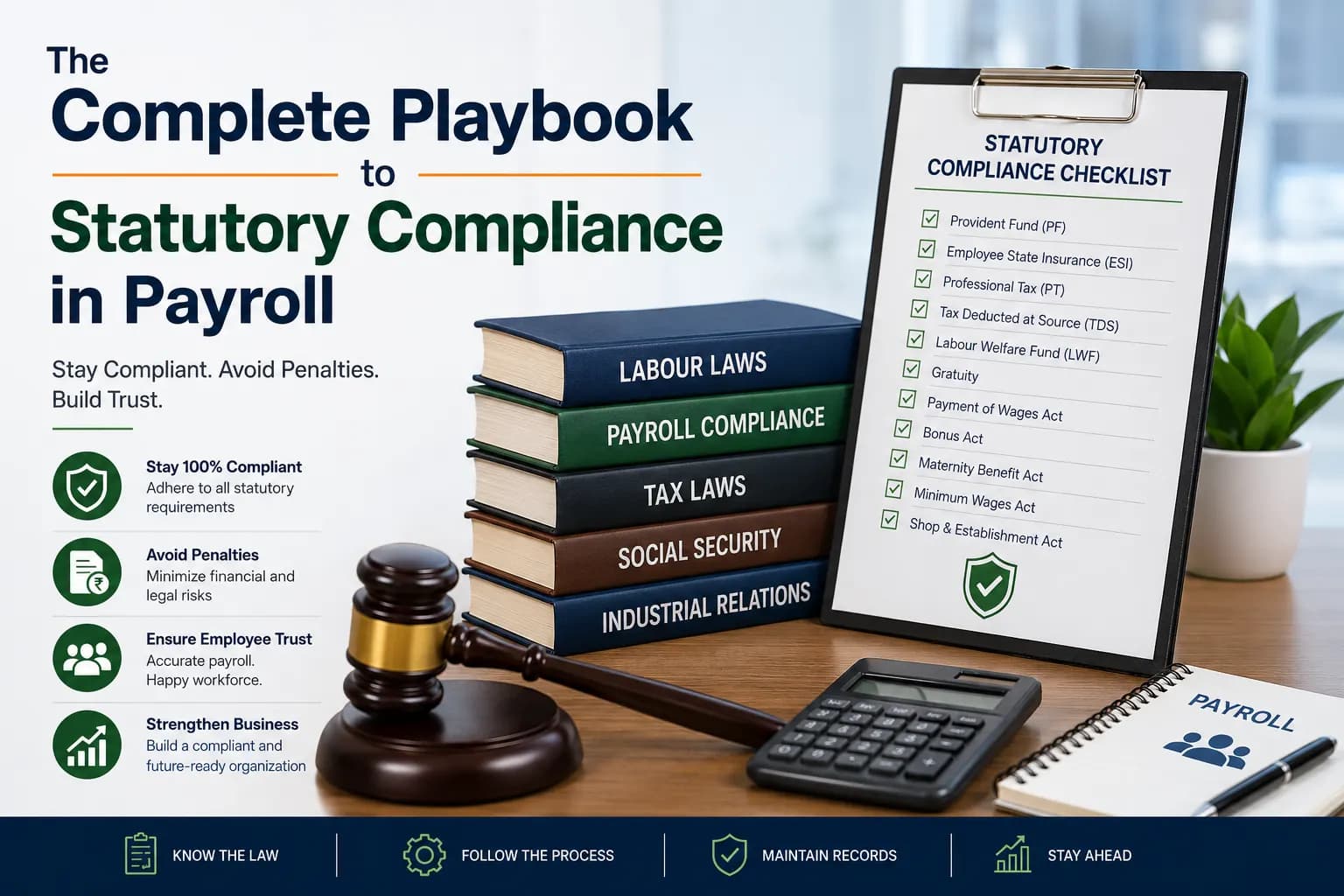
In the ever-evolving landscape of business operations, achieving statutory compliance in payroll is essential to ensure that your organization remains on the right side of the law. The complete playbook to statutory compliance in payroll offers insights, strategies, and actionable steps to fortify your compliance measures, streamline processes, and gain employee trust.
Statutory compliance in payroll refers to the legal framework within which an organization must operate to adhere to the laws and regulations governing employee compensation and labor rights. This includes adhering to laws related to taxes, social security, minimum wages, and other employment benefits.
Ensuring statutory compliance is not just about avoiding fines and legal issues. It brings several benefits to an organization:
For successful compliance with payroll laws, companies should focus on the following key elements:
Accurate payroll calculations are fundamental. Errors in payroll can lead to employee dissatisfaction and issues with labor departments. Incorporate automation via advanced payroll software to ensure accuracy.
Meet all deadlines for filing taxes and depositing payroll obligations. Delays can result in costly penalties.
Stay updated on the latest labor laws and integrate these changes into your payroll processes. Use resources like online compliance tools for clarity.
Ensure accurate management of statutory benefits like PF, ESI, and gratuity. Mismanagement can lead to reduced employee satisfaction and legal challenges.
Adopting best practices in payroll not only ensures compliance but also enhances your organization's efficiency:
Integrating payroll with attendance tracking systems can eliminate errors and save time, enabling seamless data flow and accuracy in compensation.
Ensure that payroll software is regularly updated to accommodate changes in statutory laws. Keeping your systems up to date is crucial in maintaining compliance.
Conduct regular training sessions for HR and payroll staff to ensure they understand and implement the latest compliance-related changes.
Penalties can range from hefty fines to legal actions. Non-compliance negatively impacts organizational reputation.
Review compliance quarterly or whenever there are changes in labor laws to ensure continued adherence.
Utilize advanced payroll and HR management systems for seamless compliance tracking.
Labor laws dictate various payroll aspects including pay frequency, minimum wages, and benefits. Keeping updated with regulatory changes is key.
Yes, outsourcing to specialized firms can ensure accurate compliance management and reduce internal burdens.
Ensuring statutory compliance in payroll is crucial for maintaining legal standing and enhancing operational efficiency. By adhering to best practices, staying informed on legal changes, and utilizing modern technologies, organizations can successfully navigate the complexities of payroll compliance. Embrace these strategies to maximize productivity and employee satisfaction.
