




HARI KRISHNAN S
Updated on
30-07-2026
The Face of the Future: How Facial Recognition Transforms Attendance and Payroll
In today's rapidly evolving technological landscape, the integration of facial recognition technology is reshaping the way businesses manage attendance and payroll systems. As the face of the future, this innovative solution offers enhancements in accuracy and efficiency, radically transforming the human resource (HR) landscape.
The Impact of Facial Recognition on Attendance Systems
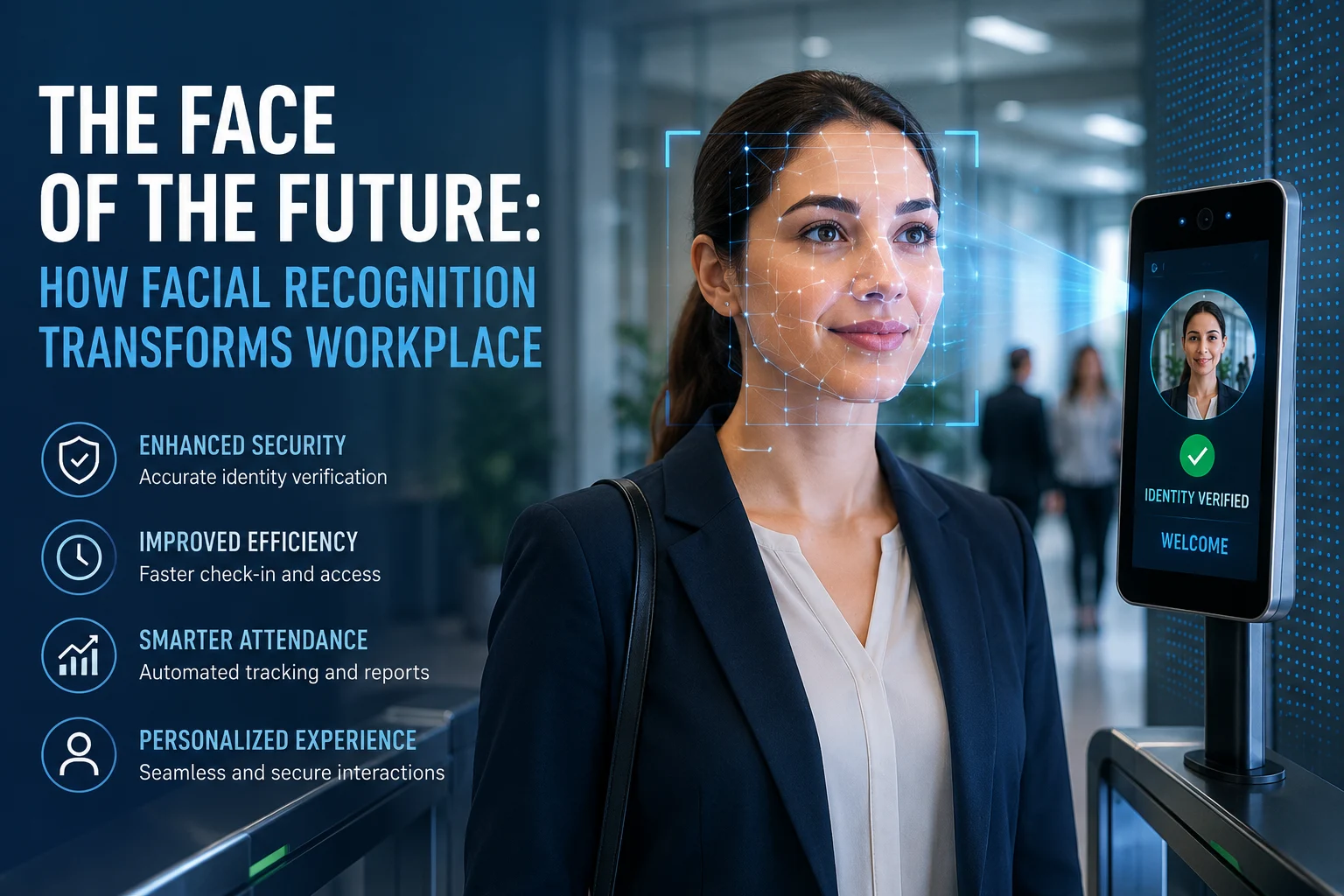
Facial recognition has fundamentally altered attendance tracking practices, offering businesses a touchless and seamless method to manage employee presence. The system uses biometric data, which eliminates the need for manual entry or card punching, thereby reducing errors and freeing up valuable HR time.
By reducing the uncertainty inherent in traditional systems, organizations are experiencing increased employee trust and satisfaction. A facial recognition system ensures that attendance data is captured accurately without opportunities for time theft or buddy punching.
How It Works
Facial recognition technology works by capturing an image of a person's face and transforming it into a unique set of data points, a process known as face mapping. These data points are compared against the stored information in the company's database whenever the employee enters or exits the premises.
- Efficient employee identification through unique facial features.
- Eliminates the need for physical touch, promoting hygiene.
- Instant data processing and recording for quick retrieval.
By adopting these technologies, companies can offer their employees an efficient and timely system, bolstering overall productivity and enhancing the workflow structure.
Transforming Payroll Management
In addition to tracking attendance, facial recognition has significant implications for payroll management. Its integration with payroll systems simplifies payroll calculations by automatically feeding precise data into the system. This integration facilitates timely salary disbursement and avoids discrepancies.
A comprehensive HRMS guide helps organizations select the proper systems that harmonize with their existing processes while incorporating facial recognition technology effectively.
Practical Benefits
This technological innovation provides numerous practical benefits in payroll management, including:
- Reduction in administrative workload and error probability.
- Automated and accurate attendance data collection.
- Integration with existing HR systems for seamless payroll management.
- Increased transparency and trust in financial transactions.
Reasons Why Businesses Should Embrace Facial Recognition
Organizations worldwide are recognizing the benefits of switching to facial recognition systems. By integrating such technology into employee management frameworks, companies can enjoy benefits such as increased efficiency, improved security, and cost savings. Here are some reasons to consider implementing this technology:
- Streamlined operations and enhanced productivity.
- Improved security measures to prevent unauthorized access.
- Reduction in operational costs associated with manual processes.
Moreover, companies that prioritize securing their operational data are exploring touchless tracking systems. These systems offer further assurance of data confidentiality and employee privacy, which is an essential factor in today's data-conscious environment.
Addressing Common Concerns
Despite its advantages, facial recognition raises questions regarding privacy and data security. Companies can mitigate these concerns by adopting transparent data practices and ensuring compliance with legal standards. Additionally, a well-outlined attendance policy helps bridge the gap between technology and employee concerns.
Ensuring Compliance and Security
Companies must adhere to attendance compliance regulations to assure employees and protect against data misuse. Organizations can achieve this by:
- Creating transparent data usage policies.
- Ensuring regular audits to verify data security standards.
- Implementing stringent role-based access controls.
FAQs: Understanding Facial Recognition in Workforce Management
Q1: How does facial recognition improve employee management?
A1: It enhances efficiency by automating attendance and data collection, thereby allowing HR to focus on strategic tasks.
Q2: Is facial recognition secure for managing attendance?
A2: Yes, when implemented with strict security and privacy protocols, it ensures safe and reliable data management.
Q3: What are the costs involved in setting up a facial recognition system?
A3: Initial setup may require investment, but the long-term cost savings and operational efficiency provide excellent ROI.
Q4: Do employees accept facial recognition systems?
A4: Acceptance is growing as more companies adopt transparent policies that address employee privacy concerns.
Q5: Can facial recognition replace all traditional methods?
A5: While highly effective, it's ideal as part of a hybrid system to allow for backup options and real-time data confirmation.
Conclusion: The Future of Facial Recognition in Attendance and Payroll
In summary, facial recognition represents a future-forward solution that enhances both attendance tracking and payroll management systems. By fostering a streamlined and efficient approach, businesses can achieve higher productivity, improved accuracy, and a greater level of trust among employees.
With ongoing advancements in facial recognition technology, it's clear that organizations willing to embrace this change will [a href='https://ledgers.cloud/in/hr-embraces-biometrics']lead the way in modern HR practices, setting new standards for accuracy, security, and operational excellence.