Rise OF Touchless Tracking Face Recognition
HARI KRISHNAN S

HARI KRISHNAN S

Updated on 30-07-2026

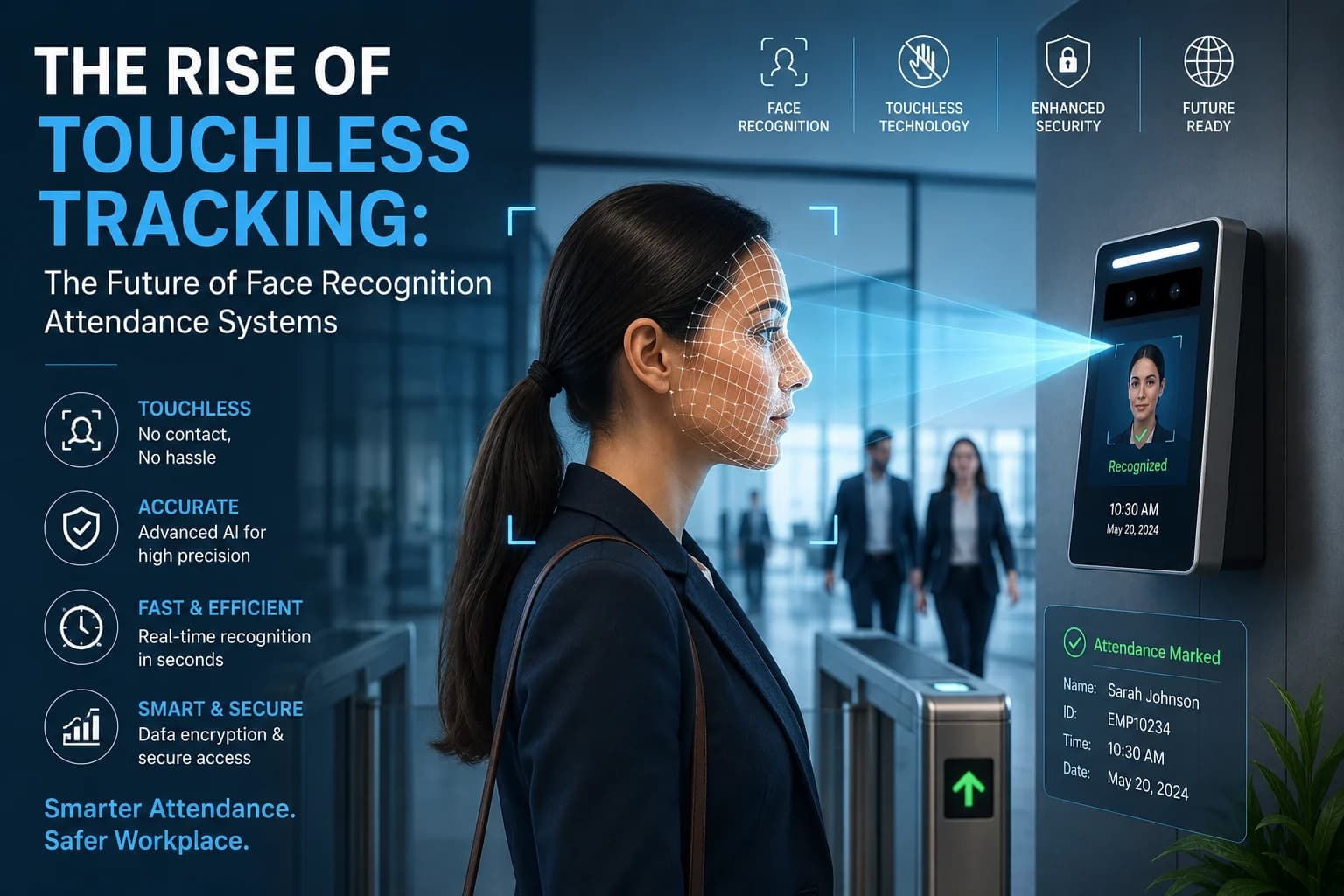
The Rise of Touchless Tracking: The Future of Face Recognition Attendance Systems

In an increasingly digitized world, the demand Too efficient, reliable and practical employee attendance systems has been transferred the focus To touchless tracking, Especially through face recognition. The emergence of touchless tracking It just isn't a technological fad But a significant marker of the future Of workplace management. It dives into the piece the groundbreaking advances of face recognition attendance systems And why have they been redefined? the landscape Of organizational efficiency.

The Emergence of Touchless Face Recognition Technology

I recent years, Contactless technology has gained traction, driven by the need to hygiene and efficiency. Facial recognition appears. A leader in this space Because it offers unparalleled accuracy and convenience. Here's why it stacks up. Worldwide interest:

  • Non-Invasive and Hygienic: Elimination of physical contact, which is pertinent in today's health-conscious society, especially post-pandemic.
  • Speed and Efficiency: Touchless systems can authenticate users in seconds, minimizing queues and improving productivity.
  • Enhanced Security: Reduces the risk of buddy punching and time theft, ensuring data integrity.
  • Real-time Data Capability: Provides instant access to real-time data analytics, helping organizations make informed decisions promptly.

How Touchless Face Recognition Works

The core Of touchless tracking technology I'm lying down its capability To analyze and verify facial features against a Stored database. Here is a simplified flow what kind the system Running:

  1. Image Capture: A camera captures the individual's facial image as they approach the attendance terminal.
  2. Facial Feature Analysis: The system analyzes facial features, measuring distances between key points like the eyes, nose, and mouth.
  3. Data Comparison: The analyzed data is compared with existing records in a secure database to verify identity.
  4. Authentication: Once verified, the information is logged, indicating successful attendance marking.

Advantages Over Traditional Systems

Meets borders, traditional methods Appreciate swiping a card or PIN inputs Being overshadowed by their touchless counterparts to significant reasons:

  • Reduces Human Error: Eliminates manual logging inaccuracies and dependency on physical tokens, such as swipe cards.
  • Fights Fraud: Face recognition prevents impersonation issues prevalent in older systems.
  • Eco-friendly: Reduces the need for paper and plastic badges, supporting sustainable workplace initiatives.

Currently Shaping the Future: Trends and Developments

Several cutting- edge developments Going forward touchless technology forward::

  • AI and Machine Learning Integration: Enhances the accuracy and adaptability of systems in various lighting and environment conditions.
  • Cloud-Based Solutions: More organizations are leveraging cloud solutions for scalability and management ease.
  • Data Security Protocols: Improved encryption techniques are being implemented to ensure user data safety.
  • Customization and Flexibility: Businesses increasingly demand systems that can integrate with existing HR and management software.

Common Implementation Challenges

Despite its many advantages, Adopting facial recognition systems is not without its challenges:

  • Privacy Concerns: There is ongoing debate regarding data storage and user's privacy rights.
  • High Upfront Costs: Initial investment in technology and infrastructure may be significant for smaller businesses.
  • Cultural Acceptance: Variances in cultural perspectives towards surveillance technologies can impede adoption.

Implementing Touchless Tracking: Best Practices

To reduce the maximum benefits Of touchless tracking, Organizations should consider:

  • Educating and Training: Conducting workshops to familiarize employees with new technologies and address concerns.
  • Ensuring Compliance: Aligning the implementation process with regional compliance laws regarding data protection and privacy.
  • Continuous Monitoring: Regular audits and updates to the system to maintain accuracy and security.

The Future of Workplace Efficiency and Security

The future of face recognition attendance systems Promises a seamless blend of technology with everyday work life, To be sure efficiency and security. Seam these systems Becoming more intelligent and versatile, they will undoubtedly participate. A pivotal role In crafts modern workplaces Who are skilled in handling. The dynamism of today's business world. Finally, as companies worldwide Continue the march Towards digitalisation touchless face recognition attendance systems The offer a glimpse Where in the future workplace processes More streamlined, safe and practical. The fast- paced environment. This growth in technology adoption marks the most important. The dawn Of a new era I organizational management.
Related Guides

Nobody really thinks about attendance management until there's a problem. A salary gets miscalculated. Someone from the labour department shows up asking for records. An employee raises a dispute about their timesheet. Then everyone suddenly cares. The truth is, attendance tracking impacts almost everything — payroll accuracy, legal compliance, how operations run, even employee morale. In India, where labour laws change from state to state and more companies are going hybrid, the old ways of doing things just don't work anymore. More Than Just Showing Up Most people think attendance management means checking who showed up and who didn't. It's far more than that. There's recording daily hours, managing different shifts and rotations, tracking leave and public holidays, figuring out overtime and compensatory offs, fixing mistakes when they happen, and making sure all this information feeds correctly into payroll and compliance documents. Organisations that use structured systems for this consistently have fewer payroll mistakes and easier audits compared to those still doing things manually or using five different disconnected tools. Choosing the Right Method for Your Workforce How you record attendance matters. Indian companies today have office workers, factory staff, sales teams on the road, and people working from home — one method doesn't fit everyone. Some use biometric machines with fingerprint or face scanning. Others have RFID cards. Field employees might use mobile apps that verify location. Remote workers log in through web portals. A few small businesses still use paper registers, though that's becoming increasingly risky. Modern platforms like LEDGERS let you use multiple methods together instead of juggling separate systems for different groups. The Parts That Cause the Most Trouble Shift management is genuinely difficult if you run round-the-clock operations. IT firms, factories, hospitals, call centres — they all struggle with this. You have to create shifts, assign them, manage rotations, track night and weekend work, deal with shift swaps, and follow legal requirements about working hours and rest time between shifts. Laws like the Factories Act and state-specific Shops & Establishments Acts set clear limits here. When leave and attendance run on separate systems, mistakes happen constantly. Employees can't figure out their balance. Approvals take forever. Year-end calculations go wrong. Integration fixes this — leave accrues automatically based on attendance, people can see their balance anytime, and approvals flow smoothly. Overtime and Error Handling Overtime costs add up fast if you're not watching. What you need is automatic calculation based on daily or weekly hours, required approvals from managers before overtime counts, correct pay rates as per the law, and tracking of compensatory offs earned. The Code on Wages requires overtime to be paid at double the rate — getting this wrong is both expensive and illegal. Missed punches are normal. Someone forgets to clock out. The machine doesn't read properly. The issue is how you handle fixes. A good process lets employees request corrections, has managers review them, keeps a record of every change, and flags frequent requests. Attendance Records Are Legal Documents In India, attendance records aren't optional paperwork — they're actual legal documents. You must retain them for specific periods, make them available when inspectors ask, enforce working hour limits, and ensure wages tie back to time records. Special rules for women employees must also be followed. Penalties for non-compliance are serious. Software that builds compliance checks into the daily process means you're not constantly worried about meeting requirements before every audit. Technology Helps, But Policies Matter Just as Much Your attendance policy needs to cover working hours and grace time, clocking in and out requirements, types of leave and how to use them, reporting absences, half-day and short leave rules, consequences for rule violations, and expectations for remote or hybrid work. Review it regularly — laws change, work practices evolve. When evaluating software, look at whether it can grow with you across locations, connects with your existing payroll and HR systems, is simple enough for people to actually use, can match your specific policies and shifts, and comes from a company that provides decent support. For most Indian businesses, integration capability and compliance coverage matter far more than premium features. Making Implementation Stick Implementation fails more often because of poor execution than technology problems. What works: get input from everyone affected early on, start with a small pilot, train people properly, explain why the change helps them, run old and new systems together for a while, and keep improving based on feedback. Organisations that follow this approach typically reach full adoption within three months. Rush it and you'll be managing complaints and workarounds far longer. Does It Pay Back? Yes. The benefits are measurable — fewer payroll errors, less admin work for HR, reduced time theft, better compliance, and managers spending less time on attendance issues. For mid-sized companies, the savings typically exceed the system cost within a year, not counting the value of avoiding legal penalties. Final Thoughts Attendance management seems basic but it affects everything. Done right, it improves compliance, payroll accuracy, and employee trust. Done poorly, it creates ongoing friction between HR, managers, and staff. For Indian organisations, moving from manual methods to a proper attendance system changes more than just the process — it changes how reliably employees get paid, how well you comply with the law, and how much time HR spends fixing avoidable problems. Platforms like LEDGERS help make that transition manageable, turning attendance from a constant headache into something that simply works reliably in the background.