
PRIYADHARSHINI B
Updated on 30-07-2026
In the rapidly evolving landscape of business operations, staying compliant with governmental regulations is critical for sustainability and growth. One key area where Indian businesses often face challenges is Tax Deduction at Source, commonly known as TDS. This is where the importance of Automated TDS Compliance & Return Filing Software for Indian Businesses comes into play.
TDS is a means of collecting income tax in India, where a specified amount is deducted when certain payments are made. This procedure helps streamline the tax collection process and minimizes tax evasion.
Compliance with TDS regulations involves several steps, including timely payments, deducting the correct amount, filing returns accurately, and issuing TDS certificates. Meeting these requirements manually can be cumbersome and prone to errors. That's why automating the TDS compliance process is invaluable.
Automated TDS compliance software offers numerous advantages for businesses:
The core function of automated TDS compliance software is to streamline and simplify the entire process of TDS management. Here's how it works:
The software integrates with existing financial systems, extracting necessary data to calculate TDS automatically. This reduces manual entry and minimizes errors.
Based on the integrated data, the software calculates the exact amount of TDS that needs to be deducted. It performs these calculations accurately by considering the most recent regulations.
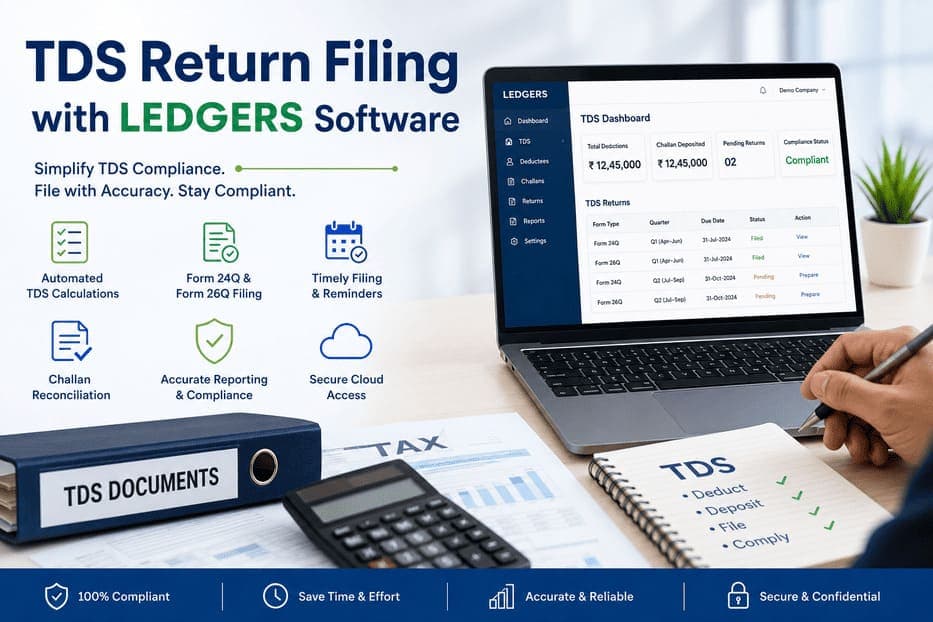
An essential feature of this software is the ability to file TDS returns timely. It generates the required forms and facilitates seamless submissions to the government portal.
Post return filing, the software automatically generates TDS certificates. These are crucial for both compliance records and employee claims.
Many businesses across India have successfully adopted Automated TDS Compliance & Return Filing Software, reaping significant benefits:
A leading IT services company employed this technology and reported a 40% reduction in man-hours spent on TDS compliance activities. Similarly, a manufacturing firm witnessed an increase in compliance accuracy by utilizing automated software.
These case studies illustrate the transformative impact of integrating advanced software solutions in traditional tax management practices.
Transitioning from manual to automated TDS compliance requires strategic planning. Here’s a step-by-step guide:
Evaluate your business needs and select a software provider compatible with your requirements. Consider solutions that also offer integrations such as Bookkeeping Agent Services and Professional Tax Filing Software.
Next, integrate the software with existing systems. Providers often assist in this transition, ensuring a seamless setup with minimal disruptions.
Conduct training sessions for your team to ensure they are proficient in utilizing the new software. Use resources like ICICI Open Banking Integration as part of the training material to demonstrate real-world applications.
Post implementation, it’s essential to monitor the system regularly. Use tools like Attendance Management Systems for consistent oversight and compliance checks.
Delayed TDS filings attract penalties, which can significantly impact a business financially. Automated software minimizes this risk by ensuring timely return submissions.
Yes, even small businesses benefit from automation by reducing errors and minimizing compliance costs, making it a valuable investment.
Integration is generally straightforward, especially with robust support from software providers who guide the process efficiently.
Leading solutions provide regular updates to keep the software compliant with the latest tax laws, ensuring your business never lags behind.
While its primary focus is on TDS, comprehensive solutions often integrate with other Compliance Tools to cover a broader range of tax-related tasks.
In conclusion, adopting Automated TDS Compliance & Return Filing Software for Indian Businesses is no longer an option but a necessity for efficient operations. It saves time, reduces errors, ensures compliance, and offers a strategic advantage. Whether you are a large corporation or a small enterprise, the integration of such software is a transformative step towards sustained business growth. Consider solutions like Automated Payroll Finance Systems for broader operational improvements. Harness the power of technology to navigate the complexities of the tax landscape seamlessly.
