




VAIRAVAN K
Updated on
30-07-2026
AI Bookkeeping Agents: The Future of Financial Management
The world of accounting is silently undergoing a revolution. Business owners have always dreaded the tedious work of organizing business transactions and reconciliations, but this has all changed with the introduction of artificial intelligence bookkeeping agents. These intelligent agents are significantly altering how business operations are conducted, and they are more accessible than you think!
What Is a Bookkeeping Agent?
A bookkeeping agent is an AI-powered system that automates financial record-keeping tasks. Unlike traditional accounting software that requires manual data entry and categorization, these agents can understand natural language commands, learn from patterns in your financial data, and make intelligent decisions about how to process transactions.
Think of it as having a trained bookkeeper available 24/7, except this one never takes breaks, processes information instantly, and gets smarter with every interaction. The agent can handle everything from categorizing expenses to generating financial reports, all while maintaining accuracy that rivals human accountants.
The Technology Behind Smart Bookkeeping
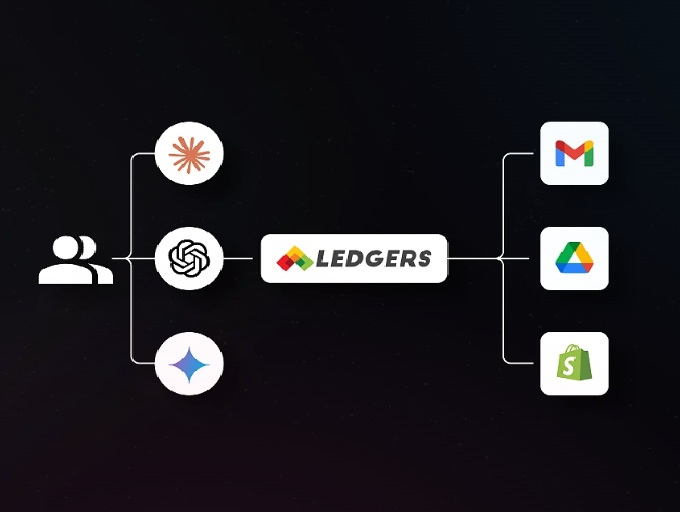
Modern bookkeeping agents leverage advanced language models that can understand context, remember previous conversations, and access your financial data through secure connections. They work by connecting to your accounting systems through protocols like the Model Context Protocol (MCP), which allows AI systems to interact with business applications in a standardized way.
When you ask your bookkeeping agent a question like "What were my office supply expenses last quarter?" it doesn't just search for keywords. It understands the intent behind your question, retrieves the relevant data, analyzes trends, and presents the information in a meaningful way. This contextual understanding makes the interaction feel natural, almost like talking to a human colleague who knows your business inside out.
Real-World Applications
The practical applications of AI bookkeeping agents extend far beyond simple data entry. Small business owners use them to get instant answers about cash flow without waiting for monthly reports. Accountants leverage them to handle routine tasks while focusing on strategic advisory work. CFOs rely on them for quick financial insights during decision-making meetings.
Consider a typical scenario: You're preparing for a client meeting and need to know your outstanding invoices. Instead of opening multiple reports and spreadsheets, you simply ask your bookkeeping agent. Within seconds, it provides a complete breakdown, highlights overdue payments, and even suggests which clients to follow up with based on payment history.
These agents also excel at catching errors that humans might miss. They can spot duplicate entries, flag unusual transactions, and identify potential tax deductions that might otherwise go unnoticed. This combination of speed and accuracy creates a safety net that protects your financial data's integrity.
How Bookkeeping Connects with Ledgers MCP
The real power of AI bookkeeping agents comes from their ability to connect directly with your accounting platform. Ledgers MCP represents a breakthrough in this integration, creating a bridge between AI systems and comprehensive financial data.
Through Ledgers MCP, bookkeeping agents gain secure access to your invoices, expenses, GST records, payroll information, and chart of accounts. This isn't just about reading data—the agent can perform actions like creating invoices, recording payments, generating reports, and even managing employee attendance records. The MCP protocol ensures these interactions happen securely while maintaining complete audit trails.
What makes this particularly powerful is the agent's ability to understand relationships between different financial elements. It knows that a sales invoice connects to a customer record, affects your accounts receivable, impacts GST calculations, and influences your cash flow projections. This holistic understanding enables sophisticated financial analysis that goes beyond what traditional automation could achieve.
Benefits for Your Business
The advantages of implementing an AI bookkeeping agent are substantial. First, there's the obvious time savings—tasks that once took hours now complete in minutes. But the benefits run deeper than efficiency.
Business owners gain confidence in their financial decisions because accurate, up-to-date information is always available. The reduced risk of human error means cleaner books and fewer headaches during tax season. Perhaps most importantly, the insights these agents provide help businesses identify opportunities and address problems before they escalate.
For accounting professionals, bookkeeping agents act as force multipliers. They handle the repetitive work, allowing accountants to focus on high-value activities like strategic planning and client advisory services. This shift elevates the role of accountants from number-crunchers to trusted business advisors.
Looking Ahead
The future of bookkeeping is not a replacement of human judgment, however, but an enhancement of human judgment with the capabilities of artificial intelligence systems. As these agents learn and become more intelligent, bookkeeping, as a tool of financial management, will become even more reliant on AI.
Those businesses that are able to take advantage of this technology will reap a competitive advantage through increased financial overview, decision-making speed, and operational efficiency. And with Ledgers MCP providing an easy integration route for users, there's no better time to start discovering how AI bookkeeping agents will revolutionize your financial management.
The question is no longer whether AI will impact bookkeeping—AI already has. Rather, the question is do you want to take advantage of that evolution?