




ALISHA FATHIMA A A
Updated on
30-07-2026
Attendance Challenges for HR Teams
Navigating the Complex Landscape of Attendance Management: Critical Challenges Facing Indian HR Professionals
The challenges confronting Human Resources departments within Indian organizations are now becoming more complex than ever. With multiple factors acting together to create difficulties in managing attendance (evolving work patterns, changing laws, varied worker demographics and technologies), organizations need to embrace new ways of managing employee attendance. First, HR leaders must understand these challenges. Then they can implement solutions that will convert attendance management from a persistent difficulty to an area of efficiency within the organization.
The Extent and Implications of the Attendance Dilemma The National HRD Network in India recently conducted a comprehensive study on attendance in the workplace and found that on average, Indian HR professionals spend 12-18 hours each week on attendance related activities, which constitutes 30-45% of their total working hours. For organizations that have over 500 employees, the allocation of time by HR to the administration of attendance normally requires the equivalent of at least two or three full-time employees, which limits the ability of HR departments to invest time in other areas that are vital to an organization’s strategic objectives such as organizational design, talent development and employee engagement. The cost of employee attendance goes far beyond the direct costs of labor. As an example, the Society for Human Resource Management (SHRM) in India calculated that attendance errors, attendance disputes and the inefficiencies associated with attendance result in an annual loss of approximately ₹2,400-₹4,800 for every Indian employee. Thus, in larger organizations that have thousands of employees, the loss from attendance will amount to crores of rupees of lost productivity and profitability that could otherwise have been utilized to grow the organization and develop employees.
Challenge 1: Manual processing of data
While the trend towards technology adoption has increased, approximately 40% of Indian organisations still rely on manual methods combined with automated technology to record and track employee attendance. Here are some examples of how manual data entry can impact organisations: Manual data entry errors: Using manual methods to enter data produces an error rate between 1% and 5%. Therefore, if an organisation employs 1,000 people, on average between 10 and 50 error-laden records can occur daily and exceed 1,000 monthly errors. Inaccurate employee records can dramatically affect the accuracy with which employers pay employees and can also undermine employees' confidence in their records of attendance.
Time-consuming processes: Reconciliation of attendance records from multiple departmental sources, the combination of these records and the comparison with leave records and the calculation of overtime, are labour intensive and use a significant amount of HR time during payroll processing. For example, a company with 500 to 1,000 employees can spend 40 to 80 hours per payroll cycle processing attendance records. Manual systems do not allow for the immediate determination of staffing needs or for urgent deployment decisions by managers.
Version control conflicts are inevitable when using several copies of Excel sent around by email. This creates confusion among many users who are using different data sets when their user groups start interacting with one another and causes reconciliation issues.
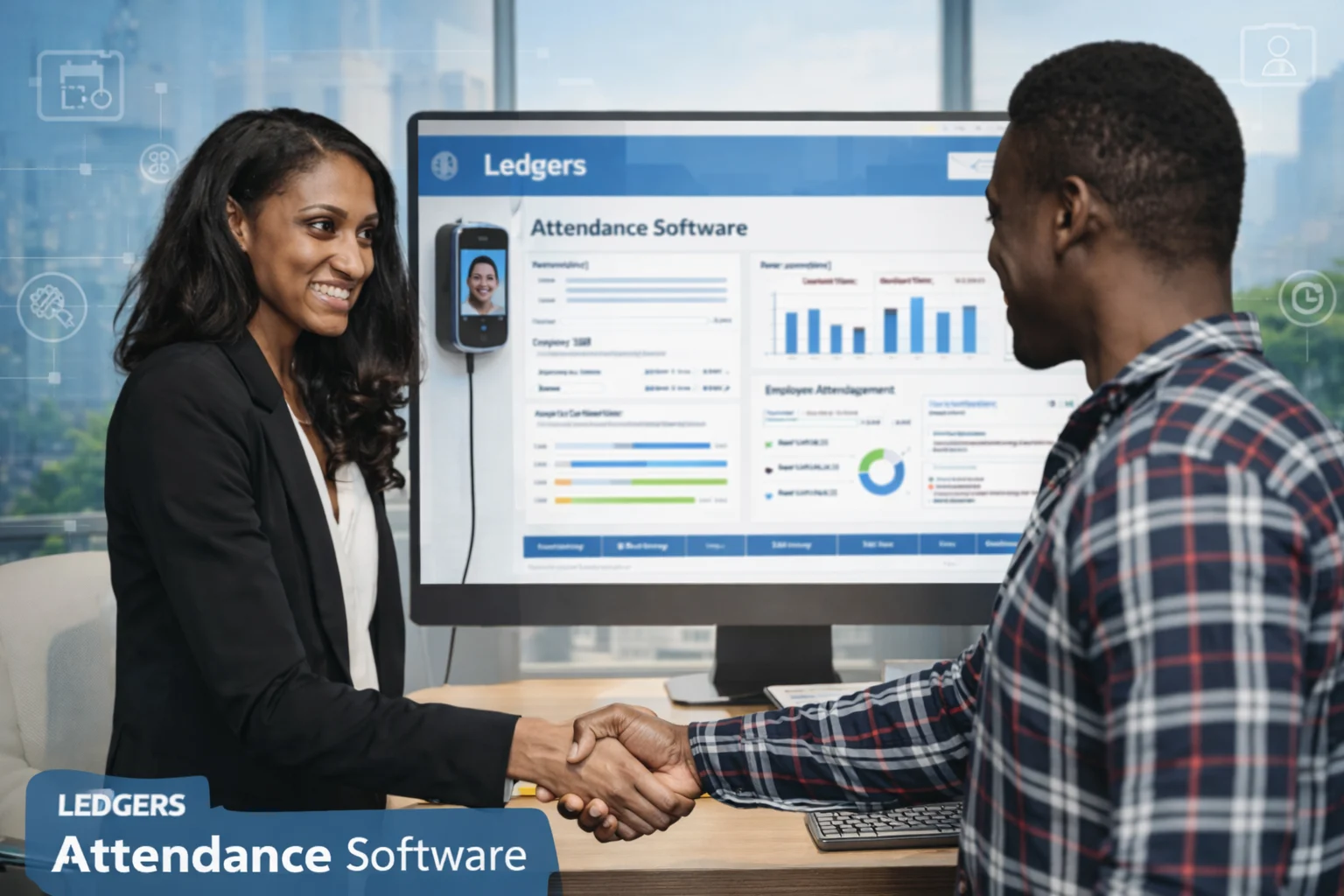
The attendance software offered by LEDGERS alleviates the need for manual data entry by providing automated data collection, real-time synchronization of information, and centralized management of your data, resulting in up to 70% fewer hours spent on administrative activities and almost complete removal of data entry mistakes.
Challenge 2: Multi-Location and Multi-Shift Complexity
India’s business landscape features extensive geographic dispersion, with organizations operating across multiple cities, states, and sometimes internationally. Manufacturing companies may have plants in 5-10 locations; retail chains operate hundreds of outlets; IT services firms maintain development centers in tier-1 and tier-2 cities.
This geographic complexity compounds when combined with shift work. A 2023 Indian Staffing Federation report indicates that approximately 35% of India’s formal workforce operates in shift-based environments—including 24/7 operations in IT services, manufacturing, healthcare, customer support, and logistics.
Managing attendance across this complexity creates specific challenges: Inconsistent Time Zones: Organizations with international operations must manage attendance across different time zones while maintaining consolidated reporting.
Variable Shift Patterns: Different locations may operate different shift structures—some 8-hour shifts, others 12-hour shifts, some rotating, others fixed. Local Regulatory
Variations: State-specific Shops and Establishments Acts impose different requirements regarding working hours, rest periods, and overtime—requiring location-specific compliance management. Communication Delays: Attendance data from remote locations may not reach central HR in time for timely decision-making or payroll processing.
Hardware Management: Maintaining biometric devices or attendance terminals across multiple locations requires coordinated IT support and spare equipment management.
A 2022 PwC India study found that multi-location organizations experience 2.3x higher attendance administration costs per employee compared to single-location operations when relying on non-integrated systems.
LEDGERS provides cloud-based centralized management with location-specific configuration flexibility, enabling headquarters HR teams to manage attendance policies, monitor real-time status, and generate consolidated reports across all locations from a single interface.
Challenge 3: Remote and Hybrid Workforce Management
The COVID-19 pandemic permanently transformed India’s work landscape. A 2023 NASSCOM survey revealed that 68% of Indian IT companies now offer hybrid work options, with 23% of employees working remotely at any given time. This extends beyond IT—sectors like consulting, finance, education, and media have embraced distributed work models.
Remote attendance management presents unique challenges:
Absence of Physical Verification: Traditional time clocks and biometric systems don’t work for remote employees, creating verification challenges and potential for time theft.
Productivity Measurement: Distinguishing between actual working time and logged-in time becomes difficult when employees work from home.
Time Zone Disparities: Remote employees may work non-standard hours, complicating attendance tracking and overtime calculation.
Privacy Concerns: Intrusive monitoring tools create employee resentment and potential privacy violations, while insufficient monitoring leaves organizations vulnerable to abuse.
Technology Barriers: Remote employees in smaller cities or rural areas may face internet connectivity issues affecting attendance system access.
According to a 2023 Gartner study, 56% of HR leaders cite remote attendance management as a top-three workforce management challenge, with 41% acknowledging they lack adequate technology solutions for distributed workforce monitoring.
LEDGERS addresses remote work attendance through mobile applications with GPS-based location verification, flexible working hour policies, and activity-based tracking that respects privacy while ensuring accountability—providing the balance necessary for effective hybrid work management.
Challenge 4: Biometric System Limitations and Failures
While biometric systems offer definitive identity verification, they introduce their own challenges:
Hardware Reliability: Biometric devices require regular maintenance and occasional replacement. Device failures leave organizations without attendance capture capability unless backup procedures exist.
Recognition Failures: Dirty sensors, injured fingers, or environmental conditions can prevent successful biometric recognition, frustrating employees and creating attendance gaps.
Hygiene Concerns: Post-pandemic, many employees resist fingerprint-based systems due to hygiene concerns, preferring contactless alternatives.
Infrastructure Requirements: Biometric systems require network connectivity, power backup, and physical installation—challenging in temporary work sites or field locations.
Privacy and Data Protection: Biometric data is highly sensitive personal information. The upcoming Digital Personal Data Protection Act 2023 imposes strict requirements on biometric data collection, storage, and processing, with significant penalties for violations.
A 2022 study by the Indian Biometric Association found that organizations experience an average of 18 days of biometric system downtime annually, during which attendance tracking either fails completely or reverts to error-prone manual methods.
LEDGERS integrates multiple biometric options (fingerprint, facial recognition) along with alternative methods (mobile apps, web portals) ensuring attendance capture continuity even when primary systems experience issues. Biometric data is encrypted both in transit and at rest, with access controls ensuring compliance with data protection regulations.
Challenge 5: Leave and Attendance Integration Gaps
Leave and attendance are intrinsically connected—leave impacts attendance, while attendance affects leave accrual. Yet many organizations operate separate leave management and attendance tracking systems that don’t communicate effectively.
This creates problems:
Double Data Entry: HR teams manually enter leave information into attendance systems to ensure accurate present/absent status and payroll calculations.
Synchronization Errors: Approved leave in one system may not reflect in the other, leading to attendance discrepancies and payroll errors.
Leave Balance Confusion: Employees can’t see real-time leave balances alongside attendance records, causing frequent HR inquiries.
Accrual Calculation Errors: Leave accrual based on attendance (common in Indian organizations) requires precise integration—manual calculation is time-consuming and error-prone.
Regulatory Compliance Issues: The Factories Act, Maternity Benefit Act, and other legislation mandate specific leave entitlements. Non-integrated systems make compliance monitoring difficult.
According to a 2023 PeopleStrong survey, 67% of Indian employees report frustration with leave balance visibility and 48% have experienced payroll errors related to leave-attendance discrepancies.
LEDGERS provides fully integrated leave and attendance management where leave applications automatically update attendance records, leave balances reflect real-time, and accrual calculations occur automatically based on actual attendance—eliminating integration gaps entirely.
Challenge 6: Compliance Complexity and Risk
India’s labor law framework surrounding attendance and working hours is among the world’s most complex. HR teams must navigate:
Central Legislation: Factories Act 1948, Payment of Wages Act 1936, Code on Wages 2019, Maternity Benefit (Amendment) Act 2017
State-Specific Laws: 29 states and 7 union territories each have Shops and Establishments Acts with varying provisions regarding working hours, rest periods, overtime, and record-keeping
Industry-Specific Regulations: Additional requirements for specific sectors like plantations, mines, construction, and contract labor
Frequent Amendments: Regular legislative changes requiring policy and system updates
Compliance requirements include:
- Maintaining attendance registers in prescribed formats
- Ensuring maximum working hour compliance
- Documenting mandatory rest periods and weekly holidays
- Calculating and paying overtime at prescribed rates
- Providing enhanced benefits for women employees
- Maintaining records for statutory periods (typically 3-5 years)
- Producing records during labor department inspections
A 2022 Ministry of Labour and Employment report revealed that 37% of workplace violations related to attendance and wage record deficiencies. Penalties range from ₹20,000 to ₹1 lakh per violation, with potential criminal prosecution for repeated or severe violations.
For publicly traded companies, compliance failures can trigger Securities and Exchange Board of India (SEBI) scrutiny, impact Environmental, Social, and Governance (ESG) ratings, and damage investor confidence.
LEDGERS attendance software embeds central and state-specific compliance rules, automatically flagging violations before they occur, generating compliant reports for inspections, and maintaining audit trails ensuring defensibility during legal proceedings.
Challenge 7: Employee Resistance and Adoption Issues
Introducing new attendance systems often encounters employee resistance stemming from:
Change Anxiety: Employees comfortable with familiar processes resist learning new systems
Privacy Concerns: Particularly with biometric data collection and GPS tracking
Perceived Micromanagement: Employees may interpret enhanced attendance monitoring as lack of trust
Technology Literacy Gaps: Older employees or those from non-technical backgrounds may struggle with digital systems
Skepticism About Benefits: Without clear communication, employees see only additional requirements without understanding improvements in transparency and accuracy
A 2023 Mercer India study found that inadequate change management causes 34% of HR technology implementations to underperform or fail, with attendance systems particularly vulnerable to adoption challenges.
Successful implementation requires:
- Transparent Communication: Clearly explaining system benefits, data usage, and privacy protections
- Comprehensive Training: Providing role-specific training for all user groups
- Pilot Programs: Testing with early adopters before organization-wide rollout
- Feedback Mechanisms: Creating channels for concerns and suggestions
- Executive Sponsorship: Visible leadership support signaling organizational commitment
LEDGERS implementation includes change management support, training materials, and phased rollout methodology maximizing employee acceptance and system adoption.
Challenge 8: Attendance Fraud and Time Theft
Attendance fraud significantly impacts organizational finances and fairness:
Buddy Punching: Employees clocking in for absent colleagues—studies estimate this occurs in 15-20% of manual clock-in instances
Time Rounding Abuse: Consistently arriving late and leaving early while recording full attendance
Unauthorized Overtime: Working unreported hours then claiming unpaid overtime
Attendance Regularization Abuse: Repeatedly claiming system errors requiring attendance corrections
Proxy Attendance: Using others’ credentials or biometric spoofing
The American Payroll Association estimates time theft costs organizations 1.5-7% of gross payroll. For an Indian organization with annual payroll of ₹50 crore, this represents potential losses of ₹75 lakh to ₹3.5 crore.
Beyond financial impact, attendance fraud creates employee morale issues when honest employees perceive that violations go undetected or unpunished.
LEDGERS prevents attendance fraud through biometric verification, geo-location validation for mobile clock-ins, duplicate clock-in prevention, and comprehensive audit trails highlighting suspicious patterns for investigation—reducing time theft by up to 95%.
Challenge 9: Reporting and Analytics Deficiencies
Many attendance systems capture data but provide inadequate reporting and analytical capability. HR teams struggle to:
- Generate customized reports matching specific management requirements
- Identify attendance trends and patterns requiring intervention
- Correlate attendance with productivity or customer satisfaction metrics
- Forecast future staffing needs based on historical patterns
- Produce compliance documentation in prescribed formats
- Export data for integration with business intelligence platforms
A 2022 Deloitte India survey found that 61% of HR leaders feel they lack adequate attendance analytics to support strategic workforce planning decisions.
LEDGERS provides extensive pre-configured reports covering all common requirements plus custom report building tools enabling HR teams to create tailored analyses. Advanced analytics identify absenteeism trends, predict staffing shortfalls, and support data-driven workforce optimization decisions.
Challenge 10: System Integration Complexity
Attendance data doesn’t exist in isolation—it must integrate with:
Payroll Systems: Feeding work hours, overtime, and leave data for accurate salary calculation
HRMS Platforms: Synchronizing employee master data, organizational structures, and policy configurations
Access Control Systems: Coordinating attendance data with physical security and facility access
Project Management Tools: Linking attendance with project time allocation and billing
ERP Systems: Connecting workforce availability with production planning and resource management
Non-integrated systems require manual data extraction, transformation, and loading—time-consuming processes prone to errors and delays.
According to a 2023 Gartner study, organizations with fully integrated HR technology stacks achieve 43% faster payroll cycles, 36% fewer processing errors, and 28% lower overall HR technology total cost of ownership.
LEDGERS offers pre-built integrations with major payroll and HRMS platforms along with API access enabling custom integrations with organization-specific systems—ensuring seamless data flow across the HR technology ecosystem.
Conclusion
The challenges facing HR teams in attendance management are substantial and multifaceted, spanning technology limitations, regulatory complexity, workforce diversity, and operational scale. These challenges directly impact HR effectiveness, organizational compliance, financial accuracy, and employee satisfaction.
However, modern attendance software like LEDGERS specifically addresses each of these challenges through automated data capture, intelligent analytics, comprehensive compliance management, and seamless integration capabilities. Organizations that acknowledge these challenges and proactively implement robust solutions transform attendance management from a persistent problem into a source of competitive advantage.