




RAGU M
Updated on
30-07-2026
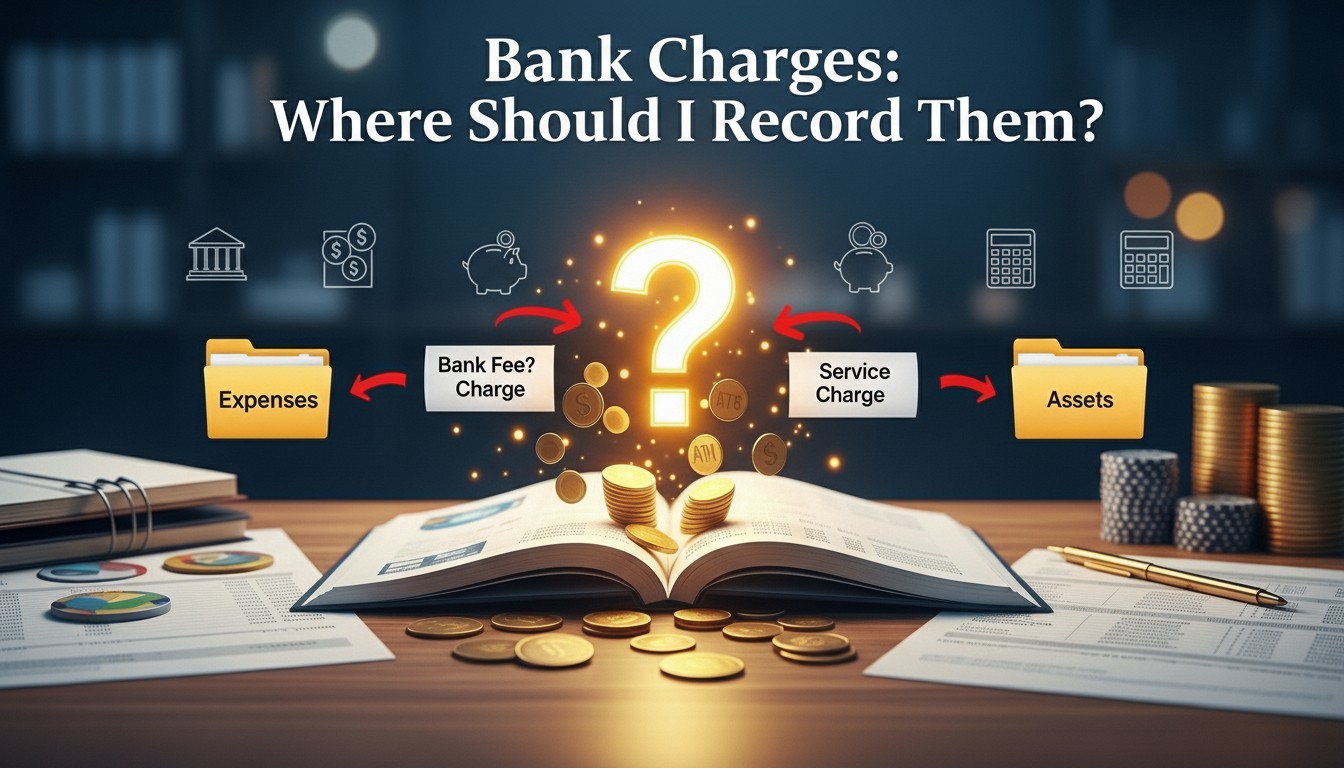
Bank Charges: Where Should I Record Them?
The importance of recording bank charges within the financial management process cannot be underestimated, since accurate accounting relies on keeping track of all bank transactions. Knowing the right way to record your bank charges will help you to simplify your bookkeeping procedures and ensure that your financial reports remain accurate, consistent, and informative. This article provides descriptions of how to record bank fees along with their associated rules of thumb, so that you’ll know exactly what you need to do for your bank charges to be recorded accurately and efficiently.
What Are Bank Charges?
Bank charges are fees levied by your bank for various services provided. These can range from account maintenance fees, overdraft charges, transaction fees, to penalties for insufficient funds or foreign transactions. Accurately recording these charges is essential for effective financial oversight and to prevent discrepancies in financial statements.
Why Accurate Recording of Bank Charges Matters
Failing to record bank charges accurately may lead to significant discrepancies in your financial statements, impacting your business's bottom line and financial health. Here's why precise recording matters:
- Transparency: Clear records ensure transparency, aiding in audits and financial analysis.
- Cost Management: Understanding bank charges helps you manage and possibly reduce unnecessary expenses.
- Compliance: Accurate documentation is crucial for tax reporting and compliance with regulatory bodies.
Where Should You Record Bank Charges?
The key to effective bookkeeping lies in understanding where these charges should be categorised in your financial records. Follow these guidelines to ensure systematic recording:
1. Categorisation under Expenses
Typically, bank charges are recorded as an expense in your accounting books. Here are some common categories:
- Administrative Expenses: General charges like monthly account fees or maintenance fees fall under this category.
- Finance Costs: Include charges directly related to obtaining financial services, such as loan fees or interest charges.
- Office and General Expenses: Miscellaneous charges, such as charges related to check issuance, could be placed here.
2. Direct Entry in the Bank Account Ledger
Another method is to record the charges directly in your bank account ledger. This practice provides real-time updates on your financial position and cash flow by immediately reflecting the bank charges deducted from your balance.
3. Utilise Accounting Software
Modern accounting software such as Ledgers.cloud can simplify this task. Features such as bank feeds automatically import bank transactions, allowing you to categorise charges with ease. Ensure that you regularly reconcile these transactions to maintain accuracy.
Enhancing Your Accounting Process
Efficiently recording bank charges is just one aspect of managing your business's finances. Here are additional tips to optimise your accounting process:
- Regular Reconciliation: Compare your bank statements with your recorded transactions regularly to catch discrepancies early.
- Detailed Record-keeping: Maintain thorough documentation of each charge, including statements and receipts.
- Consult a Professional: If you're uncertain about how to categorise complex charges, consulting with a financial adviser or accountant can be beneficial.
Common Mistakes to Avoid
Avoiding these common pitfalls can help ensure that your financial records remain accurate and reliable:
- Assuming All Charges Are the Same: Different types of charges should be categorised based on their nature.
- Ignoring Automation: Utilise technology to automate recording processes rather than relying solely on manual entries.
- Overlooking Small Charges: Even minor fees can accumulate over time and should be recorded accurately.
Latest Developments
Staying informed about banking practices and emerging technologies can improve your financial management. Recent developments in financial technology, such as enhanced bank feeds and improved integration of accounting software, offer businesses increased accuracy and ease of recording transactions.
Conclusion
When categorising bank charge transactions properly, using software programs, and regularly analysing the information, you will have a much higher level of accuracy and clarity in your accounting records. This makes your accounting tasks simpler and avoid the possibility of errors. Keep up to date with current developments in both banking and financial software programs so that your business can operate efficiently and effectively. Good record keeping is a means to good financial management, and therefore improved profitability.
By using the above steps, you can create complete, accurate and management-friendly documentation so that you can continue to have financial success and achieve your company’s financial goals.