
Jyothishwar M
Updated on 30-07-2026
Indian payroll and compensation management has become increasingly complex due to frequent regulatory changes and evolving labour laws. The payment systems, legal payments, and legal compliance are in the process of constant change--they are stimulated by the implementation of the new labour codes, the fast digitisation of business, and more stringent data protection laws.
With the heightening regulatory attention, organizations are currently compelled to consider payroll as not only a transactional organization feature, but also a compliance-driven and risk-sensitive business process.
As the Code on Wages, 2019, Code on Social Security, 2020, Industrial Relations Code, 2020, and Occupational Safety, Health and Working Conditions Code, 2020, come into effect, the payroll structures will have to be revised to the updated wage definitions, contribution rates and benefit calculations.
Meanwhile, adherence to the Income Tax Act, 1961, the Employees Provident Funds and Miscellaneous Provisions Act, 1952 and the Employees state insurance act, 1948 are also obligatory and not negotiable.
In Payroll Compliance India 2026, compliance is far more than mere simple salary calculations. It encompasses:
Also, increased focus on employee data security, which is being facilitated by the emerging data protection and data privacy models, has ensured that safe payroll data management is as important.
Understanding Payroll Compliance in India
Payroll compliance in India revolves around adhering to various statutory laws that govern salary payments, tax deductions, and benefits. Key legislation includes the Income Tax Act, Provident Fund regulations, the Employees' State Insurance Act, and Labour Welfare Fund stipulations. Failure to comply could result in hefty fines and legal consequences, impacting both the company and its employees.
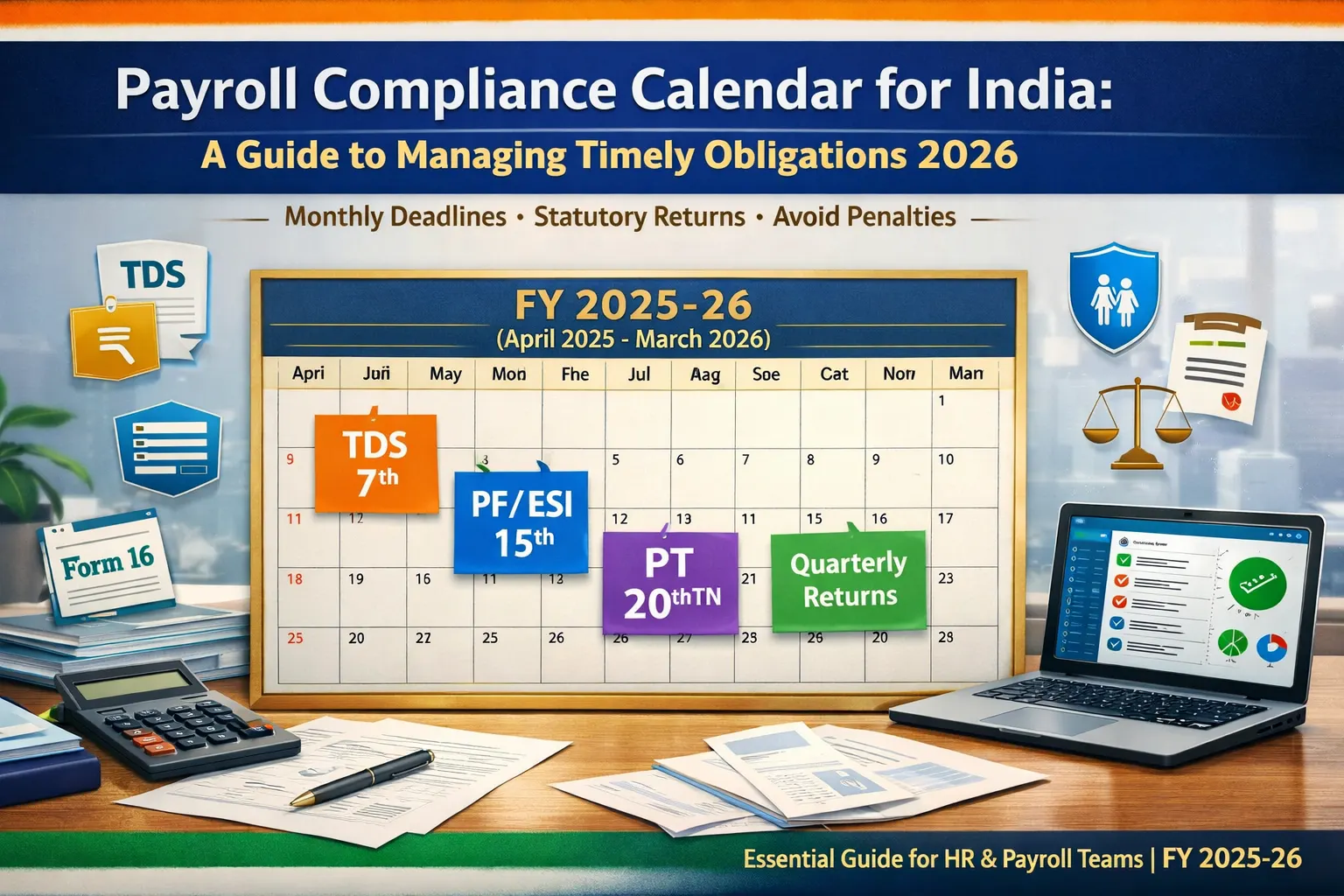
Having a detailed Payroll Compliance Calendar for India is imperative. It helps employers track important statutory dates, ensuring all submissions and payments are made on time. Such a calendar not only aids in planning monthly and annual compliance tasks but also provides peace of mind to business owners and HR professionals, knowing they're meeting legal obligations efficiently.
Adopting a proactive approach with a monthly compliance checklist can ease the burden of managing multiple payroll components. Here's a standard month-by-month guide:
Beyond monthly commitments, there are essential annual compliance deadlines that should not be overlooked:
New reforms continually emerge as the compliance landscape evolves. Staying up-to-date with these changes is vital for all businesses. In recent years, the Indian government has introduced new labour codes intending to simplify and consolidate several labour laws. These changes have implications for payroll compliance, especially concerning wage definitions, provident fund contributions, and working hours.
Navigating the payroll compliance landscape requires dedication and a structured approach. A thorough understanding of the Payroll Compliance Calendar for India, along with adherence to both monthly and annual obligations, can significantly streamline processes and prevent legal penalties. By investing time and resources into compliance, businesses not only protect themselves but also enhance their reputation as fair employers. Stay proactive, remain informed about legislative changes, and foster an environment of trust and efficiency in your organization.
