




RAGU M
Updated on
30-07-2026
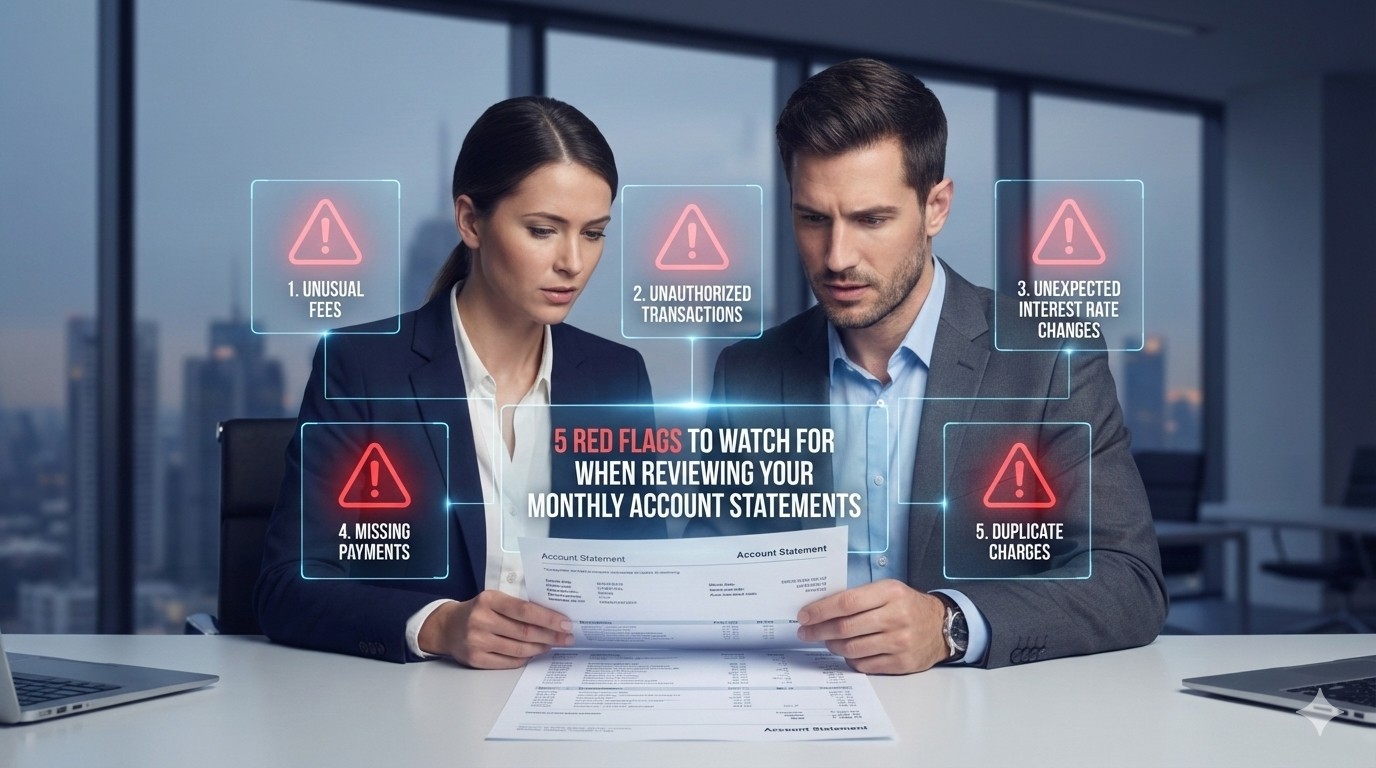
5 Red Flags to Watch for When Reviewing Your Monthly Account Statements
One of the most important ways to manage your individual finances is to look through your monthly statements from your accounts. While this appears to be something straightforward and simple, it actually provides insight into your financial health that may not have been apparent previously. Within this article, you will find the top 5 Red Flags to Watch for When Reviewing Your Monthly Account Statements, all of which can save you from potential problems in the future, assist you in identifying unauthorized charges, and keep your financial information correct.
1. Unauthorized Transactions
One of the most alarming red flags to appear on your monthly statements is unauthorized transactions. These can be a sign of fraud or identity theft, both of which require immediate action. Here's what you should look for:
- Charges made in unfamiliar locations.
- Purchases from vendors you do not recognize.
- Repeated small charges, often testing the validity of your account information.
Upon noticing any such transactions, contact your bank or credit card issuer immediately to report the activity, dispute the charges, and secure your account from further unauthorized use.
2. Unrecognized or Unexplained Fees
Fees are a common presence on financial statements, but not all of them are expected. Unexplained fees might be indicative of issues such as services you do not use or hidden charges from your financial institution. Be on the lookout for:
- New fees or charges that were not previously on your statement.
- Charges for accounts or services you did not authorize.
- Bills for subscriptions or memberships you don't recall signing up for.
Regularly reviewing these fees with a keen eye can help safeguard your budget against unnecessary financial drains. Contact customer service for clarification and, if needed, seek to have these charges waived or removed.
3. Incorrect or Duplicate Transactions
Mistakes happen, even with electronic transactions. But failing to catch duplicate or incorrect transactions can cost you in the long run. Watch for the following:
- Transactions that appear multiple times for the same amount and date.
- Charges that should have been refunded but still appear on your statements.
- Amounts that do not match your purchase receipts or confirmations.
If you discover an error, gather your receipts or confirmation emails, and reach out to your bank or vendor with the necessary details to dispute the transaction.
4. Overdraft Warnings
Consistently seeing overdraft warnings on your account statements is a critical signal indicating you're consistently spending beyond your means. Key signs include:
- Frequent overdraft fees or penalties due to insufficient funds.
- Close calls with account minimum balances.
- Regular reliance on overdraft protection.
Seeing these signs should prompt a review of your spending habits. Setting a budget or utilizing finance apps to track expenses and establish alerts for low balances can help you avoid future overdrafts.
5. Mismatched Account Balances
Beware of larger discrepancies arising from inconsistencies between your recorded expenses and the balance recorded in your Account. Look out for the following:
- Your account balance is significantly different from what you have recorded.
- You see an unexpected increase or decrease in the balance without a corresponding transaction to explain the change.
- You have seen transactions (deposits, withdrawals, or checks) or adjustments to your accounts without being able to determine the reason for those changes.
To mitigate the potential impact of these issues on your finances, it is important to ensure that you maintain your personal financial records in a timely manner, either by using a financial spreadsheet or by using some type of financial tracking software like Ledgers to reconcile your personal expense records with your bank transaction records. If after reconciling the discrepancies still exist, address those discrepancies with your bank or financial adviser.
Staying Proactive with Financial Monitoring
You need to be vigilant regarding your monthly account statement. Maintaining awareness of your finances is crucial to managing and safeguarding you from financial errors. The following will assist you in managing your finances and protecting you from potential fraud:
- Designate a time each month that is a strict for reviewing and monitoring the monthly statements of your accounts.
- Use current technology digital tools for account management. (Example: ledgers.cloud)
- Continue learning about common types of fraud that consumers typically experience to develop an awareness to prepare for potential error.
Taking these measures will provide consumers with early identification of potential fraud so that they can take steps to minimize financial losses before they occur.
Conclusion
By keeping an eye out for the many red flags associated with (i.e.) unauthorized transactions, unexplained fees, incorrect charges or duplicate charges, frequent overdrafts, and mismatched balance statements, we can help to protect our financial assets and maintain a stable financial situation. When we incorporate this vigilance into our everyday financial routine, we are better positioned to notice these problems as they arise and create a more predictable and secure financial future.