




RAGU M
Updated on
30-07-2026
The Ultimate Guide to AGM Notice Compliance
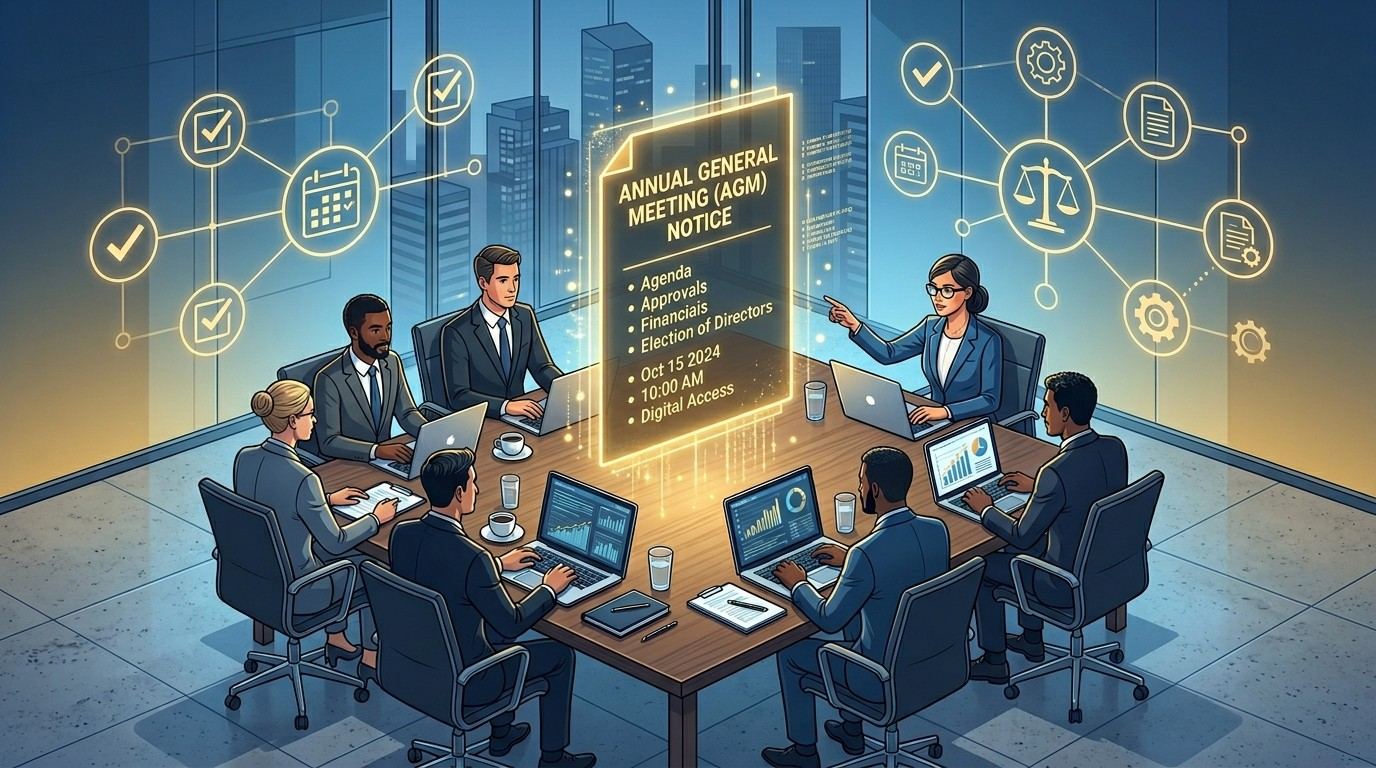
Annual General Meetings (AGMs) are a fundamental element in the corporate governance framework, providing a formal platform for shareholders to engage with company directors. Sending out an AGM Notice is not just a regulatory obligation but an opportunity to engage stakeholders effectively. This article will delve into the essentials of an AGM Notice to ensure compliance and successful communication.
Why Is an AGM Notice Important?
An AGM Notice serves several critical purposes:
- Legal Requirement: Compliance with statutory laws and regulations regarding notice periods and information dissemination.
- Stakeholder Engagement: Encourages shareholder participation and ensures transparency.
- Agenda Clarity: Clearly outlines the meeting’s agenda, facilitating orderly discussions.
Key Components of an AGM Notice
Creating an effective AGM Notice involves addressing various elements to ensure clarity and compliance:
1. Basic Details
Every AGM Notice should kick off with fundamental details, including:
- Company Name: The legal name of the company hosting the meeting.
- Date and Time: Precise timing to avoid scheduling conflicts.
- Venue: Location information or virtual meeting link details.
2. Agenda of the Meeting
The agenda serves as the backbone of the AGM, guiding the conversation and decisions. Key items typically include:
- Approval of previous AGM’s minutes.
- Director’s report and financial statements.
- Appointment of auditors, if relevant.
- Resolutions requiring shareholder votes.
3. Proxy Arrangements
AGM Notices should provide clear instructions for shareholders unable to attend. Details include:
- How to appoint a proxy.
- Submission deadlines for proxy forms.
- Contact details for inquiries.
Effective Tips for AGM Notice Distribution
Distributing the AGM Notice efficiently ensures all stakeholders are well-informed:
1. Timely Dispatch
Adhere to statutory notice periods which vary by jurisdiction but typically range from 21 to 28 days prior to the meeting.
2. Multi-Channel Communication
Enhance accessibility by utilizing various communication platforms:
- Email notifications with electronic copies of the notice.
- Physical mailings for those without digital access.
- Company website announcement.
3. Contact Information
Provide clear points of contact for queries to ensure all stakeholder concerns are addressed promptly.
Regulatory Compliance and Updates
Staying au courant with legal updates is crucial for effective AGM Notice management:
1. Understand Local Laws
Regulations vary by country and can affect the content and timing of the AGM Notice. Corporate secretaries should keep abreast of changes to ensure adherence.
2. Consult Legal Counsel
Engaging with legal experts can provide valuable insights into nuanced legal requirements and mitigate compliance risks.
The Future of AGM Notices: Embracing Digital Innovations
In an era of rapid technological advancement, leveraging digital tools can enhance AGM Notice effectiveness, and create a specialized one for your organization with less time like Ledgers.cloud
1. Virtual Meetings
Incorporating virtual meeting platforms can increase participation, especially in globalized organizations.
2. E-voting
Facilitates straightforward and accessible decision-making processes, encouraging higher shareholder engagement.
Conclusion
Crafting a compliant and comprehensive AGM Notice is vital for legal compliance, effective communication, and stakeholder engagement. By understanding and implementing best practices such as clear agenda structuring, timely dispatch, and embracing digital solutions companies can enhance the efficacy of their AGMs. Stay abreast of regulatory changes and leverage technology to foster a dynamic and inclusive shareholder meeting environment. A well-prepared AGM Notice not only facilitates smoother meetings but also strengthens the organization's governance and credibility.
With these insights, you're now equipped to optimize your AGM Notice process, ensuring that each meeting fulfills its potential as a robust platform for corporate accountability and shareholder engagement.