




VAIRAVAN K
Updated on
30-07-2026
How Accounting Basics Help Your Business Grow?
Operating a business without proper accounting is like driving with your eyes closed: you might go forward for some time, but you will ultimately crash. Again, mastering the basics of accounting is not for keeping the taxman happy; rather, it is for creating a foundation on which one can have sustainable growth.
Why Accounting Matters for Business Growth
Starting a business with passion and brilliant ideas is a common phenomenon among entrepreneurs, but the financial framework within which the idea is expected to flourish is often left overlooked in the process. Accounting gives a map of where a business has come in the past, where it currently is, and where it will be in the future.
Accurate accounting practices assist in decision making. By understanding precisely where the funds are going and how much is left over, an opportunity in addition to an area where an individual may sink to the bottom financially is determined. Guessing versus knowing are the choices.
The Core Accounting Basics Every Business Owner Should Know
Understanding Revenue and Expenses
At its simplest, accounting tracks two things: money coming in (revenue) and money going out (expenses). But it's the details within these categories that matter:
- Revenue includes all income sources, not just direct sales
- Expenses encompass everything from major overhead costs to small operational purchases
- Tracking both categories accurately reveals your true profitability
- Proper categorization helps identify areas for cost reduction and revenue optimization
The Fundamental Accounting Equation
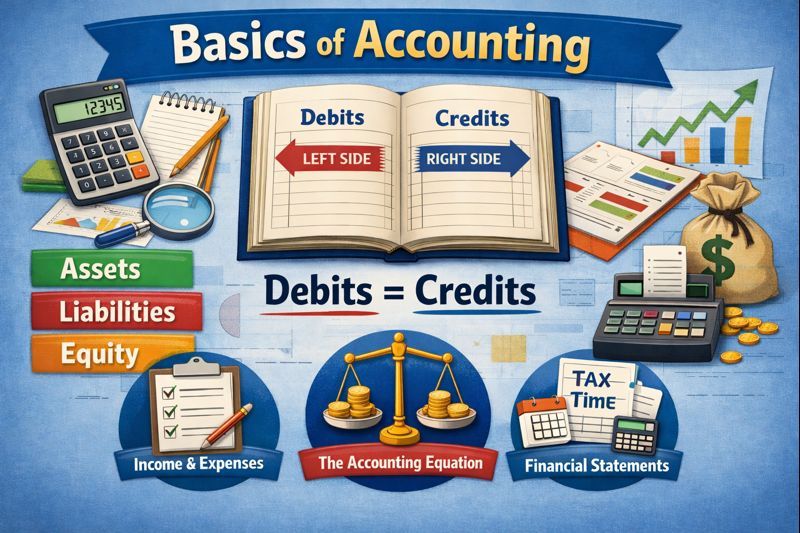
Assets equal liabilities plus equity. This simple formula is the backbone of all accounting:
- Assets represent what your business owns (cash, inventory, equipment, receivables)
- Liabilities are what you owe (loans, payables, credit obligations)
- Equity is what truly belongs to you after subtracting liabilities from assets
- When this equation stays balanced, your financial health remains intact
Cash Flow vs. Profit
Here's something that surprises many business owners: profit doesn't always mean cash in the bank. Understanding this distinction is crucial:
- Profit appears on your income statement based on invoices and obligations
- Cash flow reflects actual money moving in and out of your accounts
- You can be profitable on paper while facing cash shortages
- Managing both metrics prevents the cash crunches that kill otherwise successful businesses
How Proper Accounting Drives Business Growth
Identifying Profitable Products and Services
Without accurate accounting, you're making dangerous assumptions about what makes you money:
- Some popular products may actually lose money when all costs are calculated
- High-margin offerings might be hidden in your product mix
- Service pricing can be optimized based on actual cost data
- Resource allocation improves when you know what truly drives profit
Planning for the Future
Historical financial data becomes your most valuable strategic tool:
- Revenue trends help forecast future income with accuracy
- Seasonal patterns become predictable and manageable
- Budget planning shifts from guesswork to data-driven strategy
- Expansion decisions gain solid financial backing
Securing Funding and Investment
Want a business loan or investor backing? Clean financial statements open doors:
- Lenders require proof of profitability and stability
- Investors need evidence of growth potential and sound management
- Accurate records demonstrate business credibility
- Professional accounting increases approval rates and improves terms
Managing Tax Obligations Strategically
Smart accounting helps you minimize tax liability while staying compliant:
- Proper expense tracking maximizes deductible amounts
- Strategic timing of income and expenses reduces tax burden
- Quarterly estimates prevent year-end surprises
- Audit trails protect you if questions arise
Making Accounting Work Without the Burden
Traditional accounting can feel overwhelming. The challenges include:
- Spreadsheets that multiply and become unmanageable
- Lost receipts and missing documentation
- Hours spent on monthly reconciliation
- Confusion over proper categorization
- Stress during tax season
Modern accounting software eliminates these pain points:
- Automated transaction imports from bank accounts and credit cards
- Intelligent categorization that learns your business patterns
- Real-time financial reports available instantly
- Cloud access from anywhere, anytime
- Reduced errors through automation
Ledgers represents this new approach to business accounting. Instead of drowning in manual data entry, you get:
- Automated bookkeeping working continuously in the background
- Transaction categorization that requires minimal input
- Financial statements generated on demand
- Real-time dashboards showing business health
- Time savings that redirect focus toward growth activities
Focusing on Growth, Not Paperwork
When accounting becomes automatic rather than manual, transformation happens:
- Administrative time decreases dramatically
- Strategic planning time increases proportionally
- Financial insights become accessible and actionable
- Stress around bookkeeping virtually disappears
- Mental energy redirects to revenue generating activities
The right accounting foundation coupled with modern tools creates powerful results:
- Compliance requirements are met effortlessly
- Accuracy improves through automation
- Financial data transforms into strategic assets
- Growth planning becomes data-driven
- Business decisions gain confidence from solid numbers
Taking the Next Step
Start by committing to basic accounting discipline:
- Record every business transaction without exception
- Maintain strict separation between business and personal finances
- Review your financial statements monthly, not just annually
- Understand your key metrics like profit margins and cash runway
- Seek help when needed rather than letting problems compound
Then leverage technology to make these practices effortless:
- Choose accounting software that matches your business size and complexity
- Automate repetitive tasks to reduce manual errors
- Integrate your accounting with other business systems
- Use reporting features to gain actionable insights
- Scale your financial infrastructure as your business grows
The Bottom Line
For a business to grow, one needs to know their numbers in their heart of hearts. Accounting properly and using the right software to guide one will make the numbers the guiding force on the path to success. It is not the businesses that have the most fantastic products that succeed but the ones that understand their finances.
Your accounting system should work FOR you, NOT against you. When accounting becomes easier to understand and more intuitive rather than difficult and confusing, it opens the doors to unlock the hidden prosperity that has been there all along. Make accounting your advantage; watch your business go to new heights.