




SWATHI S
Updated on
30-07-2026
Expense Tracking for Project Work
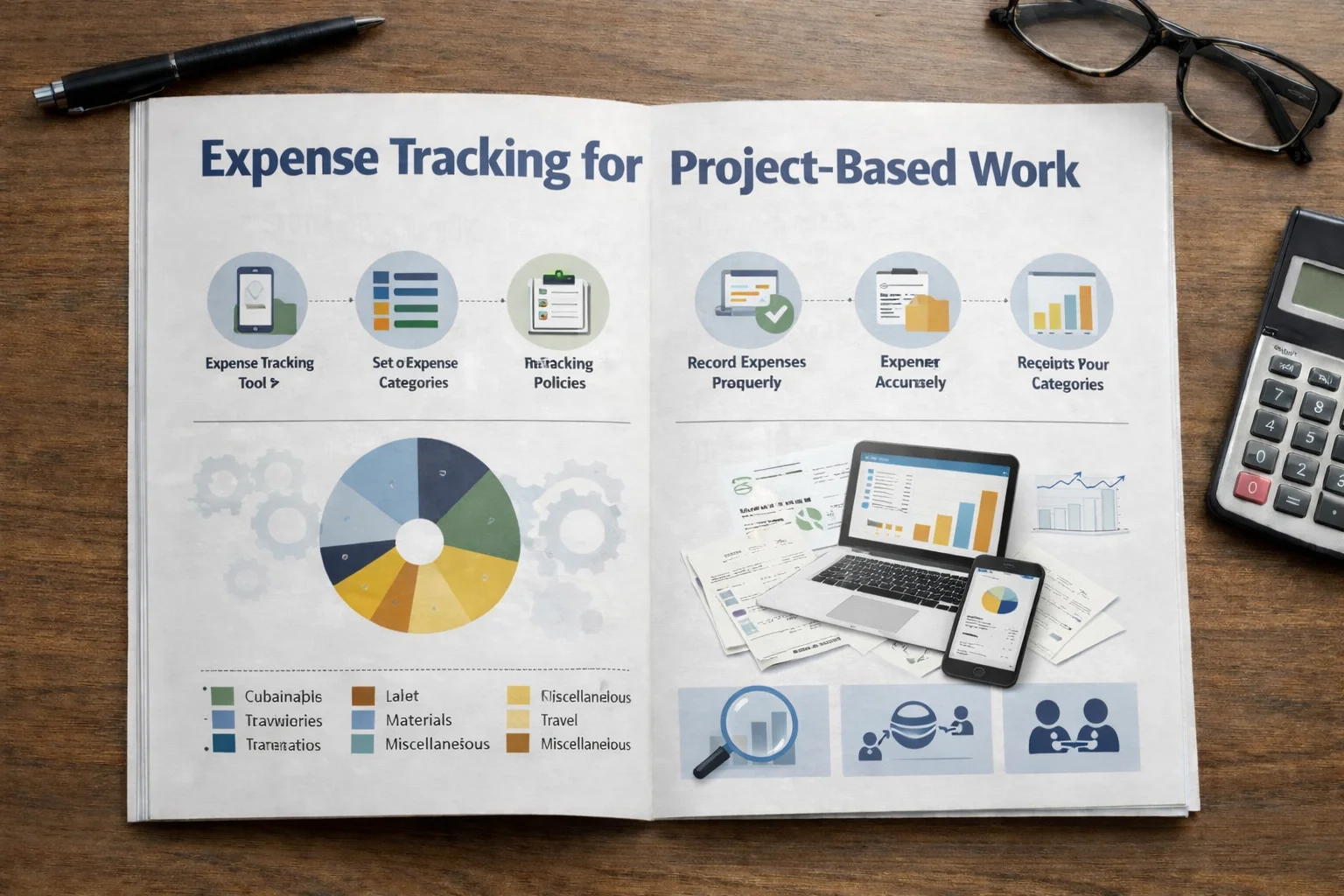
The ability to track expenses by project is important to companies who carry out specific projects, e.g., construction companies, information technology service providers, marketing agencies, and consulting companies. Each project has a distinct set of goals, a budget, a set of resources, and a time line; consequently, to ensure that they are able to generate a profit and effectively manage their financial resources, businesses need to accurately track both budgeted and actual expenses related to each project.
Why Tracking Project Expenses Matters
Unlike general business expenses, project costs must be linked to specific tasks or deliverables. Without tracking, businesses may face:
- Difficulty measuring project profitability
- Overspending
- Inaccurate client billing
- Lack of visibility
Tracking expenses for each project ensures every cost is accounted for and aligned with project goals.
Categorizing Project Expenses
Proper categorization is key to managing project expenses. Common categories include:
- Labor and employee costs
- Travel and on-site expenses
- Materials and supplies
- Vendor and subcontractor payments
- Software and tools
Categorizing expenses helps businesses see where money is being spent and identify areas to save.
Assigning Expenses to Projects
An expense tracking system allows businesses to assign each expense to a specific project, task, or cost center. This enables:
- Cost allocation
- Clear visibility into project spending
- Better tracking of project budgets
Assigning expenses correctly ensures financial data accurately reflects the cost of each project.
Tracking Expenses in Real-Time
Real-time tracking is crucial for project work. It allows teams to:
- Monitor expenses as they occur
- Identify overspending
- Make timely adjustments
With real-time insights, project managers can keep costs under control and avoid financial surprises.
Monitoring and Controlling Budgets
Each project typically has a predefined budget. Expense tracking systems help businesses:
- Compare expenses with budgeted amounts
- Identify variances
- Take actions when needed
This ensures projects remain financially viable and aligned with business goals.
Simplifying Client Billing
Accurate expense tracking plays a role in client billing, especially for billable projects. Businesses can:
- Generate expense reports
- Include reimbursable expenses in invoices
- Ensure transparency with clients
Clear and accurate billing improves client trust and reduces disputes.
Managing Employee and Vendor Expenses
Project work often involves stakeholders, including employees and external vendors. Expense tracking systems allow:
- Employees to submit project-related expenses
- Vendors to be linked to projects
- Easy tracking of all associated costs
This creates a centralized view of all project expenses.
Automation for Efficiency
Manual tracking of project expenses can be complex and time-consuming. Automation helps by:
- Assigning expenses automatically to projects
- Categorizing transactions
- Generating project reports
Automation reduces errors and improves efficiency in managing project finances.
Reporting and Profitability Analysis
Detailed reporting is essential for evaluating project performance. Businesses can generate:
- Project expense reports
- Profitability analysis
- Cost breakdowns
These insights help in improving future project planning and pricing strategies.
Benefits of Tracking Project Expenses
Implementing an expense tracking system offers several advantages:
- Better cost control
- Improved project profitability
- Enhanced financial reporting
- Enhanced decision-making
- Increased transparency
These benefits are critical for businesses that rely on project-based operations.
Tracking Expenses with Ledgers
A platform like Ledgers enables businesses to track project expenses efficiently. With features such as real-time tracking, customizable categories, project-wise allocation, and automated reporting, organizations can manage their project finances with precision.
By implementing a system to track project-related expenses, companies will be able to enhance financial visibility, improve their ability to generate profits, and ultimately deliver the project on time and within budget.
In conclusion, effectively managing financial resources with regard to project-related activities requires accurate expense tracking. By utilizing advanced software and automation tools, businesses can streamline their expense management processes resulting in improved project delivery and enhanced profitability. Creating a complete and transparent financial environment for their clients helps to build trust and positions a business for long-term viability and growth in competitive markets.