




PUGALENTHI
Updated on
30-07-2026
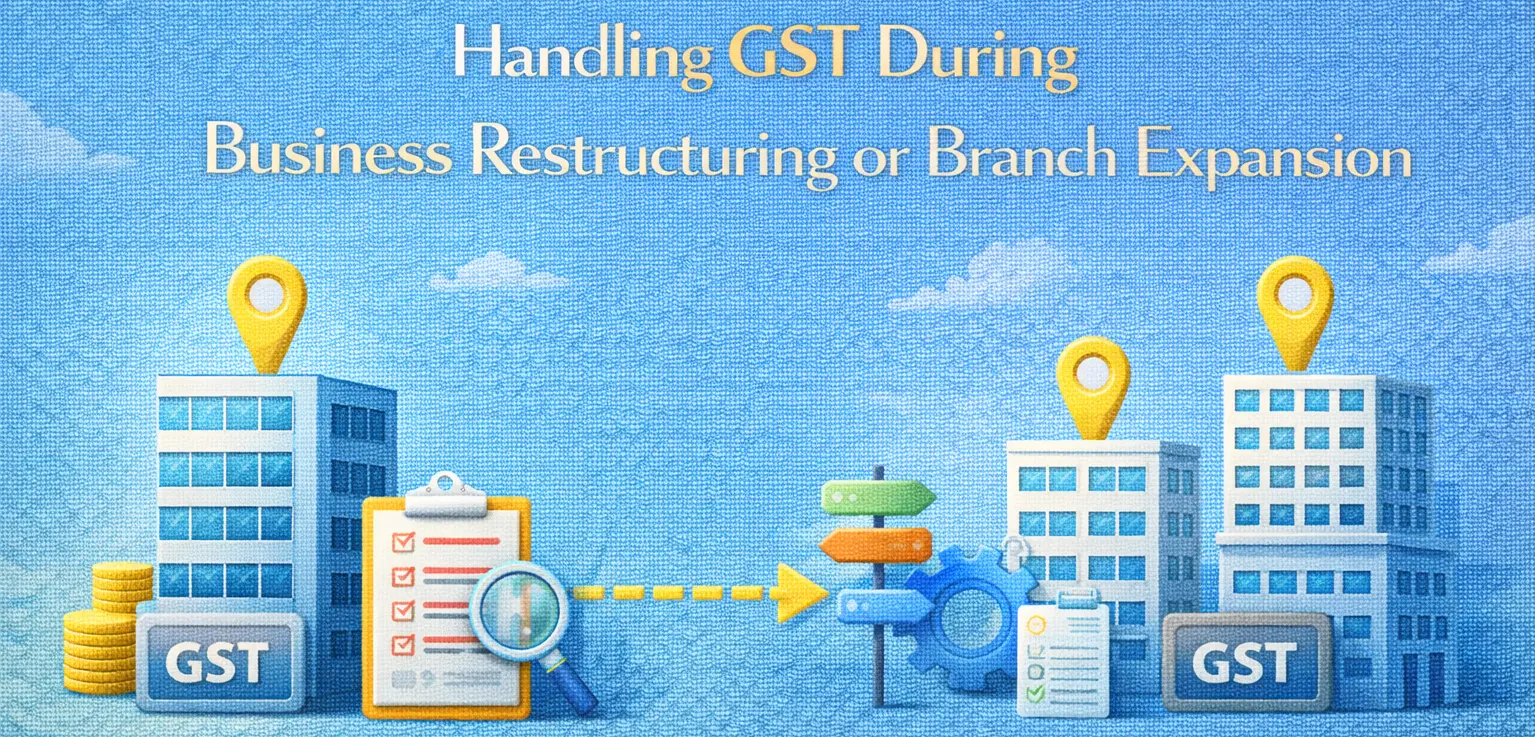
Handling GST During Business Restructuring or Branch Expansion
Expanding your business or restructuring its operations can be an exciting phase, marking a time of growth and adaptation. However, such changes come with significant tax considerations, primarily surrounding the Goods and Services Tax (GST). Understanding how GST compliance is affected during expansions or mergers is crucial for seamless operations. This guide provides an easy-to-understand roadmap for handling GST during business restructuring or branch expansion, offering actionable insights to maintain compliance.
How GST Compliance is Affected During Business Changes
When a business decides to expand to new locations, open additional branches, merge existing entities, or restructure operations, GST compliance comes into play as a key aspect. Here’s how:
- New branches or locations may require separate GST registrations.
- Multiple GST Identification Numbers (GSTINs) must be managed efficiently.
- Inter-branch transactions require careful GST handling to prevent compliance issues.
- Accurate invoicing is critical to reflect changes in business structure.
- Proper reconciliation ensures all transactions are recorded correctly under GST.
Key Considerations for GST Compliance During Business Changes
Obtaining New GST Registrations
Whenever a business opens a new branch in a different state, acquiring a fresh GST registration is mandatory. Even if the new branch is within the same state, businesses must be prepared for branch code identification and possible GST implications. The registration process can be broken down as follows:
- Gather necessary documents like PAN card, proof of address, identity, and business registration documents.
- Apply for GST registration on the GST portal, providing required details about the new branch or location.
- Respond promptly to any queries or verifications raised by the GST authority during the process.
Managing Multiple GSTINs
As businesses expand, managing multiple GSTINs becomes essential to ensure compliance across various regions. Each GSTIN requires individual tracking, timely filings, and accurate reporting. Consider these tips to effectively manage multiple GSTINs:
- Implement robust accounting software capable of handling multiple GSTINs and synchronizing data.
- Maintain a centralized system to track data related to all branches for consistent compliance checks.
- Regularly update and audit GST records to prevent omissions or inaccuracies.
Handling Inter-Branch Transactions
Transactions between branches are often subject to GST as these are considered 'supply' under GST laws. Here’s how to approach inter-branch transactions:
- Determine the input tax credit eligibility on inter-branch supplies to prevent excess tax payments.
- Carefully determine the value of supplies and ensure the setting of accurate tax invoice values.
- Frequently reconcile inter-branch transactions to ensure all have been recorded and reported correctly.
Maintaining Accurate Invoicing
With structural changes, updating invoicing processes to align with new business structures is vital. This includes:
- Update invoice templates to reflect any new branch addresses and GSTINs promptly.
- Ensure compliance with the latest e-invoicing regulations if applicable to your business scale.
- Regularly review invoicing practices to align with evolving GST norms and business practices.
Ensuring Proper Reconciliation
Reconciliation is the linchpin of maintaining GST compliance post-expansion or restructuring. Here’s how you can ensure proper reconciliation:
- Regularly reconcile sales and purchase registers with GST returns for accuracy.
- Establish a routine reconciliation schedule post-business changes to track new adjustments and errors.
- Utilize automated reconciliation software to minimize manual errors and increase efficiency.
Actionable Guidance for Smooth GST Compliance
Ensuring your business remains GST compliant during structural changes requires a strategic approach. Here are some actionable steps:
- Employ a dedicated GST compliance team to oversee all changes and updates.
- Invest in training for employees on new GST processes post-expansion.
- Consult with GST advisors periodically to stay updated on compliance requirements and strategies.
- Use technology to automate and streamline GST compliance, minimizing manual interventions.
- Periodically conduct internal audits to identify and rectify potential lapses in compliance.
Conclusion
Whether expanding your operations, merging with another entity, or undergoing structural reorganization, understanding and managing GST compliance is crucial. Following the detailed guidelines outlined here can help ensure your business transitions smoothly without compliance hitches, enabling you to focus on growth and success. Regularly updating processes and adopting a proactive approach towards compliance will position your business to tackle GST challenges effectively while exploring new opportunities.
LEDGERS
LEDGERS assists with compliance relating to GST through the integration of reconciliations into your accounting processes to allow the speedy identification of errors in records prior to incurring any penalties or interest. LEDGERS allows you to automate the process of synchronizing your GSTN data and tracking invoices on an invoice-by-invoice basis eliminating the need for manual corrections and the time-consuming process of verifying transactions at the end of a reporting period through the use of automatic validations from the system to facilitate revenue compliance activities.