




PUGALENTHI
Updated on
30-07-2026
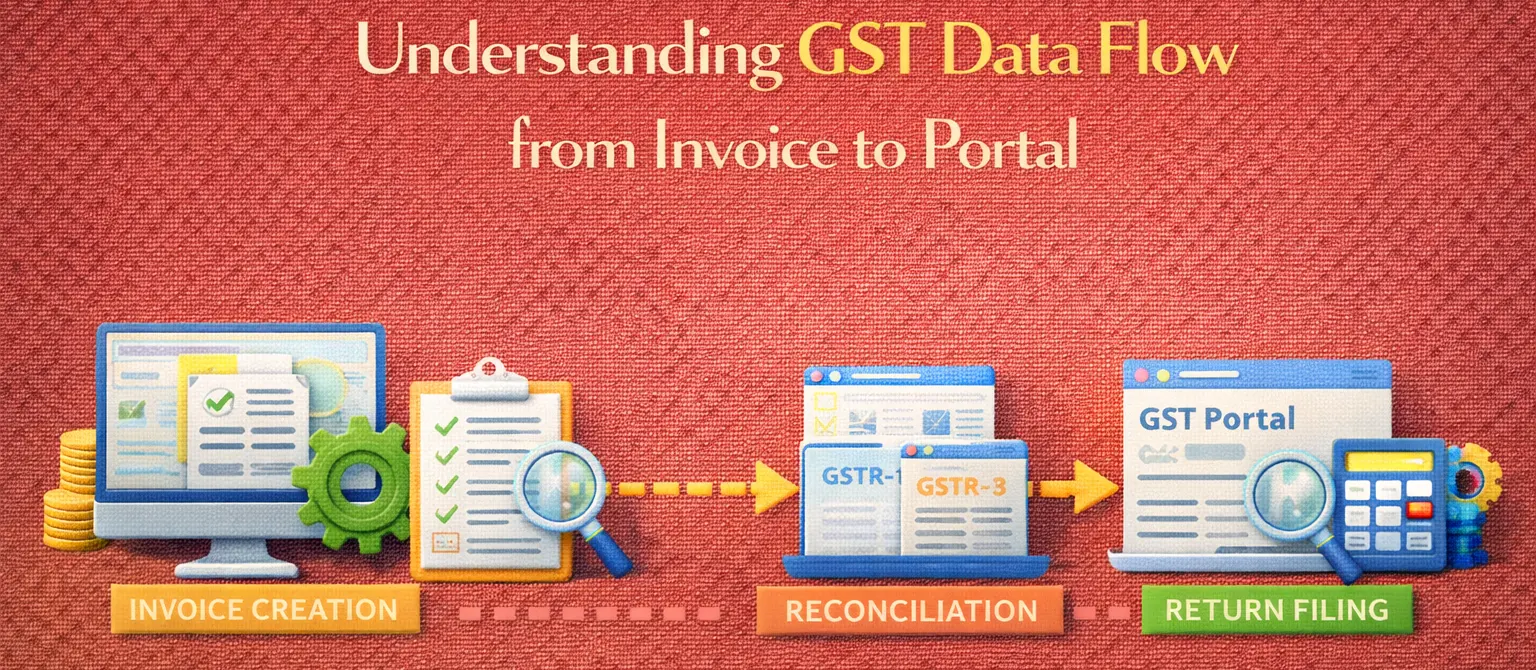
In today's digital economy, understanding the GST data flow from invoice to portal is crucial for maintaining compliance and optimizing business operations. This guide will demystify how GST-related data streams from invoice creation in your accounting system to the final GST return filing on the GST portal facilitating a seamless compliance process. Key stages include invoice generation, data recording, reconciliation, return preparation, and submission via GST returns like GSTR-1 and GSTR-3B.
Introduction: Grasping the GST Data Flow
The Goods and Services Tax (GST) is a critical part of Indian businesses. Accurate compliance and reporting start with a clear understanding of the entire data flow from invoicing to return filing. This guide lays out a step-by-step process that aids businesses in grasping the movement of GST data, ensuring they maintain flawless records and submit timely returns.
Step 1: Invoice Generation in Accounting Systems
Every GST-related process begins with invoicing. Here’s how businesses can ensure accurate data from the onset:
- Use GST-compliant accounting software to generate invoices.
- Ensure each invoice contains all necessary components GSTIN, HSN/SAC codes, item description, and applicable tax rates.
- Address errors in real-time by reviewing invoices thoroughly upon generation.
Step 2: Recording GST Data Accurately
Recording the generated invoices accurately into the accounting system ensures the foundation for your entire GST compliance strategy is robust:
- Log each invoice systematically into your accounting software.
- Regularly update the software to comply with the latest GST norms and protocols.
- Keep a digital repository of invoices to simplify audits and checks.
Step 3: Reconciliation of Invoices and Purchases
Reconciliation is pivotal in verifying that all invoices and purchases align correctly. Follow these steps to ensure a smooth reconciliation process:
- Compare purchase invoices with vendor statements to spot discrepancies.
- Match sales recorded in your books with filed returns of your buyers.
- Use reconciliation tools within your accounting system for efficiency.
Step 4: Preparation of GST Returns
After reconciliation, prepare your GST returns. Different forms serve different purposes, chiefly GSTR-1 and GSTR-3B:
- GSTR-1: Submit details of outward supplies and notes monthly or quarterly as applicable.
- GSTR-3B: Provide a summary of sales and input tax credit, filed monthly.
- Utilize your accounting software's return preparation module for accuracy.
Step 5: Submission through the GST Portal
Submitting your returns on the GST portal finalizes the compliance cycle:
- Log into the GST portal at the correct submission dates to avoid penalties.
- Upload your GSTR-1 and GSTR-3B forms accurately, scheduling reminders for each deadline.
- Verify accuracy upon submission and maintain a digital copy for record-keeping.
Conclusion: Achieving Smooth GST Compliance
Understanding and implementing a clear GST data flow from invoice to portal is essential for businesses looking to achieve seamless GST compliance. By following the step-by-step guide provided above from meticulous invoice generation to precise portal filing businesses can eliminate errors, avoid penalties, and maintain a robust tax framework aligned with the latest GST regulations. As you navigate through these steps, remember that staying updated with GST laws and utilizing reliable accounting technologies will further enhance your compliance efforts.
By adopting a systematic approach to GST data handling, businesses not only ensure compliance but also streamline their financial operations for better transparency and efficiency in the ever-evolving landscape of taxation.
LEDGERS
LEDGERS assists with compliance relating to GST through the integration of reconciliations into your accounting processes to allow the speedy identification of errors in records prior to incurring any penalties or interest. LEDGERS allows you to automate the process of synchronizing your GSTN data and tracking invoices on an invoice-by-invoice basis eliminating the need for manual corrections and the time-consuming process of verifying transactions at the end of a reporting period through the use of automatic validations from the system to facilitate revenue compliance activities.