




VAIRAVAN K
Senior Developer
Updated on
07-01-2026
Managing International Invoices: A Guide to Multi-Currency Transactions
In today's globally linked business world, companies are often interacting with clients as well as suppliers from across the world. Whether you are an individual freelancer with international clients or an expanding business with increasing operations across new markets, working with various currencies has simply become an everyday affair. Still, many businesses often struggle with international billing as well as managing various currencies.
The Reality of Multi-Currency Business
You are dealing with multi-currency transactions when you send an invoice to a client in Europe while operating from Asia, or buy materials from a vendor in the United States while based in Australia. Each invoice involves different exchange rates, fees related to such conversions, or the headache of keeping financial books across different currencies.
The old-school method of having to manually convert everything, or worse, using bank statements, is just confusing. You may invoice a client in euros, get paid in dollars, and then report your income in the currency used in your country. Unless systems are put in place, you can only guess at your profitability, and tax time becomes nothing short of a nightmare.
Common Challenges Businesses Face
Exchange rate fluctuations present one of the biggest headaches. The rate you quote today might differ significantly from the rate when payment arrives weeks later. This gap can eat into your profit margins or create unexpected gains that complicate financial planning.
Recording transactions poses another challenge. Should you record the invoice at the rate when you sent it, when the client paid, or when the money hit your account? Different accounting standards have different requirements, and getting this wrong can lead to inaccurate financial statements.
Then there's the administrative burden. Manually converting currencies, updating exchange rates, and reconciling accounts across multiple currencies consumes valuable time that could be spent growing your business. The risk of human error multiplies with each transaction.
How Modern Ledger Systems Help
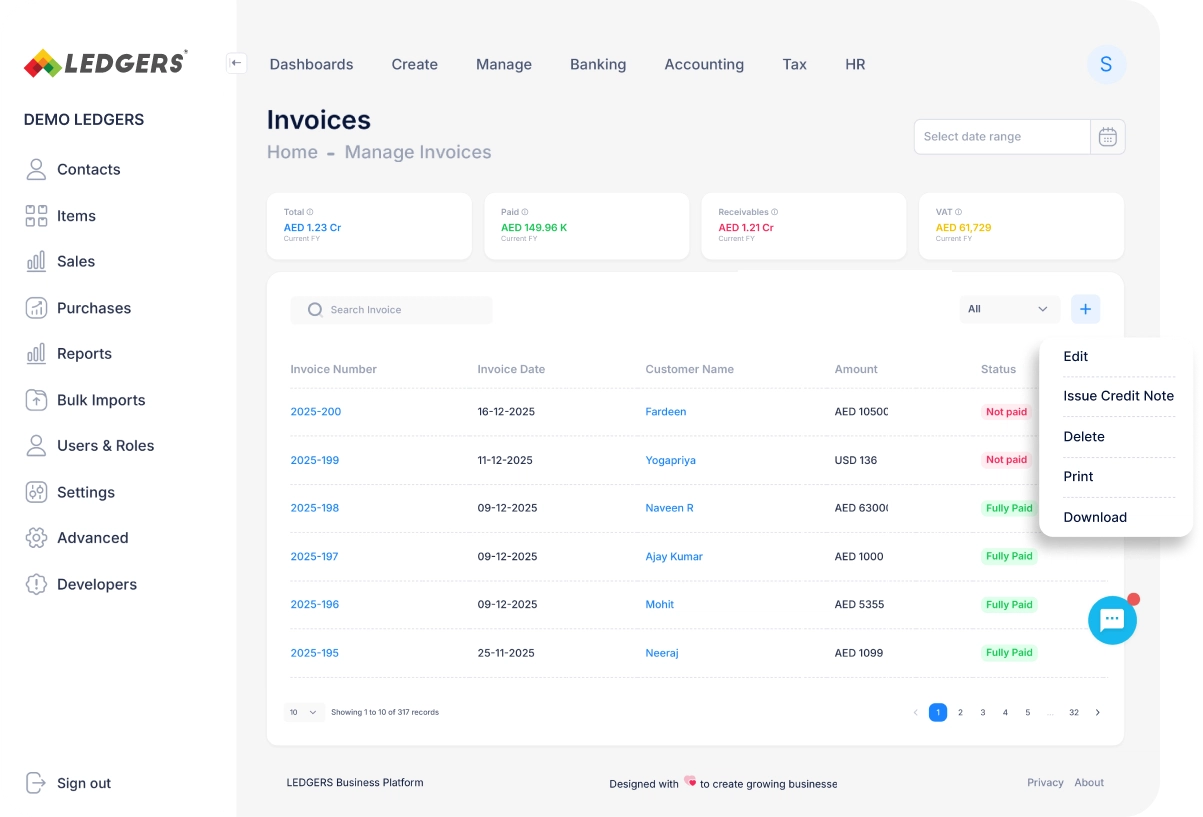
Today's accounting software has evolved to handle multi-currency transactions seamlessly. These systems automatically fetch current exchange rates, apply them to transactions, and maintain separate records for each currency while providing consolidated views in your base currency.
When you create an invoice in a foreign currency, the system records both the original amount and the converted value. If exchange rates change before payment arrives, the software automatically calculates and records the gain or loss. This automation ensures accuracy while saving hours of manual work.
Advanced ledger systems also generate reports that show your financial position across all currencies. You can see outstanding invoices in their original currencies, track currency-specific cash flow, and understand how exchange rate movements affect your bottom line.
Best Practices for International Invoicing
Begin with clearly identifying the currency involved in all invoices. Include the conditions for payment and who will be responsible for conversion charges. Most companies include an explanation regarding the exchange rate involved and the date when the rate was applied.
Think about extending the ability to pay in the client’s local currency. Although the risk for the exchange rate will be on your side, doing so makes business easier for the client, and you might get a competitive edge. Just be sure that your accounting system is able to keep up with the added complexity.
Check the exchange rate settings in your software periodically. Although it is a good practice to have the exchange rates updated in your software automatically, at times you may like to check whether the rates match the ones quoted by your bank.
The Path Forward
Managing international invoices doesn't have to be complicated. The right tools transform what was once a time-consuming, error-prone process into something that happens automatically in the background. You can focus on serving clients and growing your business rather than wrestling with spreadsheets and currency calculators.
Get Started with Hassle-Free Currency Conversion in Ledgers
Ready to simplify your international transactions? Modern accounting platforms with multi-currency invoice capabilities offer built-in support that eliminates manual calculations and reduces errors. By implementing proper ledger systems with automatic currency conversion, you'll gain clear visibility into your international finances, save countless hours on administrative tasks, and make better business decisions based on accurate data. The global marketplace is at your fingertips—don't let currency complications hold you back from seizing international opportunities.