
YOGAPRIYA S
Updated on 24-11-2026
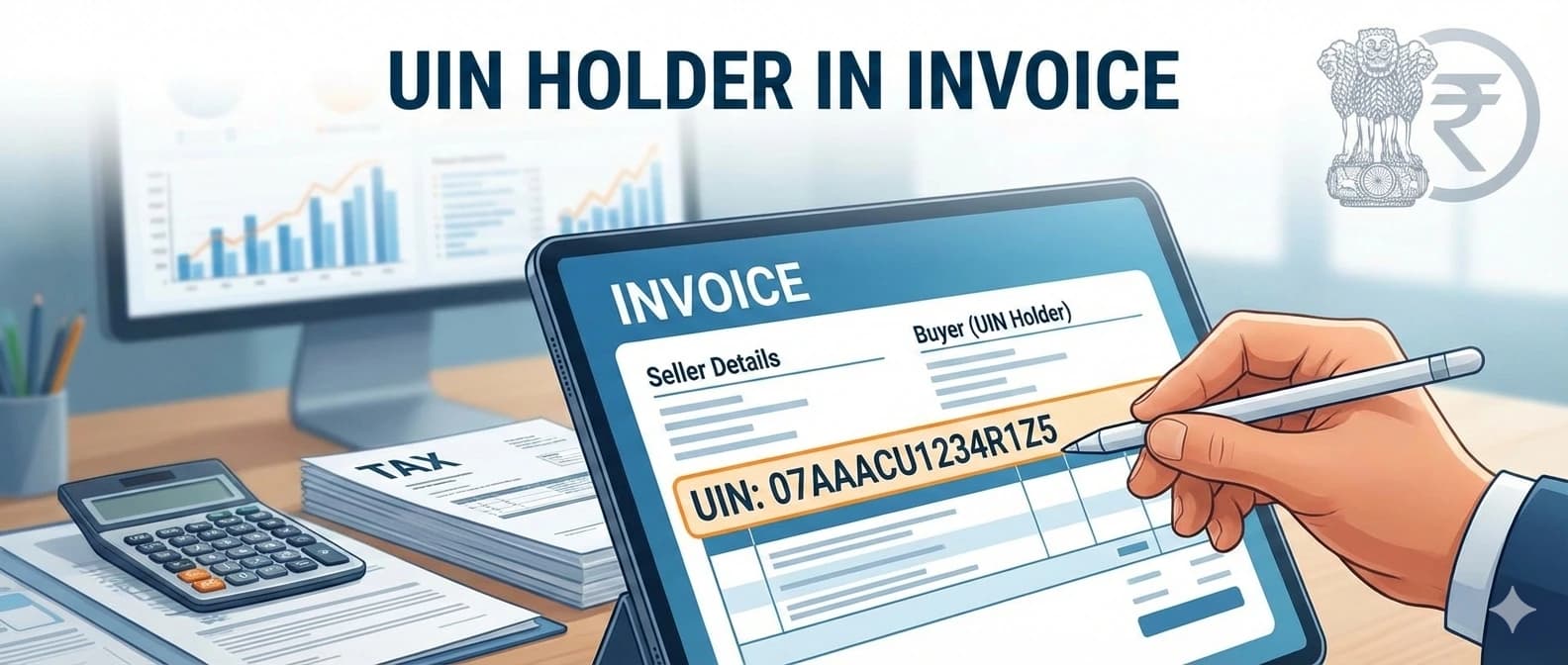
When invoicing certain special entities in India, you'll need to handle their Unique Identification Number (UIN). Understanding UIN and how it appears on invoices is crucial for both sellers and tax-exempt organizations to ensure proper GST compliance.
This guide explains everything about UIN holders, how to handle UIN in invoices, and how LEDGERS simplifies the process.
UIN (Unique Identification Number) is a unique 15 digit identification number assigned by GST authorities to an individual who does not need to register for GST, but can get a refund on GST paid. Most businesses will receive a standard GSTIN which they will use to collect tax from customers; however, UIN is only available to organizations that are exempt from registering under GST and are only entitled to claim Input Tax Credit (ITC) for their purchases. The structure of UIN is similar to a GSTIN (both are composed of 15 alpha numeric characters), but UIN has a totally different purpose.
UIN is issued only to notified entities exempt from GST registration:
These entities are not engaged in regular business activities subject to GST, make purchases in India on which GST is charged, are entitled to claim refunds of GST paid, and operate under special exemptions or international agreements.
GSTIN holders must file regular GST returns, collect tax on outward supplies, pay tax liability, and maintain complete GST compliance.
UIN holders do not file regular GST returns, do not collect tax on any supplies, only claim refunds on GST paid, and file refund applications instead of tax returns.
When you invoice a GSTIN holder, you show their 15-digit GSTIN and charge applicable GST. When you invoice a UIN holder, you show their 15-digit UIN and still charge applicable GST, but the UIN holder will later claim a refund of that GST.
You charge applicable GST rates, issue a proper tax invoice with the buyer's UIN, collect the full amount including GST, and report the transaction in GST returns like any other B2B supply.
The UIN holder pays the full invoice amount including GST and files a refund application with GST authorities.
LEDGERS stores and recognizes UIN format automatically.
Applicable GST rates are calculated automatically.
All mandatory invoice fields are included.
UIN invoices are auto-included in GSTR-1.
Complete records maintained for audits and tracking.
LEDGERS ensures automatic UIN recognition, compliant invoicing, seamless GST return integration, and complete audit trails.
Whether occasional or frequent UIN transactions, LEDGERS keeps you compliant effortlessly.
Ready to simplify your UIN invoice management? Start your free trial today.
This article is for informational purposes only and should not be considered legal or tax advice.
