




RAGU M
Updated on
30-07-2026
Importance of Reference in Accounting Journal Entries
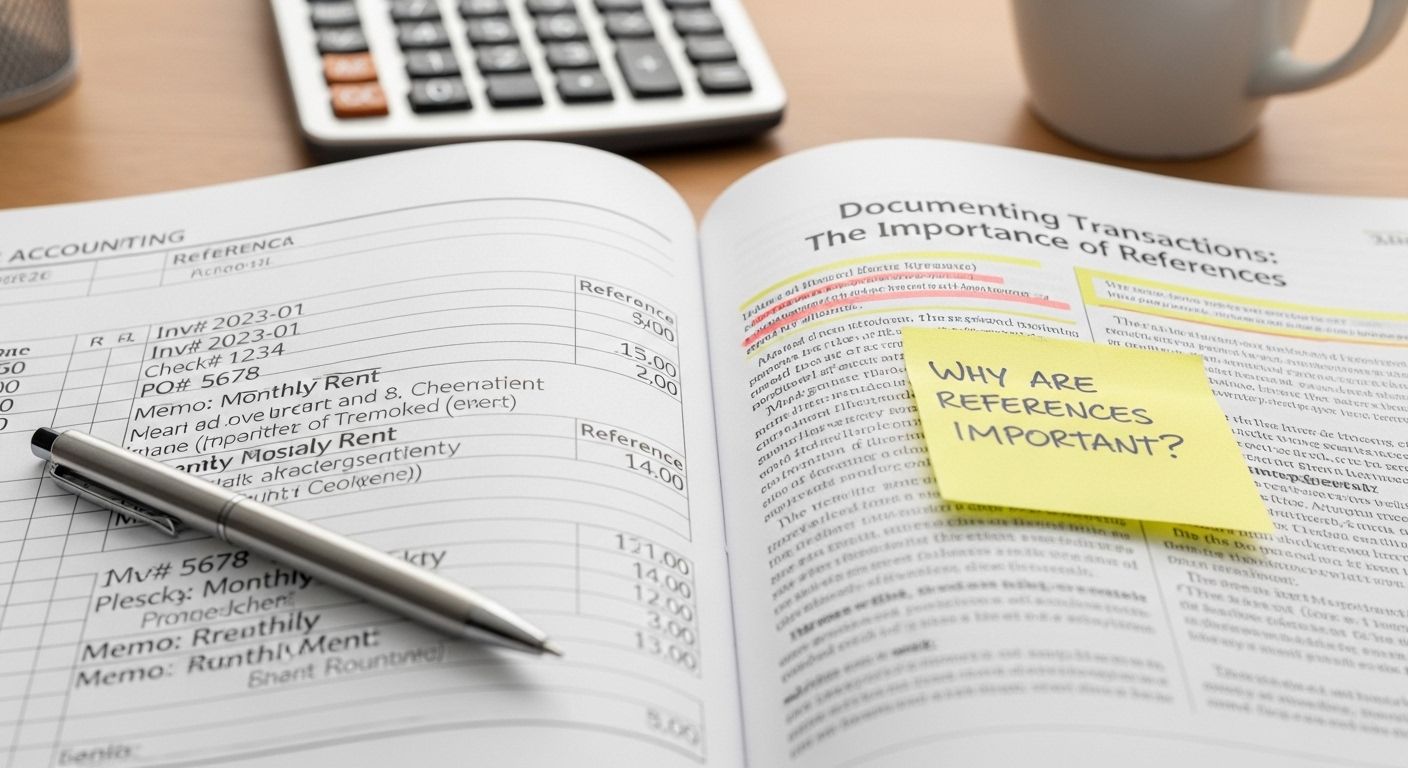
Precise organisation, and attention to detail are key elements in the accounting profession. A vital part of keeping financial records accurate and in good order is using references in accounting journals. References break the complex web of transactions that businesses engage in into smaller pieces of data. This helps maintain accurate financial statements while also providing an easier way to communicate with and conduct audits of businesses' financial statements. This article will provide readers with a review of the different elements and importance of using references in accounting journals so that readers will understand why these references are crucial to successful bookkeeping.
The Role of References in Financial Transactions
When managing finances, references in accounting journal entries serve multiple purposes that help clarify and simplify the tracking of financial activities:
- Clarity: Clearly labelled journal entries help in distinguishing similar transactions by categorising them systematically.
- Verification: References allow for easy cross-verification of financial data, enhancing auditing processes.
- Tracking: They assist in tracking the origin and journey of a transaction, making follow-ups and updates easier.
Key Benefits of Using References in Journal Entries
References play a pivotal role in the bookkeeping process for various reasons:
Enhancing Accuracy and Reliability
Accuracy in financial reporting is paramount. With references:
- Each transaction can be traced back to its source, reducing the risk of data entry errors.
- Misinterpretations are minimised, increasing the reliability of the financial statements produced.
Improving Financial Transparency
Transparency holds great importance in nurturing trust and credibility among stakeholders:
- References provide a clear audit trail, making financial scrutiny less cumbersome.
- They facilitate clear explanations behind each transaction, promoting trust among investors and auditors alike.
Streamlining the Auditing Process
The audit process is a critical evaluation often encountered in accounting. Here, references are key:
- They provide a clear chain of documentation, which is necessary for audit checks.
- Timely audits become possible as references ensure documentation is well-organised and accessible.
Facilitating Efficient Financial Management
Sound financial management relies heavily on accurate data interpretation and utilisation:
- References make it easier to analyse and interpret large volumes of transaction data.
- Financial decision-making becomes more informed and straightforward, relying on detailed and accessible records.
Implementing Effective Reference Systems
To capture the maximum benefits of references, businesses should consider implementing efficient reference systems:
Creating a Consistent Reference Framework
Ensure uniformity in referencing across all journal entries:
- Develop and maintain a standard reference guide tailored to the organisation's needs.
- Regular updates and reviews of this framework are essential to accommodate any changes in accounting practices.
Integrating Technology for Automation
Leverage technology to assist in efficient referencing:
- Accounting software can automate the referencing process and reduce manual errors.
- Advanced software options often come with custom reference templates, which help in maintaining consistency.
Training Team Members
A system is only as effective as the people using it:
- Conduct regular training sessions to familiarise staff with reference systems and their importance.
- Encourage a culture of accuracy and diligence in financial documentation.
The Future of References in Accounting
The field of accounting is ever-evolving, introducing new advancements and practices that continuously reshape its landscape. Several trends concerning references in journal entries are likely to emerge:
- Increased Digital Automation: Automated systems will become more sophisticated, further reducing manual entry errors.
- Integration with Blockchain Technology: Blockchain's immutable ledgers promise to bring a new dimension of accuracy to reference checks.
- Enhanced Data Analytics: References will play a critical role in powerful analytics tools used for strategic decision-making.
Conclusion
References are vital for maintaining accurate financial records, because they allow for easy tracking of the journal entries while simultaneously allowing flexibility and control over the accuracy of the journals. The references support companies in being able to produce accurate and reliable financial statements. Companies that put focus on using an efficient reference system within journal entries will have a significant advantage over the long term. The way in which we handle our financial records will change with the new tools and technologies we develop; however, the ability to use references in creating and maintaining the integrity of our financial records will likely still stand as one of the fundamentals of best practices in accounting. Checkout Ledgers.cloud to efficiently tracking Journal entries with references.