




Jyothishwar M
Updated on
30-07-2026
Mastering Payroll Calculation Simplified
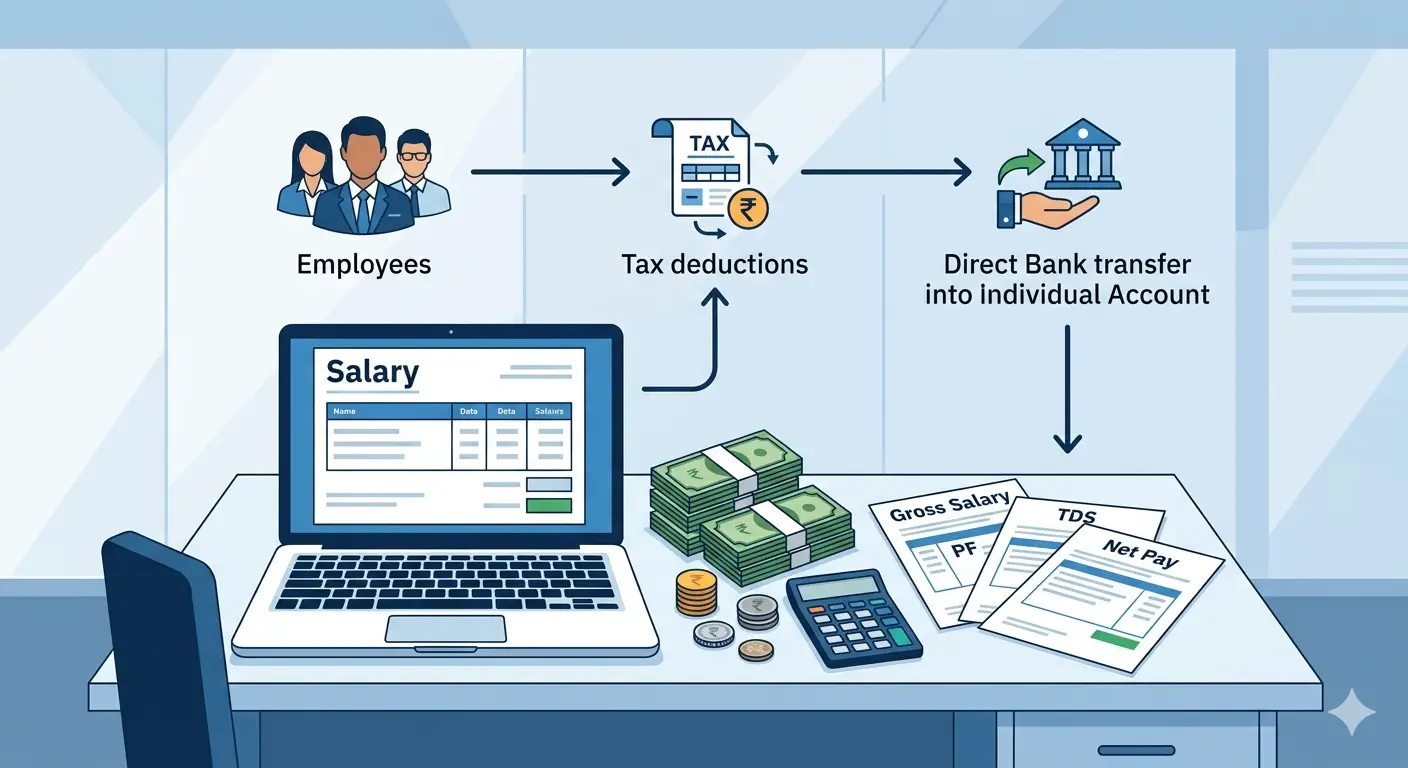
Payroll calculation is the process of calculating every employee’s net salary for a given pay period by taking into consideration the gross earnings, like salaries, bonuses, and benefits, and making all the relevant deductions. It ensures employees are paid accurately while the employer meets all statutory and company policy obligations For more take a look on https://ledgers.cloud/in/payroll
Calculating payroll can be a complex procedure, as there are several factors that impact the calculation.
What Are the Key Components of Payroll?
1. Employee Information
This step involves gathering all the required information of the employee’s finances. Some forms are filled by employees during the onboarding process as a prerequisite, as per the employment laws. Data like attendance and hours worked are also kept track of.
2. Pay Policy
This is the policy that is followed to pay employees as per local laws. Companies have flexibility while designing these rules and regulations. Attendance policies, leaves, benefits and overtime pay policies can be drafted as per the company’s convenience.
3. Basic Salary
The base salary, which is the base pay, is usually 35%-65% of an employee’s total CTC and this remains the same for as long as the employee is employed in your organization. Factors that influence base pay could be designation and hierarchical position of the employee.
4. Allowances
This is what a company gives to its employees, excluding benefits. Allowance packages could cover travel expenses, relocation expenses etc. This package could be different for different level of employees and organizations can design it as they wish. Many types of allowances are included in the CTC. Rent allowance, medical allowance, and family allowance are some of the types of allowances.
5. Deductions
A certain amount is deducted from an employee’s salary every month. These deductions can be of two types- voluntary and involuntary. Involuntary deductions include taxes and withholdings, and voluntary deductions include stock options, investment premiums etc.
6. Gross Salary
Gross salary is the employee’s wage before making any deductions. It is the cost that a company bears to employ an individual.
7. Net Salary
This is also called the take-home amount or in-hand salary that an employee is paid after making the involuntary deductions from their gross salary.
8. Tax Deducted at Source
TDS is the method of direct taxation where the employer deducts a certain amount which are taxes from the monthly salary of the employee. If an employee is earning a certain standard amount, they are liable to pay TDS.Steps to Streamline Payroll Calculation
Effective payroll processing involves following a precise series of steps to ensure accuracy and compliance. Let's dive into the process:
1. Gather Employee Information
Begin by collecting essential employee data such as Social Security numbers, tax filing statuses, and withholding allowances. Ensure your records are up-to-date to avoid processing errors.
2. Determine Pay Periods
Define your pay frequency—weekly, bi-weekly, semi-monthly, or monthly. Consistency in pay periods simplifies both calculations and employee expectations.
3. Calculate Gross Pay
For hourly employees, multiply the number of hours worked by the pay rate. For salaried employees, divide the annual salary by the number of pay periods in the year.
4. Apply Payroll Deductions
Accurately apply mandatory and voluntary deductions. Stay updated on current tax rates to calculate withholdings correctly. This includes federal and state taxes, FICA taxes, and any voluntary deductions.
5. Calculate Net Pay
Subtract total deductions from the gross pay to determine the net pay. Double-check your figures to ensure accuracy.
6. Process Payroll
Use a reliable payroll system or software to automate calculations and streamline the process. This reduces errors and saves time.
Key Considerations in Payroll Management
Payroll management requires attention to detail and compliance with regulations. Consider the following to optimize your payroll process:
Adherence to Compliance and Tax Regulations
Keeping abreast of federal, state, and local tax laws is crucial. Non-compliance can lead to fines and legal issues. Regular training and updates on tax regulations ensure your process remains compliant.
Utilizing Payroll Software
Invest in robust payroll software that can handle complex calculations, tax updates, and reporting needs. A suitable system automates tedious tasks, limits errors, and enhances efficiency.
Effective Time Tracking
Implement reliable time and attendance tracking systems to ensure hours worked are accurately recorded. This helps in reducing disputes and errors in wage calculations.
Latest Developments in Payroll Calculation
Keeping pace with technological advancements and policy changes ensures your payroll process remains efficient and compliant. Recent trends include:
Cloud-Based Payroll Solutions
Many organizations are turning to cloud-based payroll systems for scalability, security, and accessibility. These solutions offer real-time access to payroll data and help businesses remain agile.
Artificial Intelligence and Automation
AI-driven payroll software can significantly reduce manual workloads, detect errors, and provide insightful analytics. Automation in payroll processes increases accuracy and frees up valuable time for HR professionals.
Cybersecurity Measures
With the increasing threat of cyber-attacks, it’s vital to implement robust cybersecurity protocols to protect sensitive payroll data. Ensure compliance with data protection laws like GDPR and CCPA.
Conclusion
Mastering payroll calculation is a vital component of successful business management. By understanding the basics, streamlining processes, and staying abreast of the latest developments, businesses can ensure accuracy and efficiency in their payroll operations. Employing advanced technologies and adhering to compliance regulations will safeguard your company against potential pitfalls, ensuring employee satisfaction and business continuity. Prioritize an organized and secure payroll system to foster a productive and harmonious workplace environment.