




PUGALENTHI
Updated on
30-07-2026
Why GST Notices Are Increasing and How to Stay Prepared
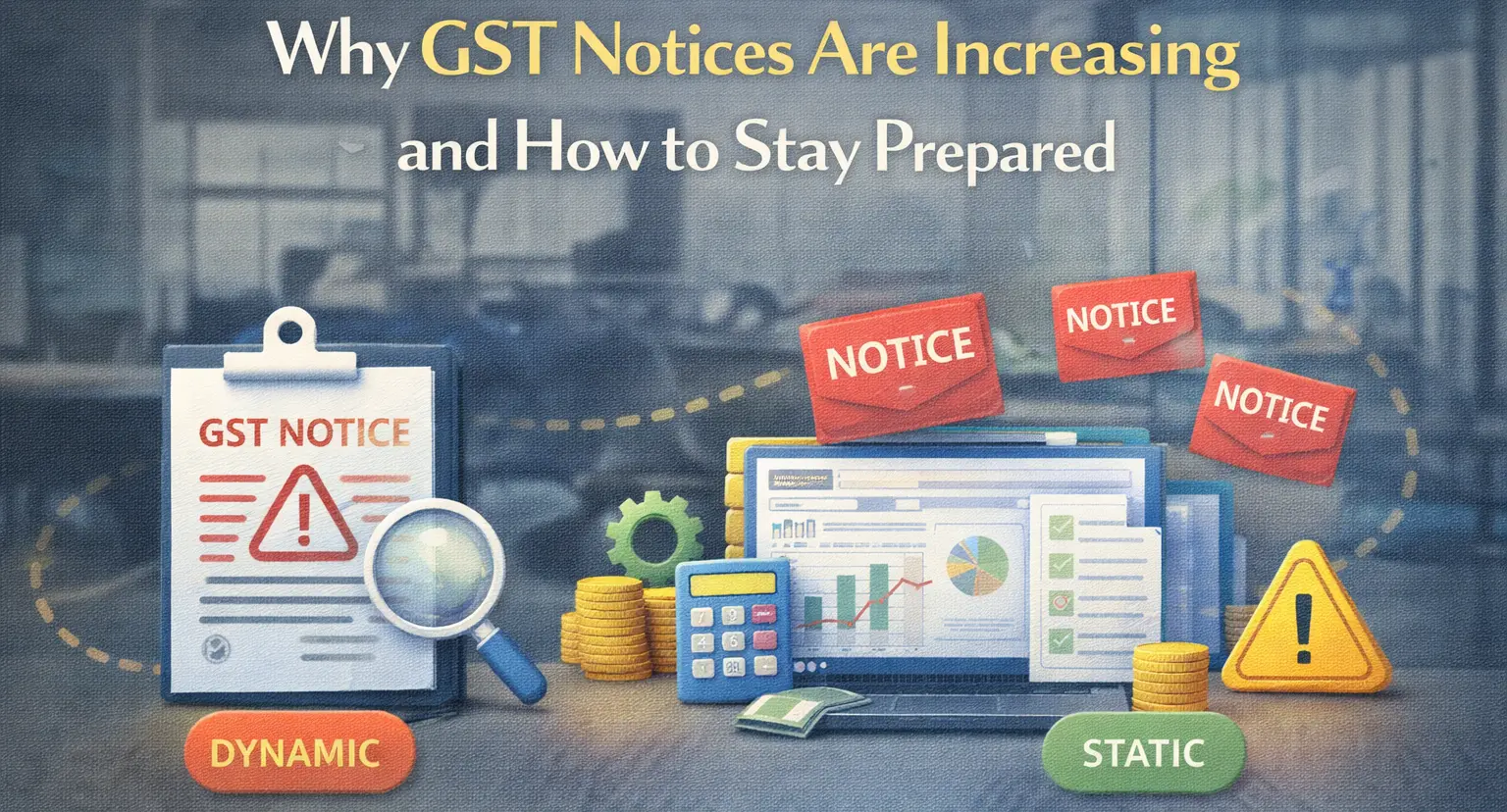
The rise in Goods and Services Tax (GST) notices has become a concern for businesses in recent times. A practical and easy-to-understand guide about "Why GST Notices Are Increasing and How to Stay Prepared" is crucial as businesses navigate the complexities of this tax structure. Explained here are the key reasons behind the surge in GST notices, such as data mismatches, Input Tax Credit (ITC) discrepancies, delayed filings, and increased system-based validations by GST Network (GSTN). This guide also offers strategies to stay compliant and avoid these notices.
Understanding the Surge in GST Notices
The GST regime is designed to streamline the tax system across India, yet the intricate nature of its implementation can sometimes lead to problems for businesses. Let's delve into the primary reasons behind the increase in GST notices:
- Data Mismatches: Inconsistent data entries across different GST returns often trigger scrutiny, prompting notices.
- ITC Discrepancies: Discrepancies in claiming input tax credits, often due to misreporting or supplier errors, are a major reason for receiving notices.
- Delayed Filings: Late submission of GST returns frequently results in notices and penalties.
- System-based Validations: The introduction of automated checks and validations by GSTN increases the detection of anomalies in filings.
Common Types of GST Notices
Businesses may receive various GST notices based on different compliance issues. Understanding these notices is essential for timely and adequate responses:
- Notice for Demand of Tax: Issued when tax liability, interest, or penalties are unpaid.
- Show Cause Notice: Issued when suspected evasion requires justification from the taxpayer.
- Notice for Return Discrepancies: Sent to address mismatches or discrepancies in the returns filed.
- Notice for Compliance Check: A reminder for filing pending returns or correcting delays.
How to Stay Prepared and Avoid GST Notices
Preventive compliance is key to minimizing the risk of receiving GST notices. Here are some practical steps businesses can take:
Regular Reconciliation
Businesses should consistently reconcile their financial records with their GST returns:
- Match GST returns validation with sales and purchase records periodically.
- Utilize reconciliation software tools for more accuracy and efficiency.
Accurate Return Filing
Submitting error-free returns is critical to avoid discrepancies:
- Ensure all entries involving sales, purchases, and ITC claims are accurately reported.
- Double-check each return before submission to prevent data mismatches.
Proper Documentation
Maintaining comprehensive documentation can expedite the resolution process:
- Keep detailed invoices, purchase orders, and receipts related to GST transactions.
- Organize records systematically for easy retrieval during audits or inspections.
Timely Filing and Payment
Prompt filing of returns and payment of taxes is crucial:
- Stay aware of GST return deadlines and ensure all filings are completed in advance.
- Set reminders or use automated systems to meet filing deadlines consistently.
Conclusion
As the incidence of GST notices continues to increase, businesses must adopt robust compliance measures. By understanding the reasons for these notices and employing strategies such as regular reconciliation, accurate filing, and maintaining proper documentation, organizations can significantly minimize their risks. Staying informed about the latest developments in the GST regime will further enhance a business's preparedness and compliance. Implementing these measures not only ensures smoother operations but also fosters a proactive approach to handling GST obligations.
LEDGERS
LEDGERS assists with compliance relating to GST through the integration of reconciliations into your accounting processes to allow the speedy identification of errors in records prior to incurring any penalties or interest. LEDGERS allows you to automate the process of synchronizing your GSTN data and tracking invoices on an invoice-by-invoice basis eliminating the need for manual corrections and the time-consuming process of verifying transactions at the end of a reporting period through the use of automatic validations from the system to facilitate revenue compliance activities.