




PUGALENTHI
Updated on
30-07-2026
AI in Accounting and GST Compliance in India
In the contemporary business landscape, accounting processes and GST compliance pose significant challenges for organizations in India. Traditional accounting methods are fraught with manual data entry, reconciliation errors, and compliance risks, making it a daunting task for businesses to keep up with regulatory standards. Enter Artificial Intelligence (AI) a transformative force with the power to revolutionize these accounting and compliance practices.
Challenges in Traditional Accounting and GST Compliance
The landscape of traditional accounting and GST compliance in India is beset with numerous challenges:
- Manual Data Entry: Dependence on manual data entry often leads to errors and inefficiencies.
- Reconciliation Errors: Human error frequently results in reconciliation discrepancies.
- Compliance Risks: Maintaining up-to-date compliance with the rapidly changing GST norms is arduous.
These challenges increase the demand for more efficient and accurate systems, setting the stage for AI's intervention.
AI as a Solution: Driving Automation and Accuracy
AI technologies are transforming accounting and GST compliance in India by offering automated, efficient, and accurate solutions. Here's how AI is reshaping the landscape:
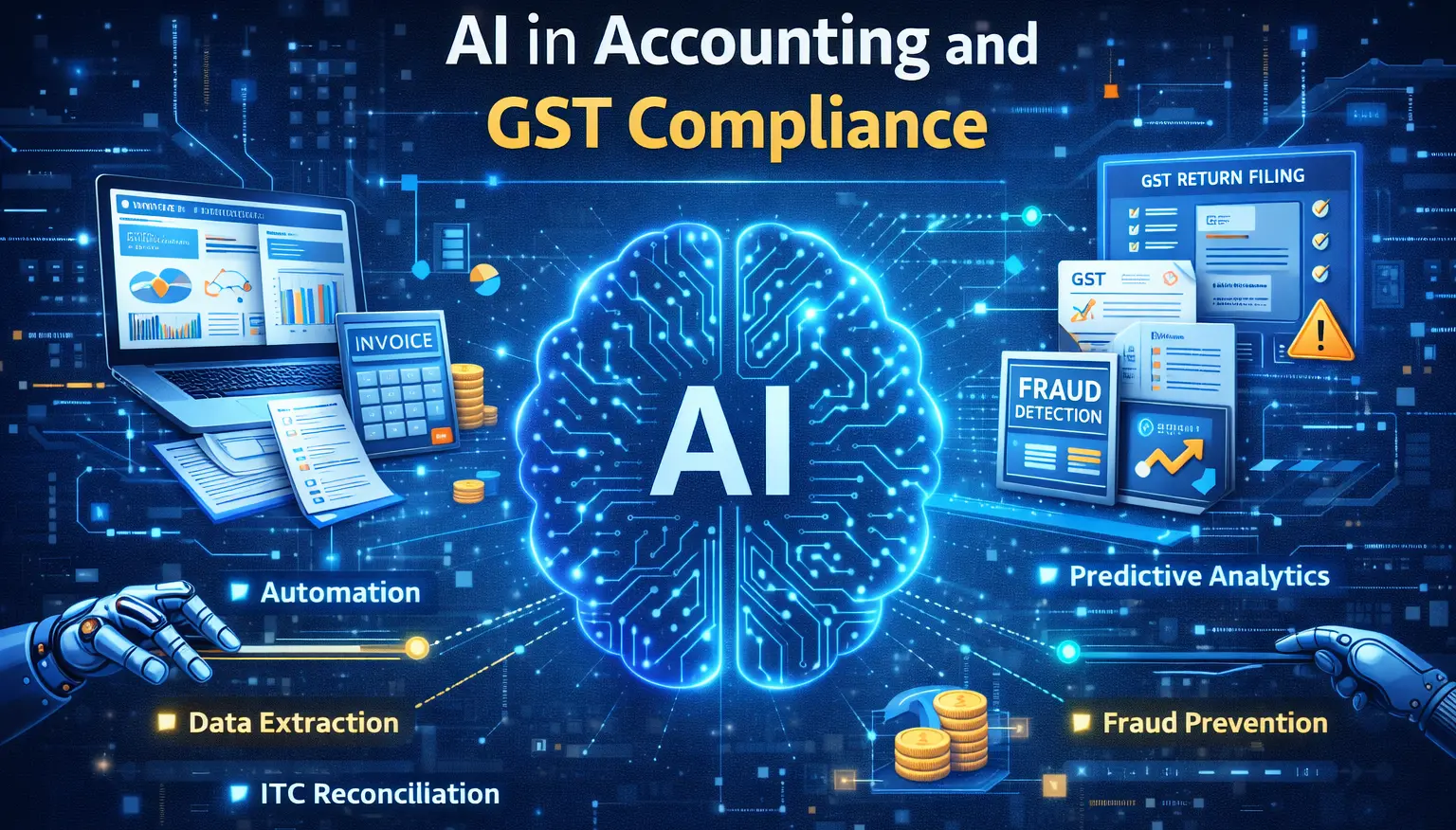
Invoice Processing and Data Extraction
AI algorithms excel at handling invoice processing by automatically extracting data from invoices accurately and quickly. This reduces the scope of manual errors and saves time.
ITC Reconciliation
AI facilitates Input Tax Credit (ITC) reconciliation by automatically matching entries and flagging discrepancies. This seamless approach enhances accuracy and compliance.
Anomaly Detection and Fraud Prevention
Advanced AI systems can recognize patterns and detect anomalies that might indicate fraud. These systems offer continuous monitoring, which is crucial in preventing financial missteps.
Predictive Analytics
AI uses predictive analytics to forecast trends and demands. Businesses can leverage these insights for better decision-making and strategic planning.
AI in GST Systems: Automation and Real-Time Validation
AI-powered GST systems are instrumental in managing compliance more effectively:
- Automating Return Filing: AI automates and simplifies the process of filing GST returns, minimizing human intervention.
- Real-Time Data Validation: AI ensures real-time validation of transactions, reducing errors and compliance issues.
Practical Use Cases
AI-driven solutions offer practical applications for various stakeholders:
- Businesses: Manage large transaction volumes efficiently, reducing operational costs.
- Tax Professionals: Streamline processes, increasing the accuracy and reliability of tax-related services.
- Enterprises: Enhance compliance through automated and accurate data handling.
Key Benefits of AI in Accounting and GST Compliance
The adoption of AI in these domains provides multifaceted advantages:
- Improved Accuracy: Reduces human error in data management.
- Time Savings: Automation accelerates tasks that would otherwise be time-consuming.
- Cost Reduction: Lower operational costs due to reduced manual intervention.
- Enhanced Compliance: Ensures better alignment with regulatory standards.
Challenges: Data Privacy and Implementation Complexity
Despite its advantages, the transition to AI presents challenges:
- Data Privacy: Ensuring the confidentiality and security of sensitive financial data.
- Implementation Complexity: Integrating AI systems with existing infrastructures.
- Dependency on Quality Data: AI systems require accurate data to function effectively.
Best Practices for Adopting AI in Accounting Systems
To successfully integrate AI, consider the following strategies:
- Integration with ERP/GST APIs: Ensure compatibility with current systems.
- Secure Data Handling: Adopt stringent measures for data security.
- Quality Data Maintenance: Regularly update and cleanse data inputs to enhance AI accuracy.
By following these practices, organizations can effectively transition to AI-based systems, leveraging their full potential.
Conclusion
AI holds the promise of a more streamlined, efficient future for accounting and GST compliance in India. By tackling traditional challenges and offering tangible benefits, AI-driven systems are undeniably the future of compliance. Businesses and tax professionals must embrace these technologies to stay competitive and compliant in a rapidly evolving financial landscape.
As AI continues to evolve, its potential to reshape industries is boundless. With strategic integration and mindful implementation, AI can elevate the accuracy, efficiency, and compliance in accounting processes, heralding a new era of financial management.
LEDGERS
LEDGERS assists with compliance relating to GST through the integration of reconciliations into your accounting processes to allow the speedy identification of errors in records prior to incurring any penalties or interest. LEDGERS allows you to automate the process of synchronizing your GSTN data and tracking invoices on an invoice-by-invoice basis eliminating the need for manual corrections and the time-consuming process of verifying transactions at the end of a reporting period through the use of automatic validations from the system to facilitate revenue compliance activities.