




RAGU M
Updated on
30-07-2026
Understanding Assets vs. Liabilities: Key Differences
Whether you're an individual or a business owner, it's vital that you understand the difference between an asset and a liability so you can manage both parts of your personal or business finances effectively for future growth. Having this knowledge gives people the ability to make smart choices when it comes to spending their money, which ultimately leads to a financially sound individual or business. By knowing what items are classified as either an asset or a liability, and how each type of item affects one's overall finance, people can develop a plan to achieve financial success and security.
What Are Assets?
Assets are items of value owned by an individual or business, contributing to their net worth and future economic benefits. Understanding assets is essential for building wealth and ensuring financial security. Here are some common examples:
- Cash and Cash Equivalents: Easily accessible funds or instruments convertible into cash, such as money market accounts.
- Investments: Stocks, bonds, mutual funds, and other investment vehicles that can potentially grow over time.
- Real Estate: Properties such as homes, commercial buildings, and land that typically appreciate in value.
- Inventory: Goods available for sale, crucial in retail and manufacturing sectors.
- Equipment: Machinery or tools essential for business operations, with potential resale value.
Assets are typically categorized into current (short-term) and non-current (long-term) assets, based on their liquidity and the duration they are expected to bring economic benefit.
What Are Liabilities?
Liabilities represent obligations or debts owed by an individual or business, requiring future payments or financial outflows. Understanding liabilities helps in managing debt and planning for expenditures effectively. Common types of liabilities include:
- Short-term Liabilities: Debts payable within a year, such as credit card balances and accounts payable.
- Long-term Liabilities: Obligations lasting beyond a year, including mortgages and long-term loans.
- Accrued Liabilities: Expenses incurred but not yet paid, like wages payable or utilities.
Liabilities are crucial for funding operations and investments, but managing them efficiently is vital to prevent financial strain.
Key Differences Assets vs. Liabilities:
Understanding the fundamental differences between assets and liabilities is essential for financial literacy and strategic planning. Here's how they compare:
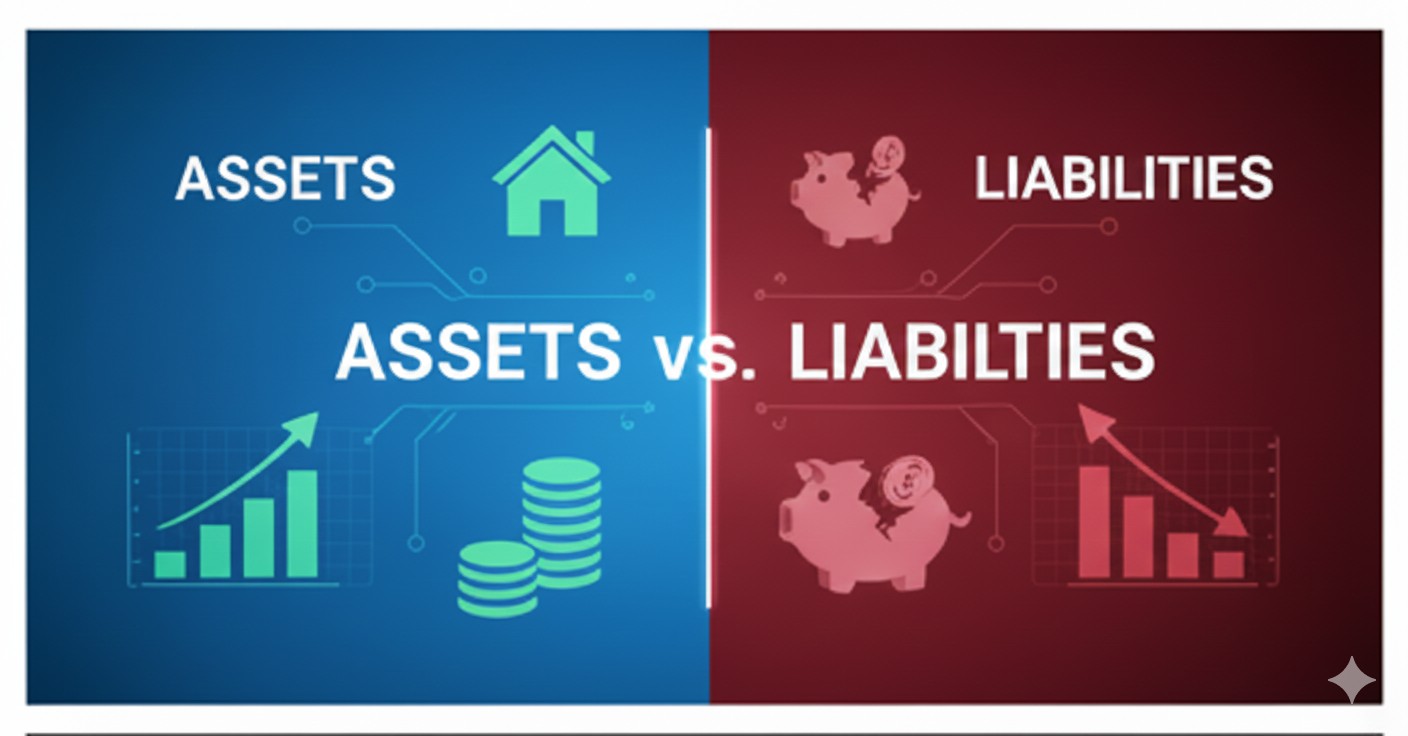
- Definition: While assets increase wealth, liabilities indicate debt or financial obligations. Essentially, assets add value, and liabilities subtract value from net worth.
- Impact on Financial Health: An abundance of assets enhances financial strength, whereas excessive liabilities can strain finances and jeopardize solvency.
- Use in Accounting: Assets appear on the balance sheet's left side, while liabilities are on the right, showcasing a company's financial position.
- Wealth Creation: Strategic asset acquisition promotes wealth accumulation; managing liabilities ensures they remain within a sustainable range.
The Importance of Balance
While assets and liabilities serve distinct purposes, their balance is vital for financial health. Effective asset management creates opportunities for growth, while prudent liability management minimizes risk. Here are some strategies to maintain balance:
- Asset Diversification: Spread investments across various asset classes to mitigate risks and maximize returns.
- Debt Management: Focus on reducing high-interest debts and optimizing debt structures to maintain a healthy balance.
- Regular Financial Review: Conduct periodic assessments of financial statements to monitor asset and liability status actively.
- Future Planning: Utilize assets for future needs, such as retirement or business expansion, while ensuring liabilities are sustainable.
Recent Developments in Asset and Liability Management
In recent years, financial markets and strategies have evolved, impacting how assets and liabilities are managed. Key trends include:
- Technology Integration: Implementation of AI and machine learning for better financial analysis and decision-making.
- ESG Investments: Growing focus on environmental, social, and governance factors in asset allocation.
- Digital Assets: Increasing interest and investment in cryptocurrencies and blockchain technologies.
- Risk Management: Enhanced emphasis on hedging strategies to safeguard against market volatility and economic downturns.
These trends underscore the need for adaptability and continuous learning to stay ahead in the dynamic financial landscape.
Conclusion
Understanding the intricate dynamics between assets and liabilities is paramount for achieving financial success and stability. Assets form the foundation upon which wealth is built, while liabilities, when managed effectively, can serve as tools for growth and development. Balancing these two components ensures financial health and resilience in both personal and business contexts. By continuously refining asset and liability management strategies and staying abreast of emerging trends, individuals and businesses can navigate financial challenges and seize opportunities for growth.
In a world, where financial security often dictates quality of life, an informed approach to assets and liabilities can pave the way for a prosperous future.