




PUGALENTHI
Updated on
30-07-2026
Building a System-Driven GST Compliance Framework
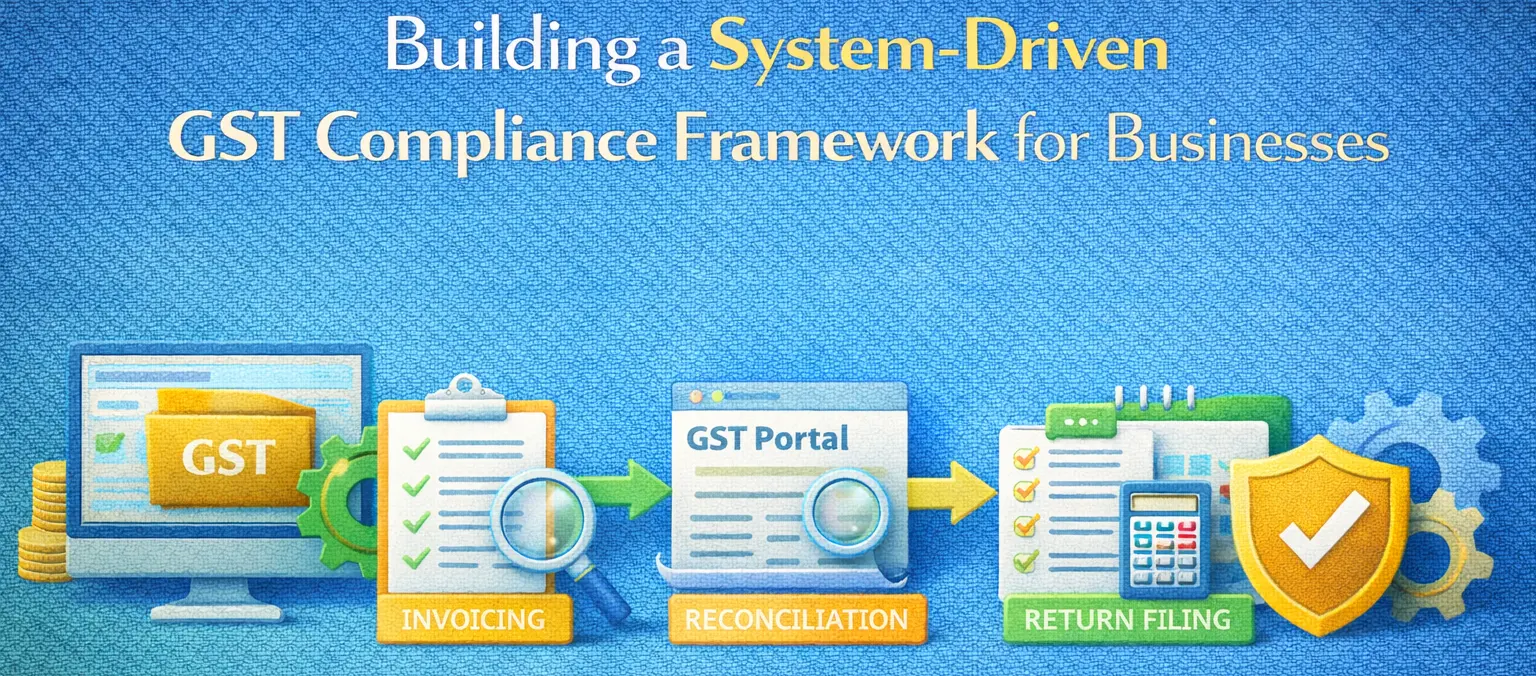
In today's ever-evolving business landscape, the need for a systematic approach to Goods and Services Tax (GST) compliance is more crucial than ever. "Building a System-Driven GST Compliance Framework" is no longer a choice but a necessity for businesses aiming to increase efficiency and accuracy. This strategic guide delves into transitioning from manual GST handling to a structured system-based approach that integrates invoicing, reconciliation, return preparation, and compliance monitoring.
Why Shift to a System-Driven Approach?
The shift from manual to system-driven GST compliance is anchored on several compelling reasons:
- Enhanced Accuracy: Minimizes manual errors through automation.
- Time Efficiency: Streamlines processes, freeing up valuable resources.
- Risk Reduction: Strengthens internal controls to ensure compliance and avoid penalties.
- Scalability: Adapts to growing business needs without proportionate increases in effort.
Implementing a System-Driven GST Compliance Framework
Step 1: Integration of Invoicing Systems
A cornerstone of GST compliance is the invoicing process. Moving from manual record-keeping to a digital invoicing system offers numerous benefits, such as:
- Accuracy: Automatically calculates GST on transactions.
- Traceability: Digitally stored records that are easy to audit.
- Efficiency: Reduces the time taken to issue and process invoices.
Begin by selecting an invoicing platform that aligns with your business needs and integrates with existing accounting systems. Ensure that it adheres to compliance standards and can generate required GST reports.
Step 2: Automating Reconciliation Processes
Reconciliation is a critical part of verifying GST returns against your books and vendor filings. A digital system can automate this by:
- Identifying Discrepancies: Quickly catching mismatches between records and returns.
- Streamlining Adjustments: Simplifying correction processes for errors detected.
- Maintaining Audit Trails: Ensuring all changes are tracked and verified.
Implement reconciliation software that can automatically compare invoices and reconcile them against the GST portal data.
Step 3: Preparing and Filing Returns
Manual GST return preparation can be prone to oversights and errors. Automate this task to:
- Speed Up Processes: Automatically generate returns using real-time data.
- Improve Accuracy: Uses data integration to minimize errors in filing.
- Ensure Timely Compliance: Alerts you of filing deadlines and requirements.
Select a platform that offers comprehensive return filing features, including error-checking mechanisms and seamless submission to tax authorities.
Step 4: Monitoring Compliance with Internal Controls
The final pillar of a system-driven framework is robust compliance monitoring. This involves:
- Setting up Alerts: Automatic notifications for potential compliance issues.
- Regular Audits: Scheduled checks to review adherence to GST requirements.
- Continuous Improvement: Implementing feedback loops for improving compliance practices.
Invest in dashboards that offer real-time insights into your GST compliance status and identify areas for potential risk.
The Importance of Automation
Automation plays a vital role in this transition by reducing human error and increasing procedure efficiency. Utilizing tools that automate repetitive tasks allows employees to focus on strategic decision-making rather than monotonous data entry.
Consider using specialized software solutions that integrate seamlessly with your current systems to create a cohesive GST management framework.
Standardized Workflows and Internal Controls
Establishing standardized workflows ensures consistency in compliance practices across your organization. This involves:
- Documenting Procedures: Clearly written, step-by-step instructions for GST-related processes.
- Training Employees: Ongoing education to keep teams abreast of new practices and regulations.
- Establishing Checks and Balances: Internal audits to ensure adherence to procedures.
Effective internal controls can prevent fraud and misreporting by ensuring that all financial information is verified and accurate before submission to authorities.
Regular Reconciliation to Minimize Risks
Regular reconciliation is crucial to ensuring that your GST filings are accurate and complete. This involves cross-verifying transaction records against external documents such as vendor invoices and bank statements. Regular reconciliation:
- Prevents Penalties: Ensures accuracy before submission, avoiding fines for discrepancies.
- Identifies Issues Early: Quick detection allowing for prompt correction.
- Builds Trust: Enhances confidence in your financial reporting.
Conclusion
Building a system-driven GST compliance framework is a strategic move towards enhancing accuracy, efficiency, and risk management. By integrating invoicing, reconciliation, return preparation, and compliance monitoring into a structured approach, businesses can significantly reduce errors and compliance risks. Embracing automation, standardized workflows, strong internal controls, and regular reconciliation are essential steps every business should take to stay ahead in the competitive landscape.
Incorporating these practices not only ensures compliance but also positions your company as a forward-thinking leader, capable of adapting to future changes in the regulatory environment. It's time to embrace technology and transform your GST compliance approach from manual to automated and system-driven.
LEDGERS
LEDGERS assists with compliance relating to GST through the integration of reconciliations into your accounting processes to allow the speedy identification of errors in records prior to incurring any penalties or interest. LEDGERS allows you to automate the process of synchronizing your GSTN data and tracking invoices on an invoice-by-invoice basis eliminating the need for manual corrections and the time-consuming process of verifying transactions at the end of a reporting period through the use of automatic validations from the system to facilitate revenue compliance activities.