




ATCHAYA M
Updated on
30-07-2026
Centralized e-Invoicing for Multi-Branch Businesses Using LEDGERS
Most companies expand by opening operations in various locations, including multiple localities, states, and/or regions. This means many branches are independently handling sales, invoicing, dispatching, and communicating with customers. As a decentralized way of managing day-to-day local operations, separate branches do not have the same operational controls or processes which can lead to various compliance risks when having to manage and keep up with the requirements of ongoing local operations.
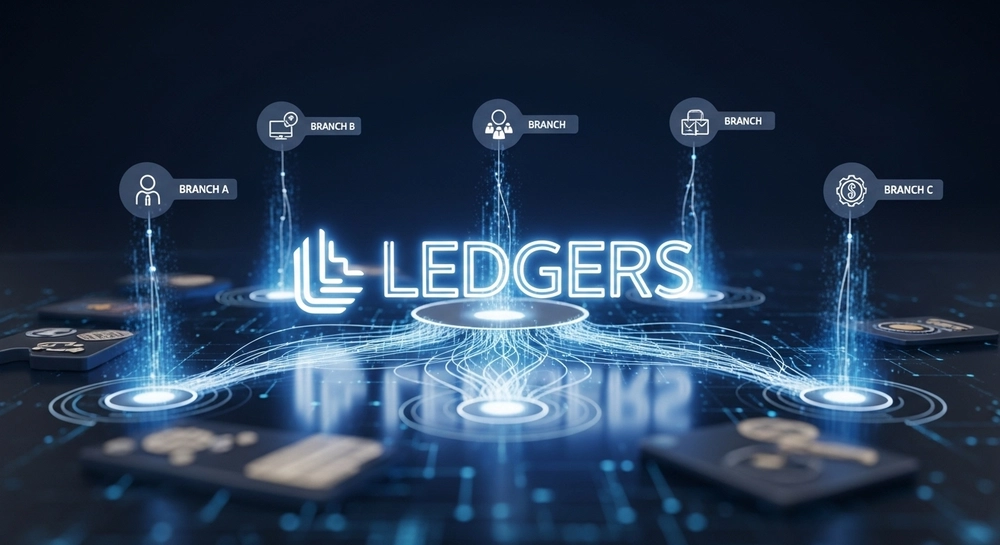
Centralizing e-Invoicing provides a way for businesses to manage their invoicing activities at the branch level, allowing for the ability to retain control over invoicing procedures, consistency across branches, and maintain compliance with legislative requirements. LEDGERS enables businesses to create a common platform where multiple teams have access to generate e-Invoices in a single unified system.
Challenges Faced by Multi-Branch Businesses
Businesses operating with several branches often encounter practical challenges in managing invoicing processes. Each branch may have its own billing team, customer base, and operational workflow. Without a unified system, common issues may arise, such as:
- Inconsistent invoice formats across branches
- Duplicate invoice numbering
- Incorrect GST classification or tax calculation
- Difficulty tracking invoices generated by different teams
- Limited visibility for central finance teams
These problems not only increase administrative workload but may also create compliance risks during GST return filing and reconciliation.
Importance of a Centralized e-Invoicing Approach
A centralized e-Invoicing system brings all invoice data into one controlled environment while still allowing branches to perform their daily billing tasks. Instead of each branch operating independently with separate systems, invoices are generated within a shared platform.
This approach helps businesses maintain uniform billing standards and ensures that every invoice follows the same compliance rules. It also allows management teams to monitor invoicing activity across the organization without interfering with branch operations.
Better Visibility for Finance and Compliance Teams
Centralized invoicing improves visibility for finance departments and compliance managers. When invoices from all branches are generated within one system, finance teams can easily track:
- Total invoices generated across branches
- Taxable turnover across locations
- Pending or rejected invoices
- Compliance status for e-Invoicing
This visibility helps finance teams prepare GST returns more efficiently and detect inconsistencies early.
Consistent Compliance Practices Across Locations
In decentralized environments, different branches may follow slightly different invoicing practices. Over time, these differences can create confusion in accounting records and tax reporting.
A centralized system helps standardize practices across the organization. Invoice templates, tax structures, numbering formats, and validation rules can remain consistent across all branches. This reduces the risk of errors and ensures that every invoice meets GST compliance requirements.
Improved Coordination Between Branches
Centralized invoicing also improves coordination between different teams within the organization. Sales teams, branch managers, finance departments, and compliance teams can all access relevant information within the same system.
This reduces communication gaps and ensures that everyone works with the same set of data. When adjustments or corrections are required, they can be handled in a structured manner without disrupting other branch operations.
Simplified Reconciliation and Reporting
For businesses operating multiple branches, reconciliation can become time-consuming if invoice data is scattered across different systems. Centralized e-Invoicing helps bring all invoice records together, making it easier to compare accounting data, GST returns, and operational reports.
Instead of collecting invoice data from each branch manually, businesses can rely on consolidated information within the system. This simplifies reporting and reduces the effort required during return filing or audits.
Supporting Growth Without Increasing Complexity
As businesses continue to grow and add new branches, managing invoicing manually becomes increasingly complex. A centralized system ensures that expansion does not create additional compliance difficulties.
New branches can follow the same invoicing framework as existing ones, allowing the organization to maintain consistent processes even as operations scale.
Conclusion
For multi-branch businesses, managing invoicing independently across different locations can create operational challenges and compliance risks. Centralized e-Invoicing provides a practical solution by bringing all invoicing activities into a single structured system while still allowing branches to manage their daily transactions.
By maintaining consistent invoicing practices, improving visibility for finance teams, and simplifying reconciliation, centralized e-Invoicing helps businesses operate more efficiently and maintain reliable GST compliance across their entire organization.