




ATCHAYA M
Updated on
30-07-2026
Why Invoice Numbering Discipline Matters More Than You Think
Most people view the process of assigning invoice numbers simply as a procedural requirement, if you have assigned the invoice a number you’re done with that task. Unfortunately, invoice numbers have a lot more impact on a business’s accounting processes (including income tax and GST compliance) in addition to assisting with the overall accountability of a business’s finances.
If an organization does not have a system to generate invoice numbers or uses an inconsistent numbering system, they may find themselves in an environment riddled with confusion, errors, and compliance challenges. In contrast, organizations with a well-defined framework for generating invoice numbers will experience improved organization and clarity when it comes to documenting their business transactions.
The Function of Invoice Numbering
Invoice numbers are not just meaningless strings of characters but are actually used as unique references to each sales transaction. The various functions of invoice numbers include:
- Ability to track all sales transactions
- Ability to maintain accurate accounting records
- Ability to support the completion of GST returns
- Ability to help with audits and reconciliations
When invoice numbers follow a clear and consistent pattern, it becomes easier to locate and verify transactions.
Common Mistakes Businesses Make
Many businesses face issues with invoice numbering without realizing its impact. Some of the common mistakes include:
- Duplicate invoice numbers
- Skipping numbers unintentionally
- Using inconsistent formats
- Resetting numbering incorrectly during the year
- Manual numbering without proper tracking
These mistakes may seem small at first, but they can create complications later.
Problems Caused by Duplicate Invoice Numbers
Duplicate invoice numbers are one of the most serious issues. In GST compliance, invoice numbers must be unique within a financial year.
If duplicates occur, businesses may face:
- Rejection during e-Invoicing (IRN generation)
- Confusion during reconciliation
- Difficulty in tracking transactions
- Questions during audits
Avoiding duplication is critical for maintaining clean records.
Impact of Skipped or Missing Numbers
Sometimes, invoice numbers are skipped due to system errors or manual mistakes. While this may not always cause immediate issues, it raises concerns during audits.
Authorities or auditors may question:
- Whether transactions were missed
- If any invoices were deleted
- If records are complete
Maintaining a continuous sequence helps build confidence in record accuracy.
Inconsistent Numbering Creates Confusion
Using different formats for invoice numbers across departments or periods can make tracking difficult. For example, mixing formats like:
- INV001
- 2024-INV-01
- A/001
can lead to confusion, especially when dealing with large volumes of invoices.
A consistent format makes it easier to search, sort, and manage invoices.
Importance in e-Invoicing
With e-Invoicing, invoice numbering becomes even more important. Since each invoice is validated before IRN generation, duplicate or incorrect numbers can lead to immediate rejection.
This means businesses must ensure:
- Unique invoice numbers
- Proper sequence
- Consistency across all invoices
Errors in numbering can slow down the entire invoicing process.
Best Practices for Maintaining Discipline
Maintaining proper invoice numbering does not require complex systems — just a structured approach. Some good practices include:
- Using system-generated invoice numbers
- Following a consistent format across the organization
- Avoiding manual overrides
- Monitoring numbering sequence regularly
- Ensuring uniqueness within the financial year
These steps help prevent common issues.
Benefits of Proper Invoice Numbering
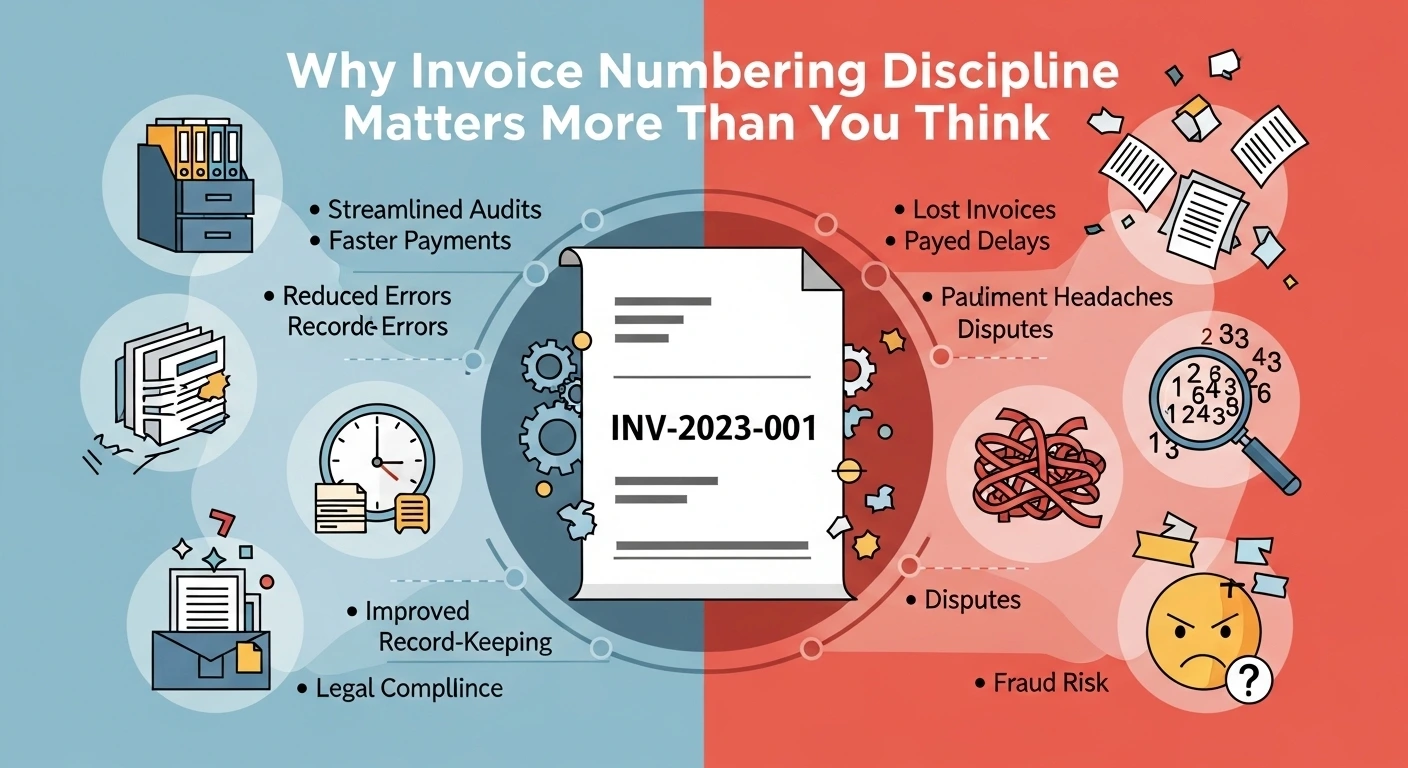
When invoice numbering is handled properly, businesses experience several benefits:
- Easy tracking of transactions
- Faster reconciliation
- Better audit readiness
- Reduced chances of errors
- Smooth e-Invoicing process
It also improves overall financial organization.
Supporting Business Growth
As businesses grow, the number of invoices increases significantly. Without a disciplined numbering system, managing large volumes becomes difficult.
A structured approach ensures that even as operations scale, invoice management remains simple and efficient.
Conclusion
Invoice numbering may seem like a small detail, but it plays a crucial role in maintaining organized and compliant financial records. Mistakes such as duplication, inconsistency, or skipped numbers can create unnecessary complications.
By following a disciplined and structured numbering system, businesses can improve clarity, reduce errors, and support smoother GST compliance. In the long run, this small practice makes a big difference in managing business operations effectively.