
RANJITH KUMAR M
Updated on 30-07-2026
Over the last few decades, accounting technology has transformed how businesses record, analyze, and manage their finances. Early accounting software replaced paper ledgers with digital systems installed on office computers. Today, the next major evolution—cloud accounting—has redefined finance operations by enabling anytime access, automation, and real-time insights.
Cloud accounting software, such as Ledgers, helps businesses reduce costs, improve accuracy, and scale operations without the burden of managing servers or complex IT infrastructure. This article explains what cloud accounting is, how it works, and why modern organizations are moving their finance operations to cloud-based solutions like Ledgers.
Cloud accounting refers to the use of internet-based accounting software to manage core financial activities, including bookkeeping, accounts payable, accounts receivable, and general ledger management. Instead of installing software on local computers or company-owned servers, users access the system through a web browser or mobile app.
With cloud accounting, financial data is stored securely on the software provider’s servers. Authorized users—business owners, accountants, finance teams, or external auditors—can access up-to-date financial information from anywhere, at any time.
Cloud accounting has evolved from a new experiment into a core business necessity. Early cloud-based ledgers demonstrated that accounting could be handled entirely through a browser. As internet reliability and security improved, cloud platforms began to match—and eventually exceed—the capabilities of traditional on-premises software.
Today’s cloud accounting systems deliver real-time reporting, automated reconciliations, and built-in analytics. Finance teams no longer wait for month-end reports; instead, they work with live data that supports faster decisions and better control over cash flow and profitability.
This shift became even more valuable as remote work increased. Teams using cloud accounting software like Ledgers could continue operations without disruption, highlighting the importance of location-independent access.
Traditional accounting software runs on company-owned computers or servers and is maintained internally. While it once represented a major improvement over manual bookkeeping, it lacks the flexibility, scalability, and efficiency of cloud-based systems.
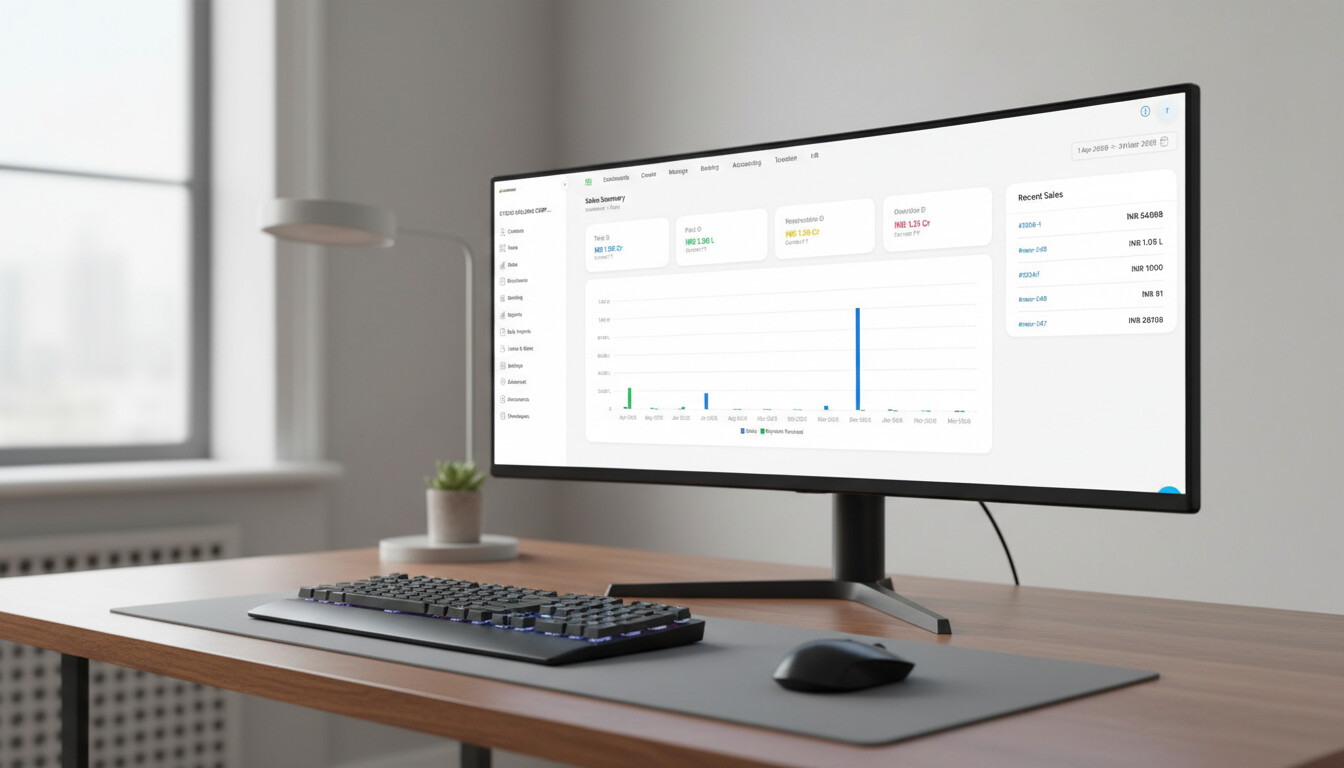
In a cloud accounting system, users log in through a secure browser or mobile app. Once logged in, they can view dashboards tailored to their roles—such as cash balances, outstanding invoices, or upcoming payments.
Bank accounts can be connected directly to the system so transactions flow automatically into the ledger. As new data enters the system, reports and dashboards update instantly. Users can drill down from summary reports into individual transactions for complete transparency.
Cloud accounting often serves as the financial core of an ERP (Enterprise Resource Planning) platform. It integrates with modules for payroll, inventory, purchasing, sales, and HR—ensuring all business activities are reflected accurately in the financial records.
Cloud accounting automates transaction posting, bank reconciliations, recurring invoices, and payment processing. This reduces manual data entry and accelerates month-end close processes.
Users can access financial data from any location using an internet-connected device. This supports remote work, multi-location businesses, and easy collaboration with external accountants.
Cloud solutions eliminate the need for expensive servers, hardware maintenance, and large IT teams. Subscription pricing helps reduce overall ownership costs.
Cloud providers implement enterprise-grade security, including encryption, access controls, and automatic backups across multiple data centers. This reduces the risk of data loss and unauthorized access.
As businesses grow, cloud accounting systems can easily add users, storage, and functionality without major infrastructure changes.
With centralized, real-time data, teams across departments can work from the same financial information, improving alignment and decision-making.
Organizations that rely on older, on-premises systems often face several challenges:
These limitations can slow growth and increase operational risk.
Modern cloud accounting platforms like Ledgers include advanced capabilities that go far beyond basic bookkeeping:
Cloud accounting is suitable for businesses of all sizes—from startups to large enterprises. While small companies may begin with spreadsheets, this approach quickly becomes inefficient and error-prone.
A cloud accounting system provides structure, accuracy, and scalability from day one. As regulatory requirements increase and operations become more complex, cloud accounting ensures financial data remains reliable, accessible, and compliant.
Cloud accounting software typically uses a subscription-based pricing model. Costs depend on the number of users and enabled features. This modular approach allows businesses to pay only for what they need and expand functionality as they grow.
Some solutions may also include one-time implementation or setup fees, depending on complexity and customization requirements.
Artificial intelligence is transforming cloud accounting by enabling predictive analytics, automated insights, and conversational interfaces. Finance teams can ask questions in plain language, generate reports automatically, and identify risks before they escalate.
Blockchain technology may further strengthen audit trails and transaction transparency by creating immutable financial records and enabling faster, more secure settlements.
Cloud accounting continues to expand through integrations with industry-specific applications. Improved APIs and low-code tools are making it easier for businesses to customize workflows without heavy IT involvement.
Choosing the right cloud accounting platform is critical for long-term success. Ledgers is a cloud-native accounting solution designed to support real-time financial management, automation, compliance, and scalability.
With Ledgers, businesses can manage accounting, reporting, and integrations on a single, unified platform—without worrying about hardware, upgrades, or system maintenance. This allows finance teams to focus less on manual tasks and more on strategic decision-making that drives growth.
