




RAGU M
Updated on
30-07-2026
Digital Accounting Pros and Cons: A Comprehensive Guide
Digital accounting has risen to become a cutting-edge innovation for all kinds of corporations throughout the present-day financial world. This eBook expounds upon the benefits and disadvantages of Digital Accounting as it relates to each business, and provides an understanding of how much it can alter your process of managing your financial resources, while also letting you know the potential downsides. Therefore, as we move further into the future, the ongoing changes to automation and technology will necessitate that companies switch to digital solutions in order to be productive and precise with their accounting methods
Understanding Digital Accounting
Digital accounting refers to the integration of sophisticated software systems that manage, process, and store financial data digitally. This approach offers a departure from traditional paper-based methods, promising speed, accuracy, and enhanced data analysis capabilities. Before stepping into the digital realm, it is vital to weigh its advantages and challenges.
The Pros of Digital Accounting
Let's start by exploring the advantages that digital accounting can bring to your business operations:
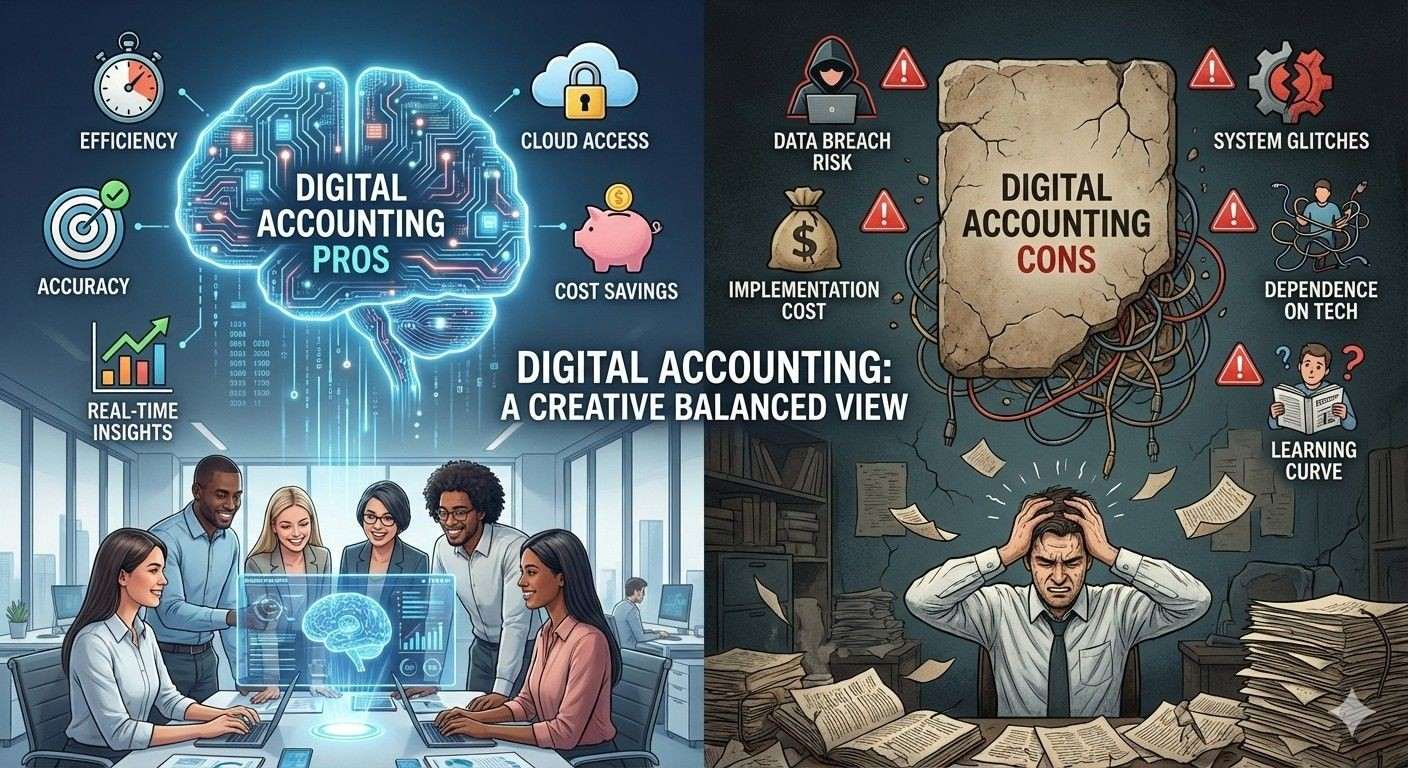
- Efficiency and Automation: Digital accounting software like Ledgers.cloud automates repetitive tasks such as invoicing, ledger entries, and reconciling transactions. This automation significantly reduces manual workloads, allowing your accounting team to focus on more strategic tasks.
- Real-Time Data Access: With digital accounting, financial data is available in real-time. This instant access enables timely decision-making and provides up-to-date insights into your company's financial standing.
- Enhanced Accuracy: Digital tools reduce the chances of human error. Automation ensures consistent data entry and processing, which minimises discrepancies in financial records.
- Cost Savings: While there is an initial investment in software and training, the long-term cost savings are significant. You'll save on paper, storage, and even labour costs as manual processes become automated.
- Improved Security: Digital accounting systems offer robust security features, such as encryption and user authentication, to protect sensitive financial data.
- Scalability: As your business grows, your accounting needs expand. Digital systems can scale up seamlessly to accommodate increased data volume and complexity.
- Environmental Benefits: Going digital reduces paper use, contributing to a lower carbon footprint and supporting sustainability initiatives.
The Cons of Digital Accounting
Despite the many benefits, digital accounting can present challenges that must be considered:
- Technical Challenges: Implementing new technology entails a learning curve. Staff may require training to adapt to new systems, and there may be initial technical issues or downtimes.
- Security Concerns: While digital systems have advanced security features, they are not immune to cyber threats. It's essential to maintain stringent security protocols to prevent data breaches.
- Dependence on Technology: Heavy reliance on digital systems means any technical glitches or power outages can disrupt business operations.
- Cost of Implementation: Despite long-term savings, the upfront investment in digital accounting software and training can be substantial, which might be a barrier for small businesses.
- Customization Limitations: Standard software solutions may not cater to the unique needs of every business, requiring further customization and development.
- Data Migration Issues: Transitioning from traditional to digital systems can be complex, especially in moving historical data accurately.
- Privacy Concerns: With everything stored digitally, there's always a concern about who can access sensitive financial data; guarding access is crucial.
Maximizing the Benefits: Best Practices
To fully leverage digital accounting while mitigating its disadvantages, businesses should adhere to the following best practices:
- Comprehensive Training: Ensure that your staff is well-trained in using digital accounting tools, reducing the risk of errors and boosting efficiency.
- Regular Software Updates: Keeping your software updated is crucial not only for functionality but also to protect against new security threats.
- Data Backup Systems: Establish stringent backup protocols to prevent data loss and ensure business continuity in case of system failures.
- Invest in Cybersecurity: Employ robust cybersecurity measures, including firewalls, antivirus programs, and regular security audits, to protect your financial data.
- Seek Custom Solutions: If off-the-shelf software doesn't meet your needs, consider customized solutions that align more closely with your business processes.
Conclusion
With the emergence of digital accounting, companies have experienced a fundamental shift in how they manage their finances. To make an intelligent selection aligned with the company's strategic vision, it is essential to analyse both the advantages and disadvantages of digital accounting. Once you have completed the transition, whether it takes time, effort, or resources, the result will be enhanced efficiency through improved accuracy and more insightful data available. Therefore, as you move toward implementing digital accounting, be considerate of your options, prepare your staff, and keep yourself updated on new developments so that you can gain from everything that digital accounting has to offer while minimizing the risks it may present to your organisation. With thoughtful application, this technology can provide tremendous support to your overall financial management process.