




SIVAKRISHNAN V
Updated on
30-07-2026
E-Stamping Agreements, POA, LLP Agreements, and Partnership Deeds Explained
In today's fast-paced business world, efficiency and clarity in legal documentation are paramount. Whether you're forming a new business partnership or drafting a power of attorney, understanding the intricacies of legal documents is crucial. This article delves into E-Stamping Agreements, Powers of Attorney (POA), Limited Liability Partnership (LLP) Agreements, and Partnership Deeds, offering insights into their purpose, benefits, and the latest trends. This comprehensive guide aims to simplify these complex subjects, making them accessible to business owners, legal professionals, and anyone interested in grasping the essentials.
Understanding E-Stamping Agreements
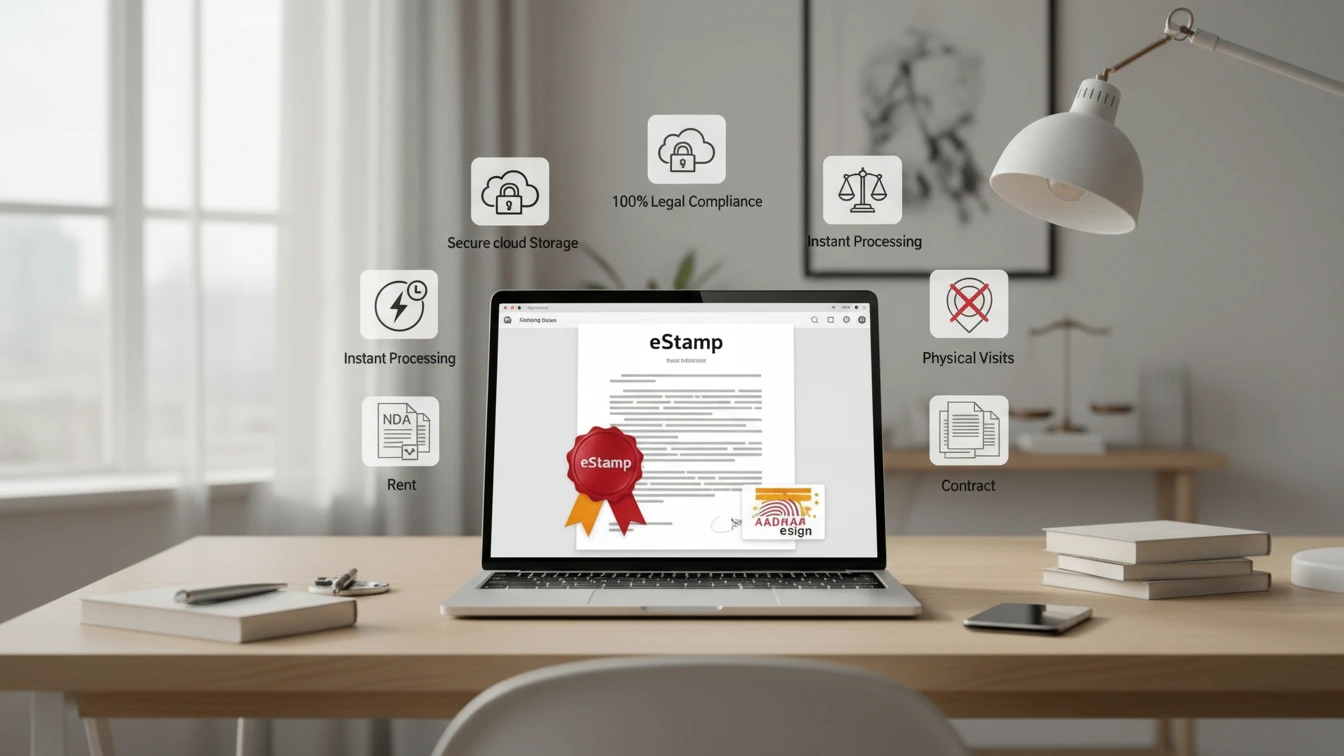
E-Stamping eliminates the traditional need for paper stamps, providing a digital alternative that is efficient, cost-effective, and secure. It formalizes agreements electronically, making it easier to validate and store documents.
- Benefits of E-Stamping: Reduces paper usage, minimizes fraud with encrypted transactions, allows for easier storage and retrieval.
- Where it’s Used: Commonly used in real estate transactions, business contracts, and leases.
- Recent Developments: Increasing integration with blockchain technology for enhanced security and traceability.
The Role of Powers of Attorney (POA)
A Power of Attorney grants legal authority to a designated person to act on behalf of another in private affairs, business, or legal matters. This delegation can be crucial for individuals who are unable to manage their affairs due to various reasons.
- Key Types of POA: General Power of Attorney, Special Power of Attorney, Durable Power of Attorney.
- Why You Might Need It: Provides legal representation, ensures continuity in business operations, manages personal financial matters.
- Trends: Increasing use of POA in digital assets management and international business transactions.
Exploring LLP Agreements
Limited Liability Partnerships (LLPs) offer a flexible business structure that combines elements of partnerships and corporations. LLP Agreements outline the rights and responsibilities of each partner, ensuring clarity and mutual understanding.
- Significance: Protects personal assets of partners, facilitates professional partnerships like law firms and accounting practices.
- Components: Profit distribution, decision-making processes, partner obligations, exit strategies.
- Current Trends: Growing popularity among tech startups due to flexibility and limited liability.
The Importance of Partnership Deeds
A Partnership Deed is a legal document that specifies the terms and conditions of a partnership between two or more parties. It plays a critical role in preventing disputes and ensuring smooth operations by providing a clear agreement on duties, profit-sharing, and other essential details.
- Integral Sections: Capital contribution, profit and loss sharing ratio, roles and responsibilities, dispute resolution mechanisms.
- Necessity: Offers legal backing to agreements, clearly defines partnership terms to prevent misunderstandings.
- Trend Alert: Digital signing and e-registration of partnership deeds are becoming common to improve efficiency and accessibility.
Concluding Thoughts
For anyone engaged in business, mastering the ins and outs of E-Stamping Agreements, Powers of Attorney, LLP Agreements and Partnership Deeds is essential because these documents form the foundation on which an agreement can exist between parties performing business activities and provides both a reference point and a mechanism to build trust between the parties involved in the business transaction/operation. The trend toward an increasingly digitalized world creates a need to stay current with the latest developments regarding trends associated with the ongoing increase in the use of technology to transform existing methods used to create these agreements. Whether you are establishing a new partnership with someone, transferring authority from one party to another, or entering into a new agreement in relation to an existing agreement, having a clear understanding of E-Stamping Agreements, Powers of Attorney, LLP Agreements and Partnership Deeds as they relate to your specific circumstances will allow you to make sound decisions regarding how best to protect your interests. Now that we live in an increasingly digitized world, the ability to adapt to evolving legal requirements and jurisdictional policies, while also complying with those changing laws and regulations, is more important than ever. By staying on top of what has been discussed in this article, you can help ensure your business continues to evolve and grow into the future and will be able to navigate through the many challenges associated with legal frameworks successfully.