




SIVAKRISHNAN V
Updated on
30-07-2026
E-Stamping Agreements, POA, LLP Agreements, and Partnership: A Comprehensive Guide
In the rapidly evolving world of business and legal frameworks, the terms E-Stamping Agreements, POA (Power of Attorney), LLP (Limited Liability Partnership) Agreements, and Partnership structures are integral to understanding modern commercial dealings. As businesses strive for legal clarity and efficiency, these elements ensure streamlined processes and protection. In this article, we delve deep into each of these components, unraveling their importance and utility for businesses of all scales.
Understanding E-Stamping Agreements
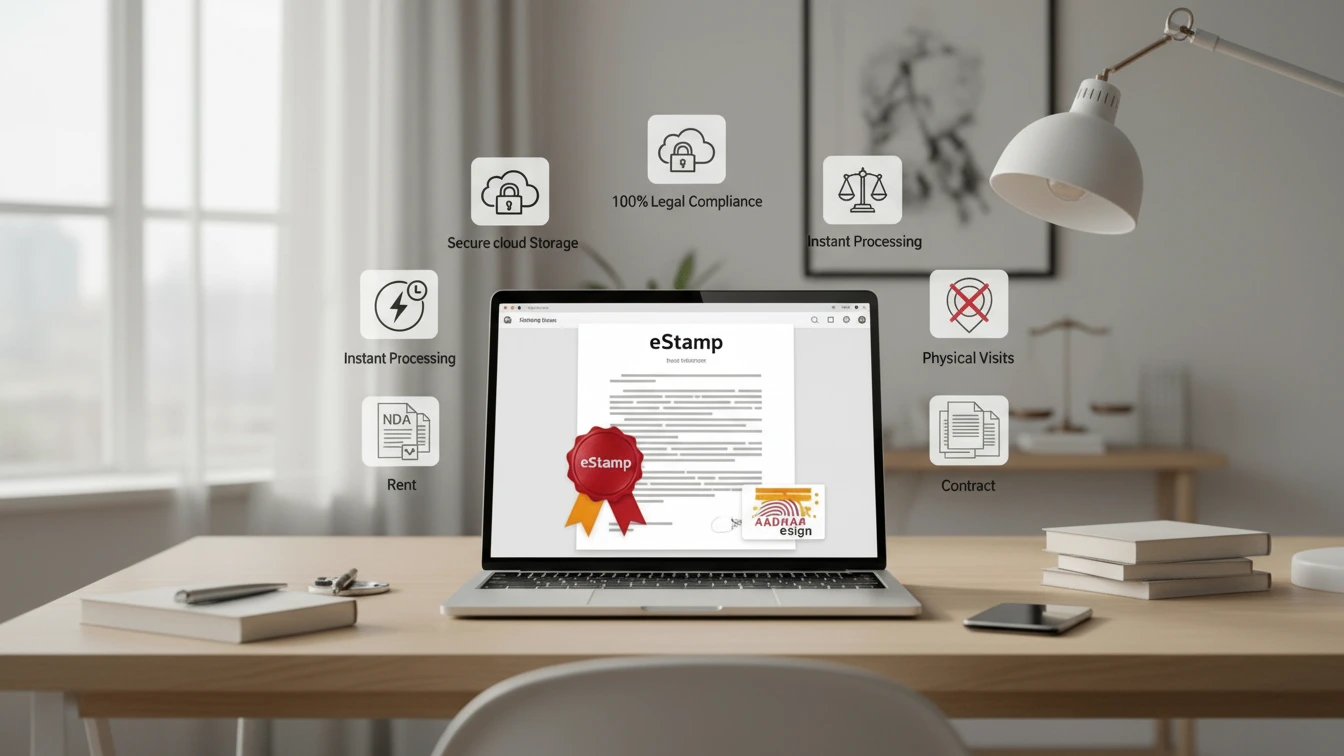
E-Stamping has revolutionized how agreements are finalized in today’s digitized economy. Traditional paper stamps have often been cumbersome and prone to errors. E-Stamping offers a modern solution by digitizing the stamping process, ensuring more secure and tamper-proof agreements.
What is E-Stamping?
E-Stamping is a digital way of paying stamp duty for transactions, which ensures the authenticity and safety of the document. The advantages of E-Stamping include:
- Transparency: E-Stamping provides a transparent record of transaction history.
- Security: It reduces the risk of forged stamps and manipulation.
- Convenience: It simplifies the process of procuring stamp duty by bringing it online.
- Cost-effective: Eliminates the additional cost of paper, printing, and distribution.
The Role of Power of Attorney (POA)
A Power of Attorney (POA) is crucial in legal transactions, allowing an individual to act on another's behalf. It is particularly beneficial in scenarios where one cannot be physically present to sign documents or make decisions.
Types of POA
There are primarily two types of POA:
- General Power of Attorney: Grants broad powers across various transactions and decisions.
- Special Power of Attorney: Confers limited authority to perform specific tasks or decisions.
POA documents must be thorough to avoid misuse. They require precise legal language and a trusted attorney acting in good faith.
LLP Agreements: A Modern Partnership Structure
Limited Liability Partnership (LLP) Agreements represent a hybrid business structure combining elements of partnerships and corporations. LLPs offer distinct advantages, making them a preferred choice for many entrepreneurs.
Why Choose LLP Over Traditional Partnerships?
- Limited Liability: Protects individual partners' personal assets from business liabilities.
- Flexibility: Allows partners to manage the business directly while enjoying perks associated with corporations.
- No Maximum Partner Restriction: Offers freedom in the number of partners involved.
- Tax Efficiency: Profits are taxed directly, minimizing double taxation.
Understanding each detail of the LLP agreement is crucial for the partners as it outlines the operational mechanisms, profit-sharing ratios, and rules for newcomers or exiting partners.
Traditional Partnership Agreements
A Partnership Agreement is a written contract among business partners that includes terms and conditions for the business. While the traditional partnership comes with several drawbacks such as unlimited liability, it remains a viable option for smaller businesses or family-run operations due to its simplicity and straightforward nature.
Benefits of a Partnership Agreement
- Ease of Setup: Simpler and cost-effective to initiate compared to corporations or LLPs.
- Shared Responsibility: Responsibilities and workloads are divided among partners.
- Simple Taxation: Direct taxation on individual partners’ income, eliminating corporate taxes.
Recent Developments and Legal Guidelines
With rapid digitalization, governments worldwide are keen on updating legal frameworks. In India, key developments include simplified procedures by Central and State Governments for setting up businesses, digital payments (like E-Stamping), and legal documentation requirements.
As of the latest updates, businesses are encouraged to turn to digital platforms for the completion of legal formalities to ensure compliance, reduce costs, and mitigate human errors.
Conclusion
The business-law landscape continues to change. To enjoy these advantages, businesses must be familiar with the intricacies associated with E-Stamping Agreements, POA's, LLP Agreements and Partnership Structures. These structures provide businesses with a combination of flexibility, efficiency, security and scalability which allows you to concentrate on growing and developing while minimizing time spent dealing with administrative issues. As international business increasingly moves into a digital format, it is crucial that businesses have these types of agreements and legal structures in place to ensure that they are operating in a manner that is both efficient and compliant. Businesses can move forward under the conditions outlined by these agreements while leveraging technological advances to accelerate their success. Business owners, legal practitioners, and entrepreneurs alike must commit to ongoing education around these key tools in order to be able to realize their fullest potential, both strategically and operationally.