




RAGU M
Updated on
30-07-2026
Reconciliation Unlocked in Accounting: Streamlining Financial Processes
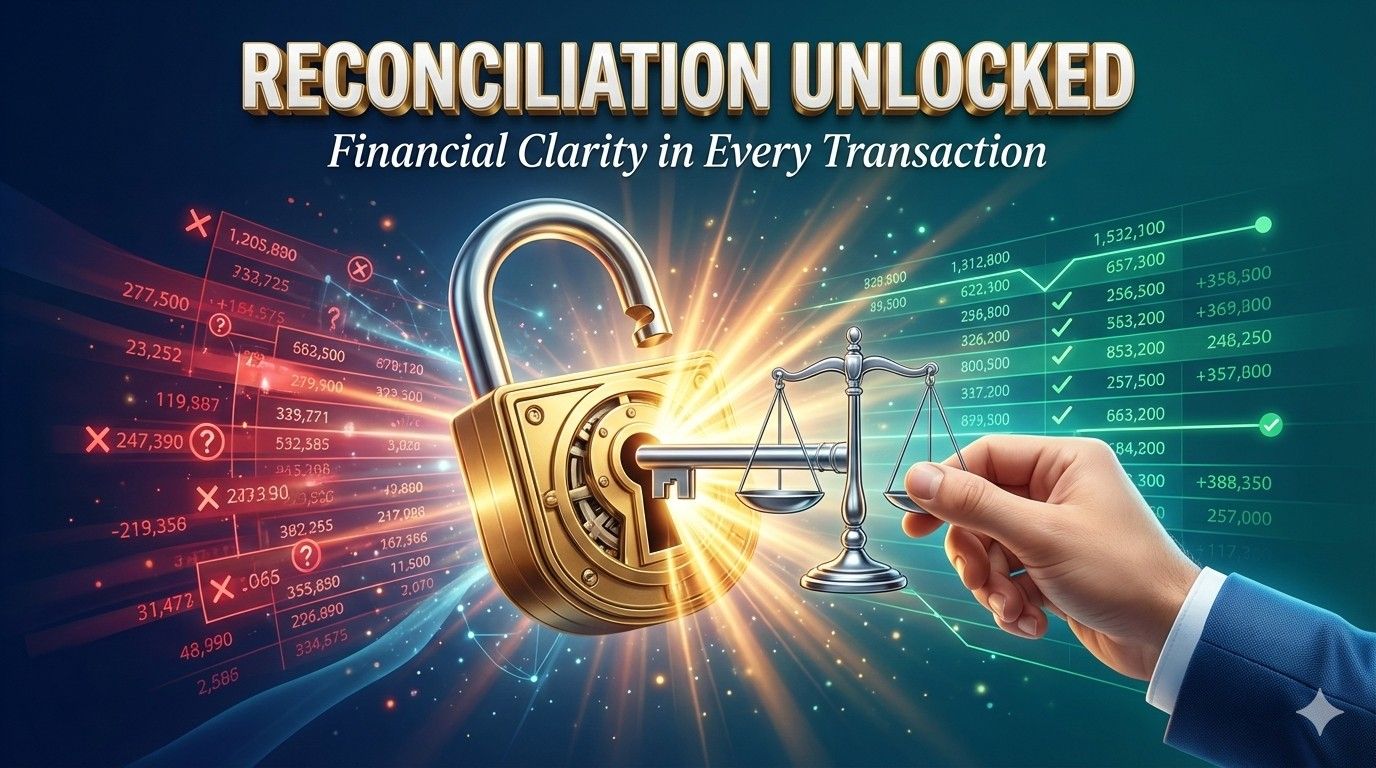
The phrase “Reconciliation unlocked in accounting” holds a tremendous amount of importance in the dynamic and fast-paced world of finance. With ongoing technological advancements and an ever-changing regulatory environment, maintaining accurate and timely records is increasingly difficult; however, it remains vital to successful bookkeeping practices. This guide describes how the process of reconciliation provides greater efficiency to bookkeeping systems as well as laying the foundation for effective financial management. Unlocking reconciliation will bring new possibilities to your accounting systems.
Understanding the Basics of Reconciliation in Accounting
The process of reconciliation in accounting is akin to cross-verifying your check-book against a bank statement. It involves comparing financial records to external data sources, such as bank statements or vendor invoices, to ensure accuracy and consistency. Successful reconciliation uncovers discrepancies, usually stemming from errors, fraud, or transactions that have not yet been recorded.
Here's why reconciliation remains pivotal:
- Accuracy: Ensures that the data in your accounting system aligns with real-world transactions.
- Compliance: Aids in meeting regulatory standards and preventing audits.
- Fraud Detection: Identifies suspicious activities to mitigate potential losses.
- Financial Planning: Provides reliable information for decision-making and budget forecasting.
Types of Reconciliation in Accounting
Understanding the various forms of reconciliation can help tailor processes to meet your specific needs:
Bank Reconciliation
This process compares your company's bank statements with the internal ledger to ensure that financial information is accurately recorded, identifying any discrepancies or unrecorded transactions.
Vendor Reconciliation
Involves comparing vendor statements against internal payable entries to verify outstanding balances and ensure that obligations to suppliers remain current and accurate.
Customer Reconciliation
This focuses on cross-referencing customer transactions recorded in accounts receivable against customer statements to confirm invoice accuracy and outstanding dues.
Inter-company Reconciliation
Used by conglomerates or entities with multiple subsidiaries, this involves ensuring that transactions between inter-related companies are accurately reflected in the financial records of each entity.
Advanced Tools and Technologies
Emerging technologies are reshaping the way reconciliation is conducted, leading to heightened efficiency and accuracy in accounting practices.
Automation Software
Reconciliation automation software like Ledgers.cloud can handle the tedious task of matching transactions, reducing human error and freeing up time for accountants to focus on analytical work.
Artificial Intelligence (AI)
AI-driven tools can predict reconciliation entries and flag anomalies far quicker than traditional methods, learning from past data to improve future outcomes.
Blockchain Technology
The use of blockchain can ensure immutability and transparency, fostering trust in reconciliation processes by providing a verifiable and secure ledger of all transactions.
Best Practices for Efficient Reconciliation
To unlock the full potential of reconciliation in accounting, consider adopting the following best practices:
- Regular Reconciliation: Perform reconciliations on a frequent and consistent schedule to stay informed and catch discrepancies early.
- Utilize Technology: Leverage the latest tools to automate repetitive tasks, enhancing efficiency and reducing errors.
- Maintain Detailed Records: Keep comprehensive documentation that provides a clear audit trail, aiding in accountability and analysis.
- Training and Development: Continuously train staff on new technologies and reconciliation processes to maintain high standards of accuracy.
Conclusion: The Path Forward
Reconciliation (the act of making consistent/reconciling an accounting record between two sources) is an important and in-depth aspect of financial management, not simply an administrative function. As technology continues to develop, the way in which reconciliation takes place will also develop, providing opportunities for business accountants and their companies to operate more effectively and accurately. If you include automation (using software to automate tasks), artificial intelligence (using machines that think to a degree), and blockchain (a way of tracking transactions) into your daily activities for completing reconciliations, you will completely change how your business makes financial decisions and complies with regulatory requirements. Take some time to review this information and put and the techniques into practice as you prepare for the ever-changing world of business accounting.