




ATCHAYA M
Updated on
30-07-2026
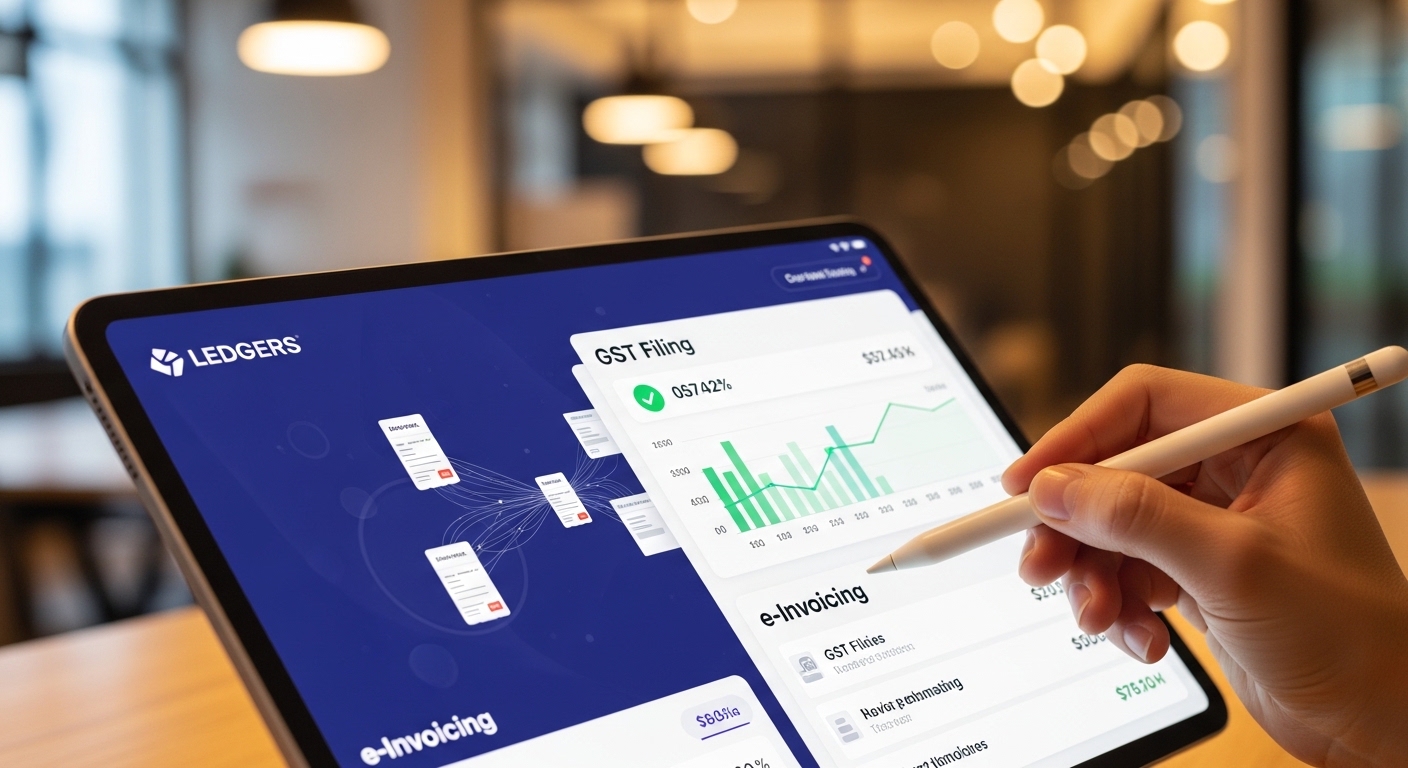
e-Invoicing as a Foundation for Accurate GST Filing in LEDGERS
Compliance with GST entails numerous stages of reporting, one of which is filing returns. Companies need to provide information on their outward supplies, tax liability and other related transactions on a recurring basis through GST returns. Periodic filing and reporting cannot happen unless invoice data is precise; therefore, minor errors in invoice data may ultimately result in issues with reporting, reconciliation and/or delays in compliance-related activity.
E-invoicing provides a common format for businesses to generate and validate invoices; if an invoice is produced accurately at the outset, it will facilitate preparing GST returns accurately later on, which is why many companies view e-invoicing as the starting point for dependable GST return filing.
LEDGERS helps facilitate this by providing for seamless transfer of invoice data to the GST reporting process during e-invoicing.
The Connection Between e-Invoices and GST Returns
GST returns rely heavily on invoice-level information. Details such as invoice value, tax amount, GSTIN of the buyer, and supply classification must be accurately reported. Traditionally, businesses often prepared invoices in one system and later compiled the data manually for return filing.
This separation between invoicing and return preparation sometimes resulted in mismatches. Incorrect invoice values, missing entries, or duplicated records could create discrepancies between accounting records and GST filings.
e-Invoicing helps reduce these issues because invoices are validated at the time of generation. When the data used for GST reporting comes from validated invoices, the chances of reporting errors become much lower.
Standardized Invoice Data Improves Return Accuracy
One of the main advantages of e-Invoicing is the structured format it introduces. Every e-Invoice follows a standardized data structure that includes mandatory fields such as:
- Supplier and recipient GSTIN
- Invoice number and date
- Taxable value
- Applicable tax amounts
- HSN or SAC codes
- Supply type classification
Because these fields are validated during IRN generation, businesses can rely on the accuracy of invoice data. This structured information forms a reliable base for preparing GST returns.
Reducing Manual Compilation Effort
Before e-Invoicing became common, finance teams often had to collect invoice data from multiple sources while preparing GST returns. This process involved reviewing spreadsheets, accounting records, and billing systems.
Such manual compilation increased the chances of missing invoices or reporting incorrect values.
When e-Invoices are generated through a unified system, the same invoice data can be used directly for return preparation. This reduces manual effort and improves efficiency during return filing periods.
Improved Consistency Across Compliance Processes
GST compliance involves several interconnected activities, including invoicing, return filing, reconciliation, and audit preparation. If invoice data remains consistent across these processes, businesses can maintain better control over their compliance obligations.
e-Invoicing helps ensure that the invoice information used in accounting records and GST filings remains aligned. This consistency reduces reconciliation issues and simplifies internal reviews.
Supporting Accurate GSTR-1 Reporting
GSTR-1 is the return used to report outward supplies. Since e-Invoices contain all essential supply information, they naturally serve as a reliable source for preparing this return.
When invoices are validated at the time of generation, businesses can confidently report supply details in their returns without worrying about inconsistencies.
This structured approach improves the reliability of return data and helps avoid unnecessary corrections later.
Strengthening Reconciliation and Compliance Confidence
Accurate invoice data also plays an important role in reconciliation processes. Businesses frequently compare accounting records with GST returns and other compliance data to ensure everything matches.
When invoices are generated and validated through e-Invoicing, the chances of mismatches are significantly reduced. This strengthens compliance confidence and helps businesses respond more effectively during audits or reviews.
Long-Term Benefits for Businesses
Using e-Invoicing as the starting point for GST compliance offers several long-term benefits. Businesses experience:
- Better invoice accuracy
- Simplified return preparation
- Reduced reconciliation effort
- Improved financial transparency
Over time, this structured approach helps organizations manage GST compliance more efficiently.
Conclusion
e-Invoicing is more than just a regulatory requirement—it also provides a strong foundation for accurate GST return filing. By ensuring that invoice data is validated and structured at the time of generation, businesses can simplify the entire GST reporting process.
LEDGERS helps businesses maintain this connection between e-Invoicing and GST filing by ensuring that reliable invoice data flows smoothly into compliance workflows. With organized and accurate invoice records, businesses can prepare GST returns with greater confidence and maintain consistent compliance across their operations.