




SIVAKRISHNAN V
Updated on
30-07-2026
Understanding eStamping: Benefits and Process Explained
"eStamping" is a fast-expanding term within the rapidly changing world of electronic documentation. As governments and organizations lead the charge towards finding new ways to use technology to increase both efficiency and security, eStamping has become an important part of how we operate at an organizational level. In this article, we will explore the many ways in which eStamping is affecting different types of organizations, its many advantages, and its role in helping eliminate unnecessary paperwork from many industries.
What is eStamping?
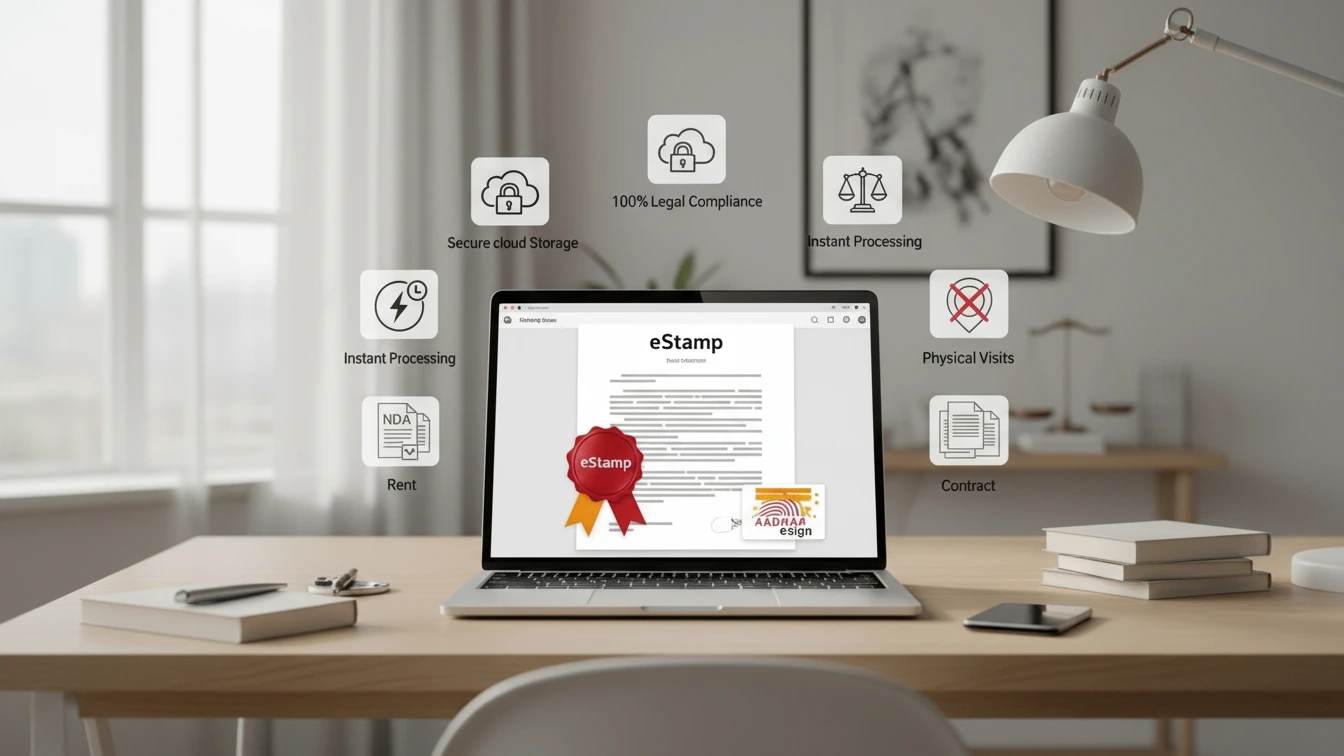
E-Stamping also means to digitally authenticate documents utilizing a digital stamp versus a traditional (paper) stamp. An electronic stamp serves as proof of authenticity (i.e. the document is real and has gone through the legal channels in which it resides). E-Stamping provides an efficient means of overcoming all administrative burdens resulting from the handling of stamp duties.
The Significance of eStamping
Over the years, eStamping has gained prominence for several reasons:
- Enhanced Security: By verifying the authenticity of documents electronically, eStamping minimizes the risk of fraud.
- Environmental Impact: Reduces the need for paper, contributing to sustainable practices.
- Time Efficiency: Speeds up the execution of legal processes by eliminating delays associated with physical stamp procurement.
- Accessibility: Makes the stamping process more accessible, as it can be done online from anywhere.
The eStamping Process
To fully leverage the benefits of eStamping, understanding the process is crucial:
- Visit the Authorised Platform: Most regions have specific online platforms where users can initiate the eStamping process. Ensure you are on an authorized website to maintain the integrity of the transaction.
- Enter Details: Fill in the required information about the parties involved, the transaction details, and select the type of document you are stamping.
- Payment of Stamp Duty: The system will calculate the required stamp duty, which can be paid electronically through various online payment methods.
- Issuance of e-Stamp Certificate: Upon successful payment, an e-Stamp certificate is generated, which serves as proof that the stamp duty has been paid.
Benefits of eStamping
The shift to eStamping offers numerous advantages:
- Cost-effective: Cuts down the need for intermediaries, such as agents who collect traditional stamps, reducing the overall cost.
- Traceability: Each transaction is digitally recorded, allowing for easy tracking and auditing.
- User-Friendly Interface: Modern portals are designed to be intuitive, making it easy for users to navigate through the process.
- Government Compliance: Ensures that all transactions are compliant with existing legal frameworks, safeguarding against penalties.
eStamping: Recent Developments and Future Trends
As technology continues to evolve, so too does the domain of eStamping. Recent advancements have focused on integrating blockchain to further enhance security and transparency. Moreover, AI is being leveraged to automate the verification process, reducing human intervention and errors.
Looking ahead, we can anticipate greater global adoption of eStamping to keep pace with the digital economy's demands. Regions that are yet to digitalize their stamping processes are gradually acknowledging the benefits and moving towards eStamping.
Challenges in Implementing eStamping
Despite its advantages, the transition from traditional to electronic stamping isn't without its hurdles:
- Digital Literacy: In regions with lower technological uptake, the challenge remains in educating users about eStamping's benefits and process.
- Technical Malfunctions: As with any online system, occasional downtime or technical glitches can pose challenges.
- Cybersecurity Threats: Ensuring the utmost security against cyber threats remains a priority, calling for robust cybersecurity measures.
Steps to Overcome eStamping Challenges
To ensure a seamless eStamping experience, several measures can be put in place:
- Education Campaigns: Run public awareness campaigns to educate on the benefits and usage of eStamping platforms.
- Robust IT Infrastructure: Continuous investment in technology and server capabilities to handle high transaction volumes efficiently.
- Enhance Cybersecurity: Constant updating of cybersecurity protocols to protect users' data and avoid breaches.
Conclusion
eStamping stands as a testament to how digital innovation can enhance administrative efficiency and security. By enabling faster, safer, and more cost-effective document processing, eStamping represents a forward-looking approach to traditional paperwork. Its integration into routine business practices signals a profound shift towards digital conformity, encouraging sustainability and transparency.
As the world continues to embrace digital ecosystems, both private and public sectors are urged to implement eStamping to stay compliant and competitive. In doing so, they not only benefit from streamlined processes but also contribute to a more sustainable and fraud-resistant economic environment.
To fully enjoy the benefits of eStamping, stakeholders must remain informed about best practices and upcoming advancements, ensuring they are always a step ahead in the digital documentation realm.