




SWATHI S
Updated on
30-07-2026
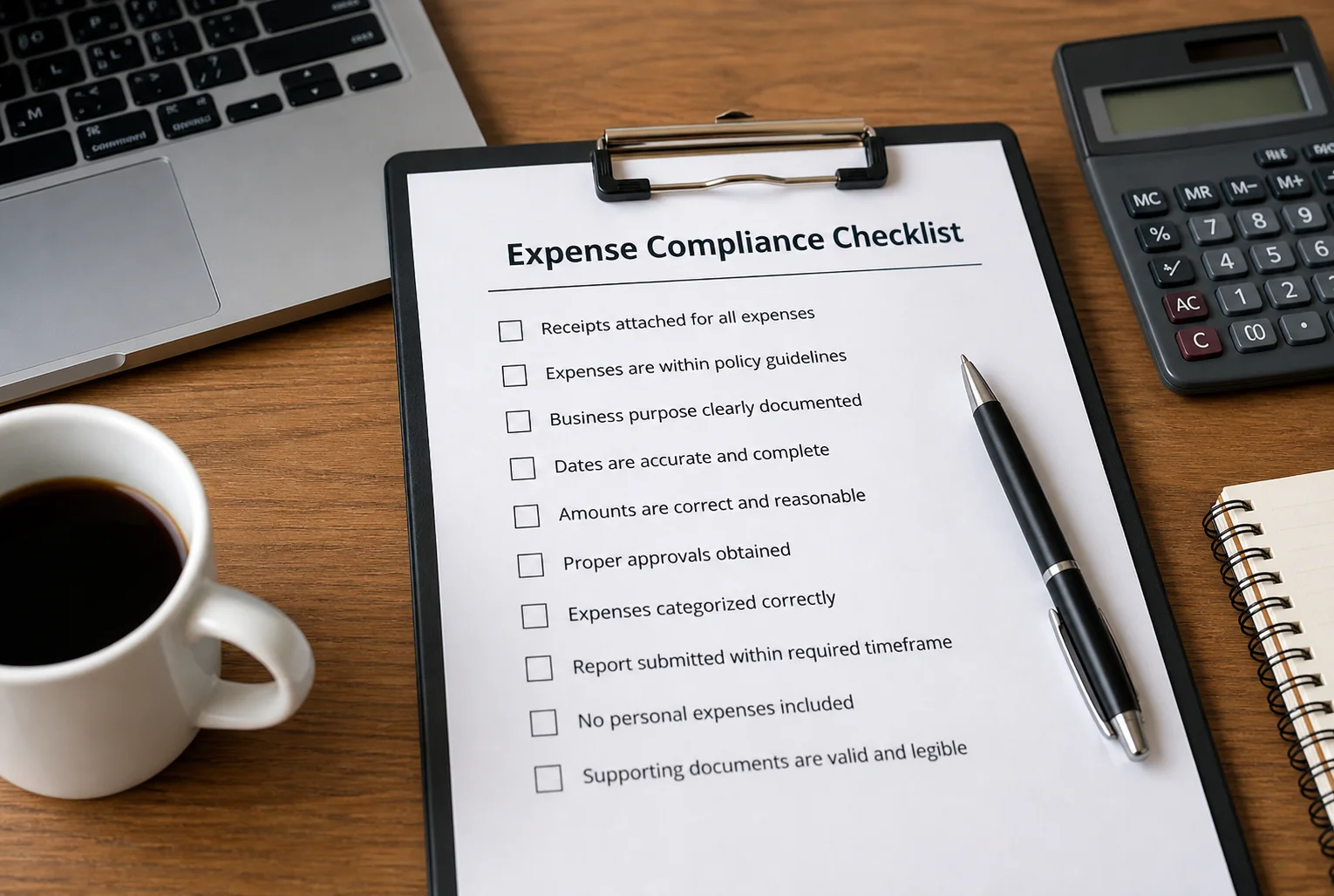
Expense Compliance Checklist: Ensuring Accurate Spending
Expense compliance is very important for businesses for a number of reasons: ensuring that the correct accounting procedures are followed can help a business to avoid problems with the law and to have their finances orderly. Businesses must have a process set up that will help to ensure that all of their expenses are compliant with businesses' own policies and the law. An expense compliance checklist will help individuals that manage an organization’s finances implement business policies uniformly so that there is less potential for error and so they will be ready for an audit.
What is Expense Compliance?
Expense compliance is making sure that all the money a company spends is spent correctly. This means that every expense:
- Follows the company's internal rules
- Follows the law and tax rules
- Is properly written down and approved
Doing this helps companies avoid problems with their finances and makes sure everyone is accountable.
Essential Expense Compliance Checklist
The people in charge of money can use this list to make sure everything is done correctly:
1. Clear Expense Policies
- Define what expenses are allowed and what are not
- Set limits on how much can be spent in each category
- Make rules for getting money
- Tell all employees about the policies
Having clear rules is the foundation of doing things correctly.
2. Proper Documentation
- Make sure every expense has a receipt or invoice
- Keep digital copies of all the paperwork
- Check the details like the date, amount, and who the vendor is
Having all the paperwork in order is really important for audits and tax filings.
3. GST and Tax Compliance
For companies in India, following the tax rules is really important:
- Write down the GST details for every expense that needs it
- Check the GST number of every vendor
- Keep track of whether the company can get a tax credit
- Make sure everything is classified correctly for tax purposes
This helps companies avoid getting in trouble and makes sure they are reporting their taxes correctly.
4. Standardized Expense Categorization
- Use the categories for every expense
- Make sure everything is classified the same way across all departments
- Do not misclassify expenses
Using the same categories makes it easier to keep track of everything and helps with compliance.
5. Approval Workflows
- Set up a system for approving expenses
- Require approval for every expense claim
- Have checks in place for big expenses
Having a system for approval helps make sure everyone is accountable and prevents people from spending money they should not.
6. Policy Enforcement
- Automatically flag expenses that do not follow the rules
- Do not allow expenses that are not compliant
- Keep an eye on people who break the rules repeatedly
Enforcing the rules makes sure they are followed all the time.
7. Real-Time Tracking
- Keep track of expenses as they happen
- Find transactions early
- Keep all the records up to date
Tracking expenses in real time helps prevent problems before they get out of hand.
8. Audit Trails
- Keep records of every transaction
- Track every change, approval, and rejection
- Store all the historical data in a safe place
Having a record of everything is really important for audits.
9. Regular Reviews and Audits
- Do checks of all the expenses
- Find any mistakes or discrepancies
- Update the system based on what is found
Doing regular checks helps make sure everything stays compliant.
10. Integration with Accounting Systems
- Sync all the expense data with the accounting software
- Make sure everything is accurate
- Reduce mistakes from manual entry
Integrating the systems makes it easier to keep track of everything and reduces mistakes.
Common Compliance Risks to Avoid
Companies should be aware of problems such as:
- Missing paperwork
- Incorrect GST handling
- Unauthorized expenses
- Late expense reporting
- Lack of proper approval
Addressing these problems before they happen makes the company's finances stronger.
Benefits of Using an Expense Compliance Checklist
Following a checklist provides advantages:
- More accurate finances
- Less chance of getting in trouble
- Faster audits
- Better adherence to the rules
- More transparency
Using a checklist makes compliance a manageable process.
Expense Compliance with Ledgers
A solution like Ledgers helps companies handle expense compliance. With features such as automated policy enforcement, real-time tracking, audit trails, and GST-ready reporting, companies can make sure every expense is compliant.
Companies can implement a robust and resounding financial framework with the aid of a checklist and appropriate tools.
In conclusion, having an expense compliance checklist with a well-structured set of guidelines is essential for every company that wants to maintain their financial integrity and to prevent legal challenges. As companies expand and change over time, similar diligence in managing their expenses must be developed and applied continuously, along with maintaining that every monetary-related decision is made in accordance with a company’s internal policy and regulatory compliance obligations.