




SWATHI S
Developer
Updated on
01-04-2026
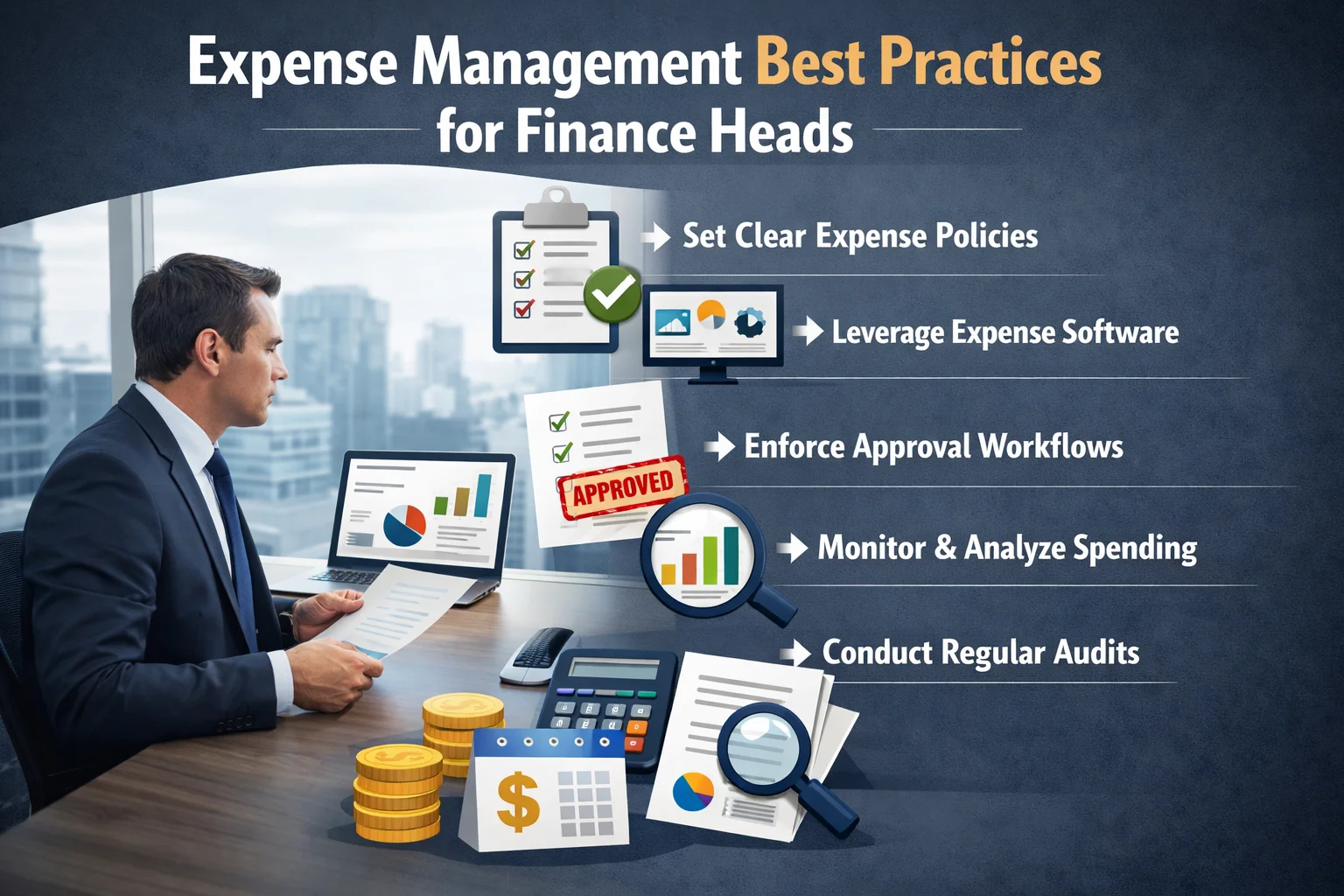
Expense Management Best Practices for Finance Heads
The complexity of managing expenses for finance leaders in companies has increased as companies continue to grow. The number of layers in departments and management increase with the growth of your business, which makes it more difficult for you to have control over expenses and visibility into expenses. Without a structured approach to expense management, risks such as overspending, compliance issues, and fraud can all negatively impact the company’s financial health.
To increase efficiency and create a strong financial foundation, finance leaders must follow some key best practices for expense management. This article provides step-by-step instructions for getting your expense management processes under control.
1. Make Clear Rules for Expenses
Developing transparent rules is crucial for managing expenses effectively. These guidelines should clearly outline:
- What qualifies as an expense and what does not
- Spending limits for different expenses
- Reimbursement procedures for employee-incurred costs
- Documentation requirements, including receipts and invoices
By providing clear directives, employees will understand their boundaries and reduce the likelihood of non-compliance issues.
2. Use the Same Categories for Expenses
Unified expense categories simplify tracking and financial analysis. Consistently categorizing expenses—such as travel, office supplies, advertising, and employee reimbursements—enables better budgeting and insightful financial planning.
3. Make a Plan for Approving Expenses
An effective expense approval procedure aids in spending control. Key elements should include:
- Designating approval responsibility
- Ensuring multiple layers of authorization for significant expenses
- Streamlined processes for approving minor expenses quickly
A structured plan helps identify potential issues early and guards against excessive spending.
4. Keep Track of Expenses as They Happen
Real-time tracking of expenses prevents end-of-month surprises. It allows you to:
- Identify and resolve discrepancies promptly
- Maintain accurate financial records
- Make informed, timely financial decisions
Continuous monitoring encourages proactive financial management.
5. Use Computers to Help
Automating the expense management process using technology reduces manual errors and saves time. Utilize digital tools to:
- Organize expenses by category automatically
- Digitally scan and store receipts
- Set up alerts for non-compliant spending activity
- Automate reimbursements to employees
Embracing technology enhances accuracy and operational efficiency.
6. Make Sure People Follow the Rules
Implementing policies is not enough; enforcing compliance is critical. Deploy systems to:
- Alert you of rule violations
- Block submission of unauthorized expenses
- Maintain comprehensive audit trails
This minimizes fraud and ensures adherence to established policies.
7. Connect Your Expense System to Your Accounting System
Integrating expense management with the accounting system promotes synergy between departments. This linkage allows for:
- Minimized clerical errors
- Faster financial close processes
- Accurate financial reporting
An interconnected system streamlines financial operations and fosters transparency.
8. Look at Your Spending
Regularly reviewing expenses can uncover potential savings and inform strategic decisions. Focus on:
- Departmental spending patterns
- Individual employee expenditures
- Vendor-related costs
- Budget adherence
Evaluating these elements helps optimize resource allocation and cost-efficiency.
9. Make it Easy for Employees
Facilitate straightforward procedures for submitting expenses and receiving reimbursements. This approach:
- Reduces unnecessary frustration
- Encourages compliance with rules
- Boosts employee productivity and satisfaction
An accessible process keeps employees content and engaged.
10. Check Everything Regularly
Routinely auditing the expense management system is essential to its continued effectiveness. Regular checks should ensure:
- Accuracy of expense reports
- Detection and prevention of fraudulent actions
- Policy updates to reflect current realities
This diligence secures accuracy and control over financial activities.
Expense Management with Ledgers
Tools like ledgers furnish comprehensive solutions for expense management. They facilitate real-time tracking, customize approval workflows, and automate various financial tasks. Utilizing such systems empowers finance heads to confidently steer the company toward financial success.
In summary, implementing these best practices not only makes it easier on the finance leader, but it also helps create and maintain a financially viable and successful organization.