




SWATHI S
Updated on
30-07-2026
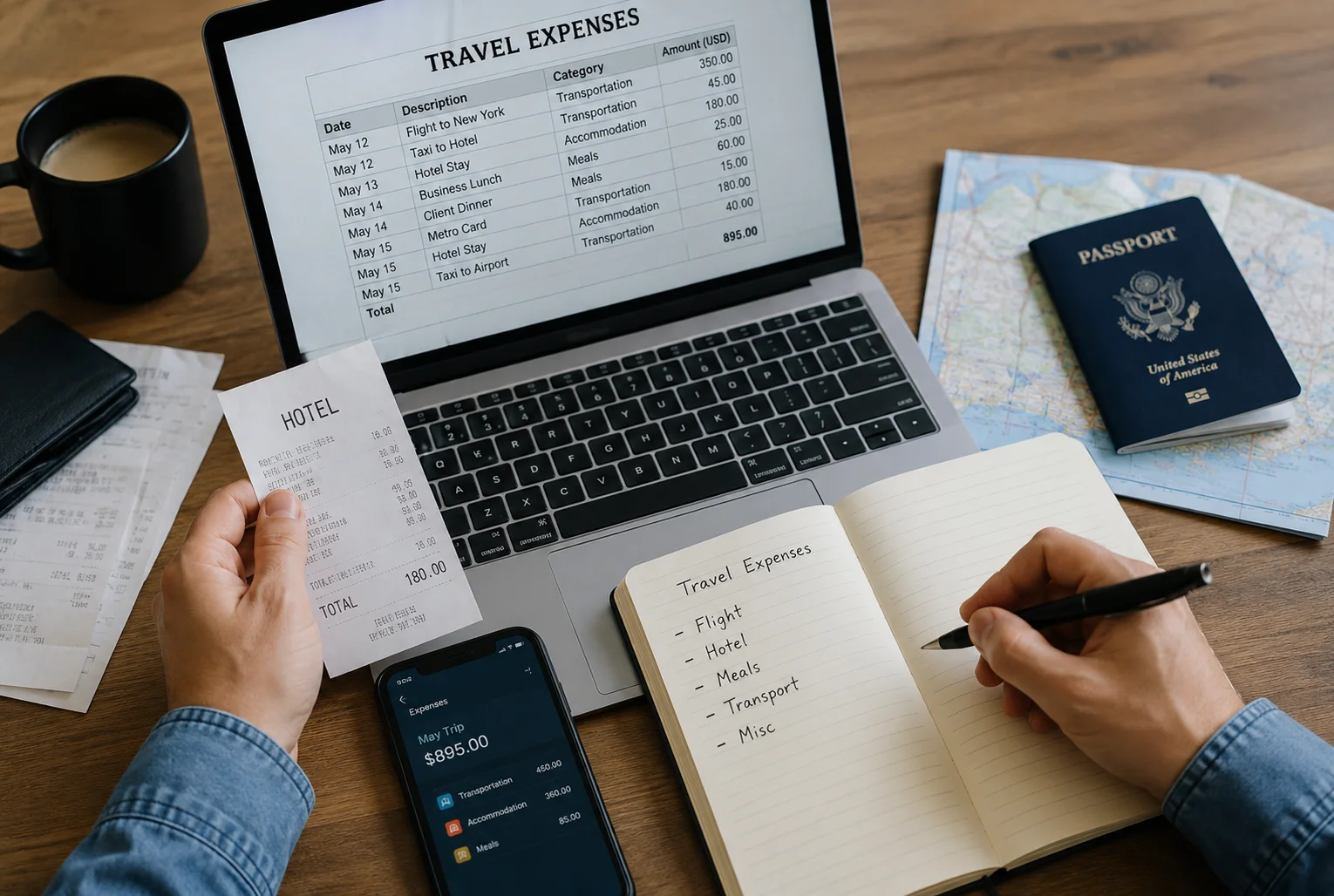
Expense Tracking for Travel Expenses
Business travel is essential for growth, client meetings, and operations-but without proper tracking, it can become a major source of uncontrolled spending. From flights and hotels to meals and local transport, every expense needs to be accurately recorded and monitored. A well-structured travel expense tracking system helps businesses maintain financial discipline while ensuring a smooth experience for employees on the move.
Understanding Travel Expense Challenges
Tracking travel expenses is often more complex than regular business spending because:
- Expenses occur across multiple locations
- Different currencies or tax rules may apply
- Employees may delay reporting
- Receipts can be lost easily
Without a proper system, these challenges can lead to inaccurate records and delayed reimbursements.
Key Components of Travel Expense Tracking
To manage travel expenses effectively, businesses should focus on the following components:
1. Pre-Travel Planning
- Define travel budgets in advance
- Set spending limits for different expense categories
- Approve trips before expenses are incurred
Planning helps prevent unnecessary or excessive spending.
2. Expense Capture on the Go
Employees should be able to record expenses instantly while traveling. This ensures:
- Real-time data entry
- Reduced dependency on memory
- Accurate expense reporting
Mobile-friendly tools play a crucial role here.
3. Centralized Expense Management
All travel-related expenses should be stored in a centralized system to:
- Avoid data fragmentation
- Enable easy access for finance teams
- Maintain consistency in records
Centralization improves efficiency and control.
4. Policy-Based Controls
Travel expenses should align with company policies. Businesses can:
- Set category-wise limits
- Automatically flag violations
- Restrict non-compliant expenses
This ensures disciplined spending across all employees.
5. Multi-Level Approvals
Approval workflows are important for validating expenses. Companies can implement:
- Manager-level approvals
- Finance team verification
- Additional checks for high-value claims
This reduces the risk of errors and misuse.
Managing Different Types of Travel Expenses
Travel expenses vary widely, and each type requires proper tracking:
- Transportation: Flights, trains, taxis, fuel
- Accommodation: Hotels, rentals, lodging
- Meals: Daily allowances or actual expenses
- Miscellaneous: Parking, internet, visa fees
Categorizing these correctly helps in better analysis and reporting.
Improving Accuracy with Automation
Manual tracking often leads to mistakes and inefficiencies. Automation helps by:
- Capturing expenses digitally
- Categorizing transactions automatically
- Matching receipts with entries
- Reducing duplicate or missing data
Automation significantly improves accuracy and saves time.
Real-Time Monitoring for Better Control
Finance teams benefit greatly from real-time visibility into travel expenses. This allows them to:
- Track ongoing trips and spending
- Identify unusual patterns
- Take immediate corrective action
Real-time insights prevent budget overruns before they happen.
Faster and Transparent Reimbursements
Delayed reimbursements can impact employee satisfaction. A good tracking system ensures:
- Quick verification of claims
- Clear visibility into approval status
- Faster payouts
Transparency builds trust between employees and finance teams.
Travel Expense Reporting and Insights
Detailed reporting helps businesses optimize travel spending. Reports can provide:
- Employee-wise expense summaries
- Trip-wise cost analysis
- Department-level spending trends
These insights help in refining travel policies and reducing unnecessary costs.
Benefits of Effective Travel Expense Tracking
When implemented correctly, travel expense tracking offers:
- Stronger financial control
- Reduced operational inefficiencies
- Improved compliance with policies
- Better employee experience
- Accurate budgeting and forecasting
These advantages make it an essential part of modern business operations.
Travel Expense Management with Ledgers
Using a smart platform like Ledgers, businesses can simplify the entire travel expense process. With features such as real-time tracking, mobile expense capture, automated categorization, and approval workflows, managing travel expenses becomes seamless and efficient.
By adopting a digital approach to travel expense tracking, businesses can reduce manual effort, eliminate errors, and maintain complete financial visibility-even when employees are on the move.