
HARI KRISHNAN S
Updated on 30-07-2026
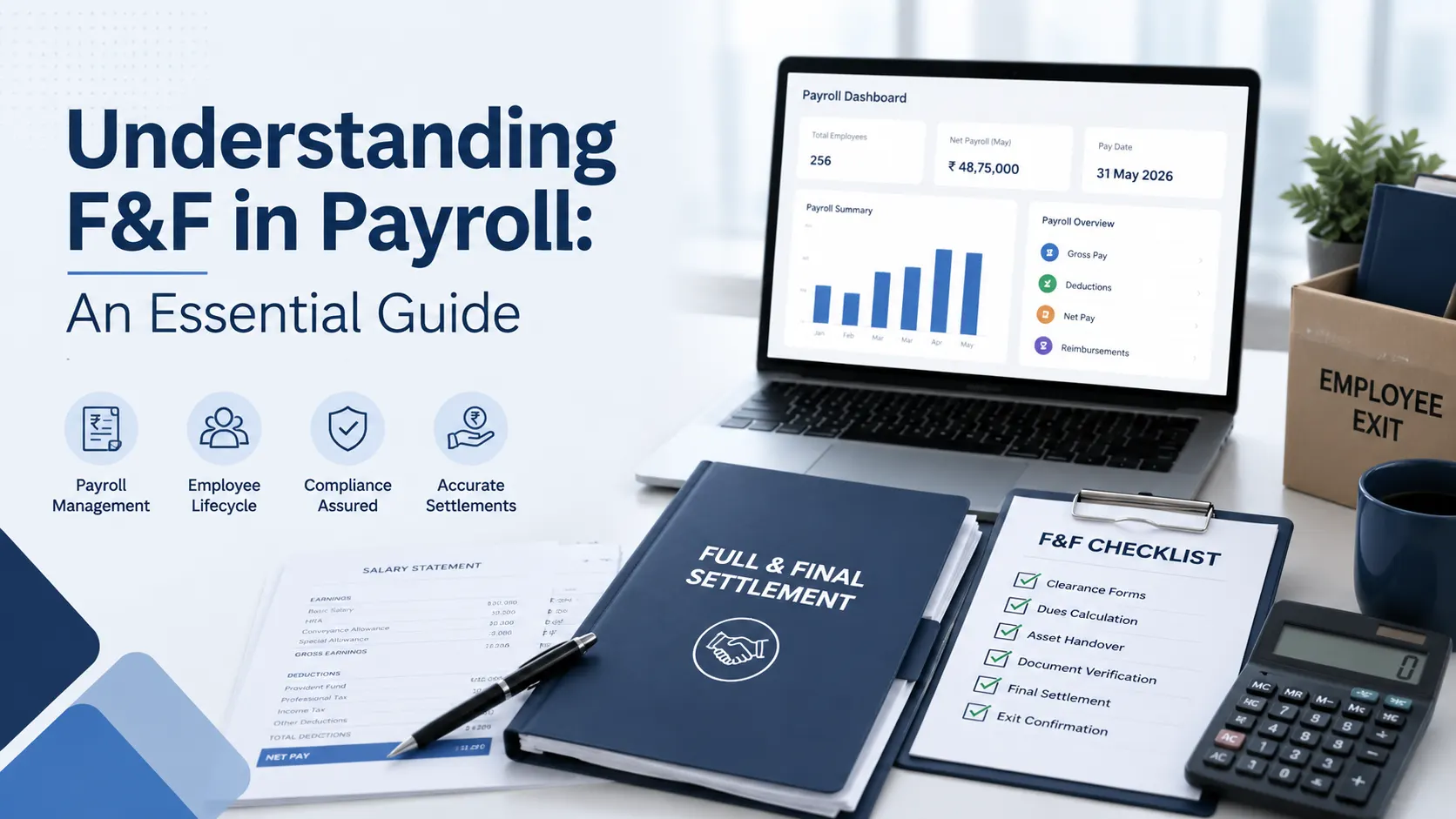
Full and Final (F&F) settlement is the process of settling all dues between an employer and employee when employment ends — whether due to resignation, termination, or retirement.
It is the last financial transaction between both parties, and it must be done accurately to avoid legal disputes.
What the employee receives:
What gets deducted:
Net F&F = (Pending Salary + Leave Encashment + Gratuity + Bonus) − (Deductions + TDS)
Gratuity formula: Last drawn Basic salary × 15/26 × Number of years of service
Leave encashment formula: (Basic salary ÷ 26) × Number of pending earned leave days
| Component | Timeline |
|---|---|
| Final salary | Within 30–45 days of last working day |
| Gratuity | Within 30 days of separation |
| PF withdrawal | 10–20 working days after claim |
| Statutory bonus | Within 8 months of the accounting year close |
| Form 16 | By 15 June of the following financial year |
Note: Late gratuity payment attracts 10% simple interest per annum under the Payment of Gratuity Act, 1972.
| Component | Tax Rule |
|---|---|
| Pending salary | Fully taxable as per income slab |
| Leave encashment | Exempt up to ₹25L for govt employees; limited exemption for private sector |
| Gratuity | Exempt up to ₹20L for private sector (Section 10(10)) |
| VRS payout | Exempt up to ₹5L under Section 10(10C) |
F&F settlement = last salary + leave encashment + gratuity + bonus − deductions − TDS
It must be processed within 30–45 days of the last working day. Both employer and employee should keep a signed copy of the F&F statement for their records.
For more info visit: Ledgers.Cloud
