
PUGALENTHI
Updated on 30-07-2026
As organizations expand, staying compliant with new regulations becomes more difficult; this includes compliance with Goods and Services Taxes (GSTs). It can be especially difficult for small firms and new businesses to fulfill their GST obligations. The challenges range from dealing with numerous invoices to mistaking an input tax credit. This guide will show you how to solve these problems quickly and efficiently in a straightforward and easily understood format.
Goods and Services Tax, or GST, is a significant tax reform aimed at integrating several indirect taxes in the country. For businesses, it ensures a more straightforward and transparent method of taxation with the benefit of input tax credits (ITC) on the procurements. However, compliance is crucial, as it avoids legal issues and unnecessary fines, ensuring the company's reputation remains intact.
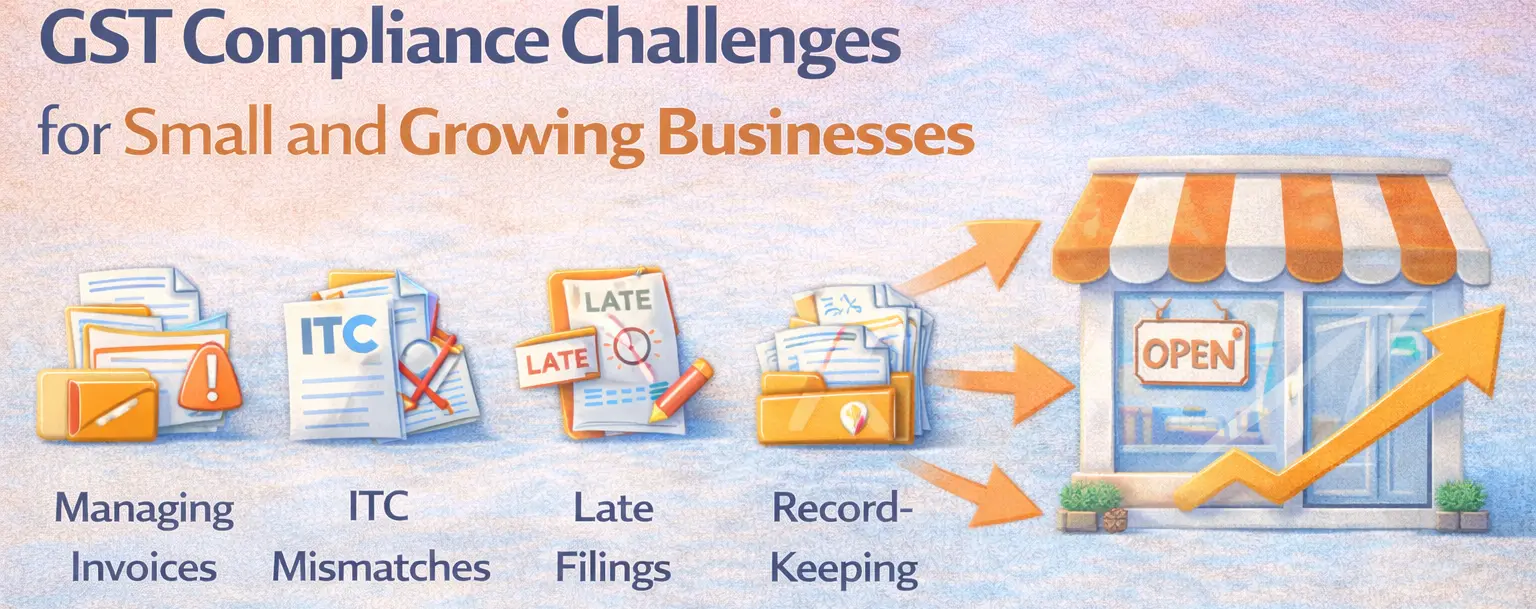
For small and growing businesses, managing invoices is one of the primary challenges. With the increase in sales and purchases, the volume of invoices multiplies, and tracking and recording each accurately becomes burdensome. Errors in invoice handling can lead to delays in ITC claims and potential discrepancies in returns filed.
Input Tax Credit is a refund mechanism that allows businesses to reclaim the tax they paid on inputs. However, mismatches between buyer and supplier data can lead to ITC mismatches. These mismatches often result from clerical errors or discrepancies in invoice details, affecting the credit the business can claim.
GST return filing is periodic and comes with strict deadlines. Small businesses often struggle with accurately filing these returns due to resource constraints. Errors can arise from incorrect data entry, overlooked transactions, or failure to file timely returns, which can result in penalties.
Reconciliation involves ensuring that the reports filed match the actual transactions that a business performed. Discrepancies between the books of accounts and filed returns can lead to audit queries. Managing timely reconciliations is essential to avoid legal challenges and maintain a clear financial record.
Maintaining detailed records of transactions, invoices, tax paid, and returns filed is crucial for GST compliance. Businesses, especially those that are expanding, find it cumbersome to keep these records organized and accessible for potential audits or assessments.
Though challenges in GST compliance are significant, implementing certain practices can streamline the process and reduce the stress associated with it:
As businesses expand, the resources required to manage GST compliance also grow. This expansion often results in an increase in transactions, new registrations, additional geographic considerations, increased workforce, and substantial record-keeping operations. Each of these factors adds another layer of complexity to GST compliance.
Overall, small and growing organizations experience substantial obstacles to successful management of GST compliance that can create barriers to their operational efficiencies and profitability. However, through strategic solutions including the use of advanced accounting systems; frequent reconciliations; obtaining expert advice; and maintaining detailed documentation, small businesses can overcome these challenges with ease.
Through proactive GST processes, a small business will not only improve DG compliance with applicable laws, but also cultivate growth by eliminating any legal barriers to business success. The use of various tools and solutions can allow small businesses to simplify a previously complex process into an integrated method of developing their business - assisting them in reaching their full potential.
LEDGERS simplifies GST compliance by embedding reconciliation directly into the accounting workflow, helping businesses identify mismatches early and address them before they lead to interest or penalties. With automated GSTN data synchronization, invoice-level tracking, and system-driven validations, LEDGERS enables seamless, reliable compliance without last-minute corrections or manual follow-ups.
