




PUGALENTHI
Updated on
19-03-2026
Preventing ITC Reversals Through Proper Documentation: A Complete Guide
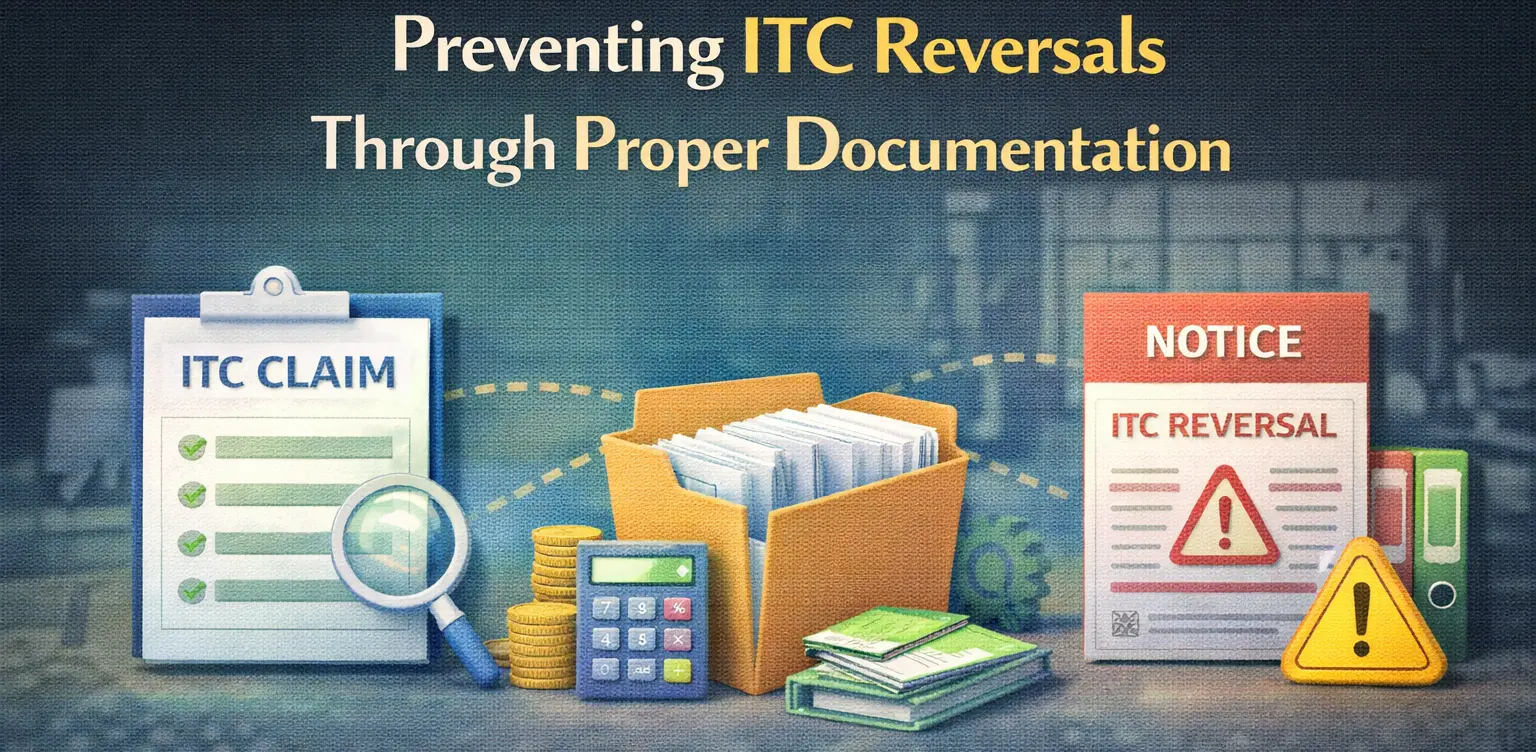
In today's competitive business landscape, understanding the intricacies of Input Tax Credit (ITC) and its reversal is crucial. This guide, titled "Preventing ITC Reversals Through Proper Documentation," aims to simplify the complexities surrounding ITC reversals. By focusing on maintaining robust business documentation, we will explore actionable strategies to prevent reversals, ensuring your business remains compliant and avoids financial setbacks.
Understanding ITC Reversal
Input Tax Credit (ITC) is a critical component of the GST framework, allowing businesses to reduce their tax liabilities by claiming credits on taxes paid for inputs. However, ITC claims can be reversed under certain conditions, leading to increased financial burdens. ITC reversal typically occurs due to the following reasons:
- Missing Invoices: Failure to provide proper invoices can lead to reversals.
- Vendor Non-Compliance: If vendors fail to comply, it affects your ITC claims.
- Ineligible ITC Claims: Claiming credits for ineligible expenses results in reversals.
- Mismatches with GSTR-2B: Discrepancies between claimed ITC and GSTR-2B data can cause issues.
The Significance of Proper Documentation
Proper documentation is the cornerstone of successful ITC claims. Establishing an organized system for maintaining accurate records minimizes the risk of ITC reversals. Critical documents include:
- Tax Invoices: Ensure all invoices are recorded accurately and promptly.
- Debit/Credit Notes: Maintain these records to support any changes in invoices.
- Payment Proofs: Keep track of all payment transactions related to claimed ITC.
- Reconciliation Records: Regular reconciliation of ITC claims with GSTR-2B data is essential.
Steps to Avoid ITC Reversals
To secure your business's financial health and ensure compliance, follow these steps to avoid ITC reversals:
1. Implement a Comprehensive Record-Keeping System
Develop a systematic approach for storing and managing all necessary documents. Digital tools and software can help maintain a centralized record-keeping system, ensuring easy access and retrieval of documents.
2. Conduct Regular Vendor Audits
Perform regular audits of your vendors to verify their compliance with GST regulations. Ensure they file returns timely and pay the necessary taxes to minimize the risk of ITC reversals.
3. Continuous Reconciliation with GSTR-2B
Reconcile your ITC claims regularly with GSTR-2B data. Immediate identification and correction of discrepancies help in maintaining accurate records and reducing reversal risks.
4. Educate Your Team
Invest in regular training sessions for your finance and accounting teams about GST compliance, ITC rules, and the importance of accurate documentation. An informed team is better equipped to handle compliance requirements.
5. Automate Processes
Automation tools can streamline processes such as invoice matching, reconciliation, and filing, thus reducing manual errors and enhancing efficiency in handling ITC claims.
Why Compliance with GST Norms Matters
Compliance with GST norms is non-negotiable for businesses looking to thrive. Non-compliance not only leads to ITC reversals but also results in hefty penalties and interest, adversely affecting your business's financial standing and reputation. Proper adherence to guidelines ensures smooth operations and fosters trust with stakeholders and government bodies.
Latest Developments in GST Regulations
Staying updated with the latest GST regulations is vital for businesses. Engage in continuous learning through attending seminars, subscribing to industry newsletters, and maintaining communication with tax professionals. Awareness of regulatory changes empowers businesses to adapt quickly and remain compliant, thereby preventing ITC reversals.
Conclusion
Preventing ITC reversals through proper documentation requires diligence, consistency, and a proactive approach. By maintaining accurate records, conducting regular audits, reconciling claims diligently, and keeping abreast of GST changes, businesses can safeguard their ITC claims and maintain financial stability. Incorporating these best practices into daily operations ensures compliance, supports accurate financial reporting, and minimizes the risk of costly penalties and reversals.
In conclusion, a robust documentation strategy, coupled with regular compliance checks, becomes an invaluable asset for any business navigating the complex terrain of GST and ITC. By adopting these strategies, your business can sail smoothly, ensuring that you capitalize on every eligible credit while maintaining compliance and financial health.
LEDGERS
LEDGERS assists with compliance relating to GST through the integration of reconciliations into your accounting processes to allow the speedy identification of errors in records prior to incurring any penalties or interest. LEDGERS allows you to automate the process of synchronizing your GSTN data and tracking invoices on an invoice-by-invoice basis eliminating the need for manual corrections and the time-consuming process of verifying transactions at the end of a reporting period through the use of automatic validations from the system to facilitate revenue compliance activities.