




PUGALENTHI
Updated on
30-07-2026
How to Automate GST Return Filing Using APIs
In today's fast-paced business environment, staying compliant with GST regulations can be a daunting task for many companies. Manual GST filing involves several challenges such as high error rates, time consumption, and tedious reconciliation processes. However, there's a modern solution to these challenges: the automation of GST return filing using APIs.
Challenges of Manual GST Filing
Manual GST filing presents numerous obstacles:
- Errors: Manual data entry can lead to input mistakes, which may result in compliance issues and penalties.
- Time-consuming: Manually preparing and filing each return is a labor-intensive process that consumes valuable resources.
- Reconciliation issues: Ensuring that the data in invoices matches what is recorded in the books is often problematic.
Introduction to GST API Integration
API integration offers a streamlined approach to GST compliance, eliminating the need for manual entries. But how does this work? At the center of this system is the concept of GST Suvidha Providers (GSPs), which serve as intermediaries enabling secure communication between the taxpayer's system and the GST system. By integrating APIs, businesses can automate various stages of GST return filing, making the process seamless and efficient.
How Automation Works Step-by-Step
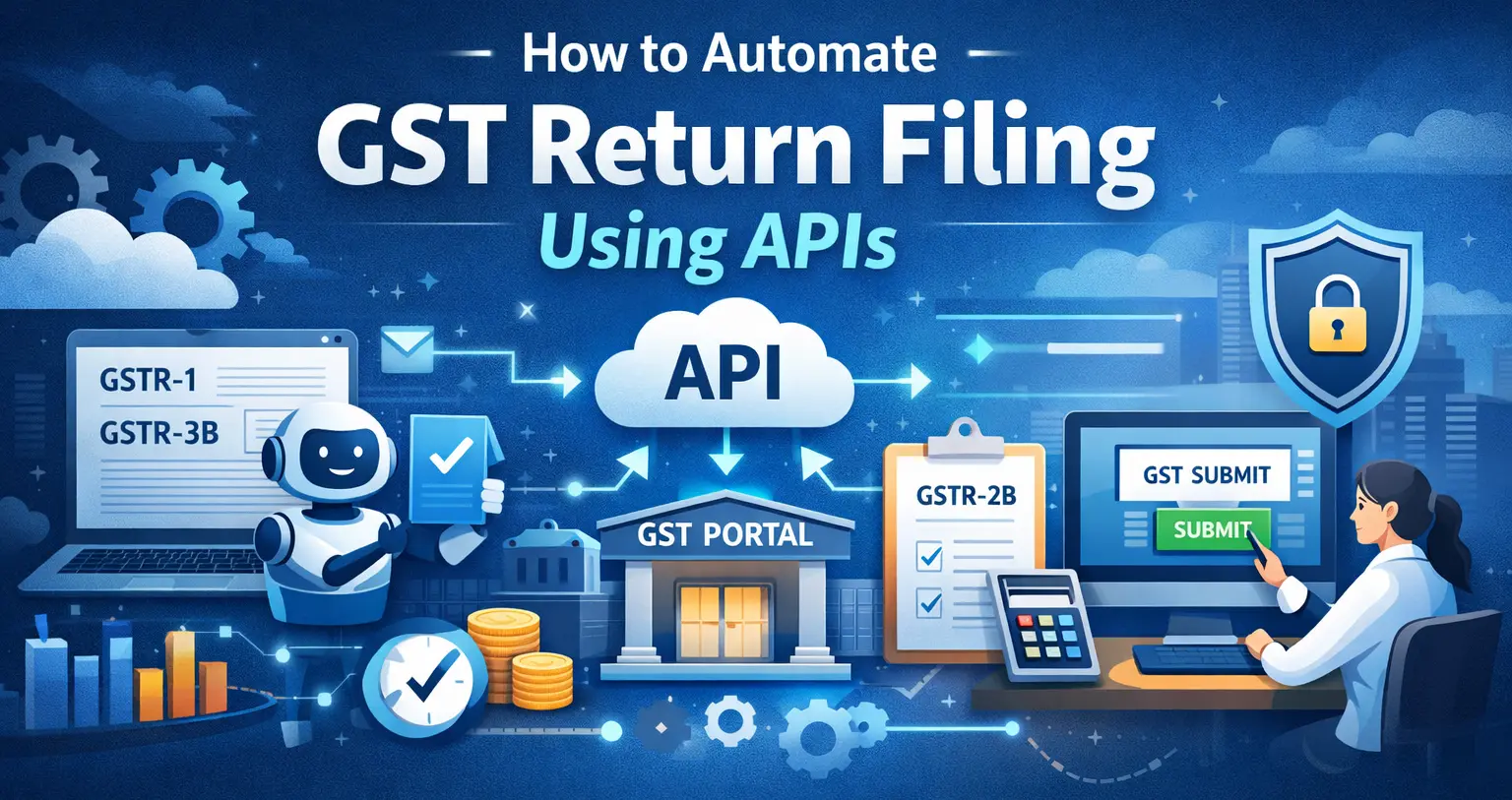
Here's a breakdown of how GST return filing automation works:
1. Data Extraction
The automation process begins by extracting data from the company's ERP or accounting systems. This ensures that the data is both up-to-date and accurate.
2. Validation of Data
The next step involves validating the fetched data to ensure compliance with GST rules. This step helps in identifying any discrepancies or errors before submission.
3. API Submission
Validated data is submitted to the GST system via APIs orchestrated by GSPs, ensuring secure and reliable transmission.
4. Draft Return Generation
Once data is submitted, the system auto-generates draft returns (GSTR-1 and GSTR-3B), ready for review and finalization.
5. Reconciliation with GSTR-2B
The system performs automatic reconciliation with GSTR-2B to verify input tax credits. This step minimizes discrepancies before the final filing.
6. Final Filing
Upon successful reconciliation, the final returns are submitted, completing the GST return filing process effortlessly.
Key Benefits of Automation
- Improved Accuracy: Reduces chances of human error, ensuring precise filings.
- Real-time Processing: Instant data handling streamlines the compliance workflow.
- Reduced Compliance Risk: Minimizes liability by adhering to the latest GST regulations.
- Scalability: Suitable for handling high-volume transactions without additional overhead.
Practical Use Cases
API-driven GST automation can cater to various business sizes and types:
- SMEs: Small and medium enterprises can reduce overhead costs and focus on growth.
- Enterprises: Large enterprises benefit from processing vast transactions smoothly.
- E-commerce Sellers: Automated solutions streamline complex multi-state filing processes.
- Tax Professionals: Simplifies managing multiple clients’ GST compliance simultaneously.
Essential Features to Consider
- Real-time Data Fetching: Enables prompt access to current financial records.
- Auto-drafting: Prepares returns automatically, reducing manual workload.
- Error Detection: Early detection of errors prevents submission failures.
- Bulk Processing: Handles large data volumes for big enterprises effortlessly.
Security Considerations
Security is crucial in GST return filing due to the sensitive nature of financial data:
- Encryption: Protects data during transit and at rest.
- Authentication: Ensures that only authorized users have access.
- GSTN Compliance: Adheres to the GST Network standards for data security.
Common Challenges and Best Practices
While API-driven automation offers numerous advantages, it also introduces several challenges:
- API Dependency: Over-reliance on APIs requires robust fallback mechanisms.
- Data Consistency: Ensuring data consistency between systems is a must.
To mitigate these challenges, consider adopting the following best practices:
- Structured Data Handling: Maintain standardized data formats for consistency.
- Validation: Systematically validate data before submission.
- Logging and Monitoring: Track all activities to identify and rectify issues promptly.
- Retry Mechanisms: Implement retry logic to handle temporary API failures.
Conclusion
Automating GST return filing using APIs is not merely a technological upgrade but a strategic shift towards efficient compliance management. By embracing API-driven solutions, businesses can drastically reduce manual errors, save significant time, and focus more on strategic activities. It's a future-ready approach that aligns with digital transformation in financial management.
Begin by evaluating your existing accounting systems and explore the integration of API solutions tailored to your business needs. Stay ahead in this compliance journey by overcoming manual hurdles and unlocking the potential of automation.
LEDGERS
LEDGERS assists with compliance relating to GST through the integration of reconciliations into your accounting processes to allow the speedy identification of errors in records prior to incurring any penalties or interest. LEDGERS allows you to automate the process of synchronizing your GSTN data and tracking invoices on an invoice-by-invoice basis eliminating the need for manual corrections and the time-consuming process of verifying transactions at the end of a reporting period through the use of automatic validations from the system to facilitate revenue compliance activities.