




ATCHAYA M
Updated on
17-03-2026
How LEDGERS Keeps e-Invoice Data Clean Across Accounting and Compliance
As we operate in an environment governed by Goods and Services Tax (GST), the need for accuracy of invoice data to ensure compliance with business requirements is an extremely important factor to take into consideration. All invoices produced by a business are entered into numerous different systems; for example, accounting records, GST Returns and reconciliation reports, sometimes even logistics documentation. If the data is inconsistent across these systems, businesses may find that they have to deal with reconciliation variances, receive compliance notices and have to put up with extra administrative labor.
The introduction of e-Invoicing has raised even more the importance of having clean and structured invoice data. Because invoices are validated on the Invoice Registration Portal (IRP), any inconsistencies in the data could lead to an invoice being rejected or problems when reporting later down the track. The need for a well-structured invoicing system is therefore of paramount importance and that is why LEDGERS provides businesses with clean and reliable invoice data across both accounting and compliance.
Why Clean Invoice Data Matters
Invoice data is not used for just one purpose. The same information is required in several places such as:
- Accounting records
- GST return filing
- e-Invoice registration
- e-Waybill generation
- Customer reconciliation
If the information is inconsistent in any of these areas, it can create confusion and additional work for finance teams. For example, an invoice value that differs between accounting records and GST returns may trigger reconciliation problems. Similarly, incorrect GSTIN details may cause Input Tax Credit issues for customers.
Maintaining clean invoice data helps businesses avoid these problems and maintain smoother compliance workflows.
Common Causes of Data Inconsistency
Many businesses still rely on multiple systems or manual processes for managing invoices. This often leads to data inconsistencies. Some common reasons include:
- Manual data entry errors
- Incorrect customer details
- Duplicate invoice numbers
- Missing tax classification
- Changes made in one system but not updated elsewhere
These issues may appear minor at first but can create complications during GST return filing or financial audits.
Centralized Invoice Data Management
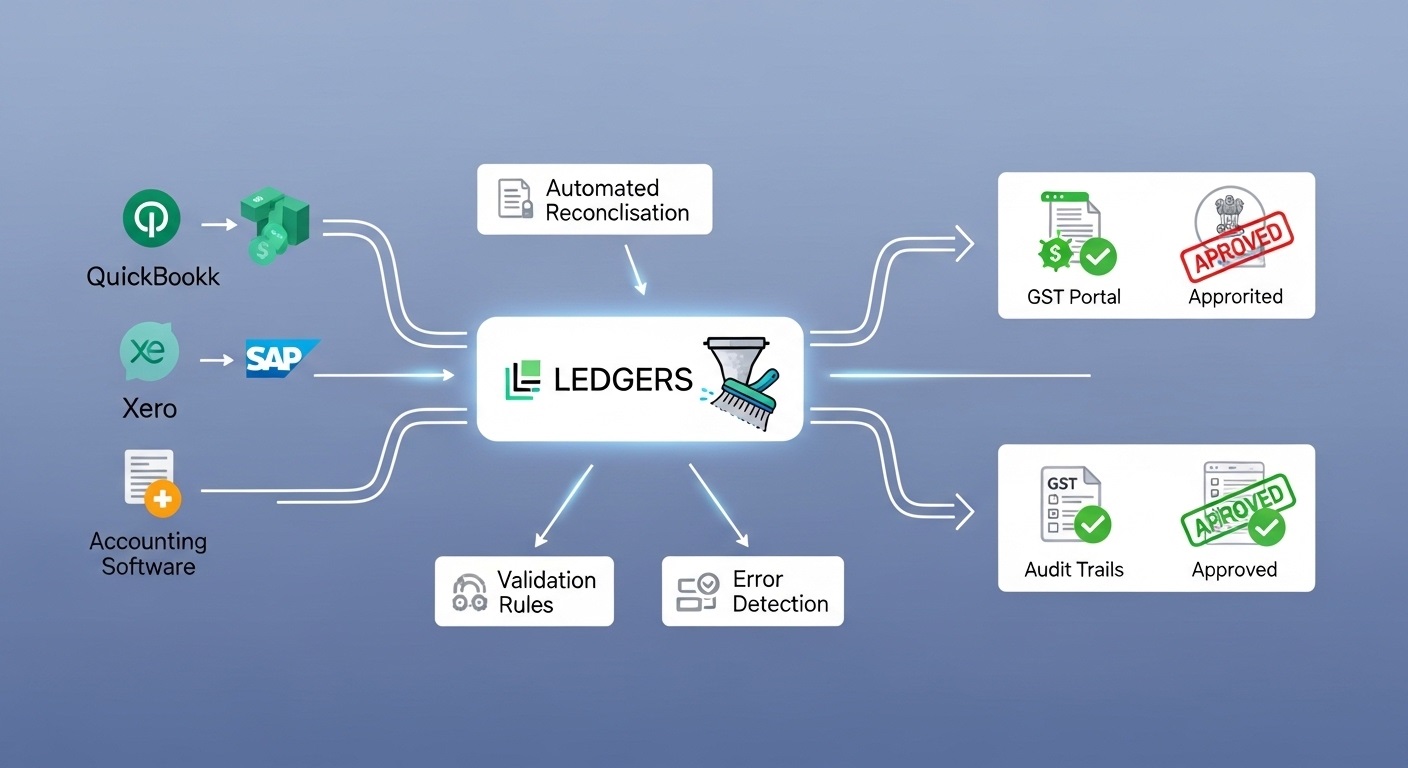
One of the most effective ways to maintain clean data is to manage invoices within a centralized system. LEDGERS helps businesses achieve this by maintaining invoice information within a unified platform.
When invoices are generated and processed through the same environment, the risk of data inconsistency is significantly reduced. Customer information, tax details, and transaction values remain consistent across different compliance activities.
This approach ensures that the same invoice data flows smoothly into accounting records, GST reporting, and other compliance processes.
Structured Data Validation
Another important factor in maintaining clean data is proper validation. LEDGERS applies structured validation checks during invoice creation. These checks help ensure that essential details are correctly entered before the invoice is finalized.
For example, the system can help verify:
- Correct GSTIN format
- Proper tax calculations
- Required invoice fields
- Consistent invoice numbering
By identifying errors early, businesses can correct them before the invoice becomes part of official compliance records.
Improved Customer and Product Data Accuracy
Clean invoicing also depends on maintaining accurate master data for customers and products. When customer details such as GSTIN, address, or state codes are incorrect, it can create issues in GST reporting.
LEDGERS helps businesses maintain organized master records so that invoices are generated with correct information automatically. This reduces repetitive data entry and improves the overall reliability of invoice data.
Consistency Between Accounting and Compliance
One of the major challenges businesses face is maintaining consistency between accounting records and GST compliance data. If invoice values differ between these systems, reconciliation becomes difficult.
By maintaining invoice data within a unified workflow, LEDGERS helps ensure that accounting entries and compliance reporting are aligned. This reduces the risk of mismatches and simplifies return preparation.
Simplifying Reconciliation Processes
When invoice data remains clean and consistent, reconciliation becomes much easier. Finance teams can quickly match invoices with accounting records, GST returns, and customer confirmations.
Instead of spending time identifying errors, businesses can focus on monitoring compliance and improving financial reporting processes.
Long-Term Benefits of Data Discipline
Maintaining clean e-Invoice data is not just about compliance. It also supports better business operations. Organized data improves reporting accuracy, reduces manual corrections, and helps businesses make better financial decisions.
Over time, this data discipline becomes a strong foundation for efficient accounting and compliance management.
Conclusion
Accurate invoice data is the backbone of reliable GST compliance. When invoice information is inconsistent or incomplete, businesses may face reconciliation challenges, customer disputes, and regulatory scrutiny.
LEDGERS helps businesses maintain clean e-Invoice data by centralizing invoice management, applying structured validations, and ensuring consistency across accounting and compliance processes. By maintaining organized and reliable invoice data, businesses can simplify GST reporting and strengthen their overall financial management practices.